
 United States
Atlanta makes sense if
- You want the easier housing and budget equation in this comparison.
- Access to stronger healthcare matters most to you.
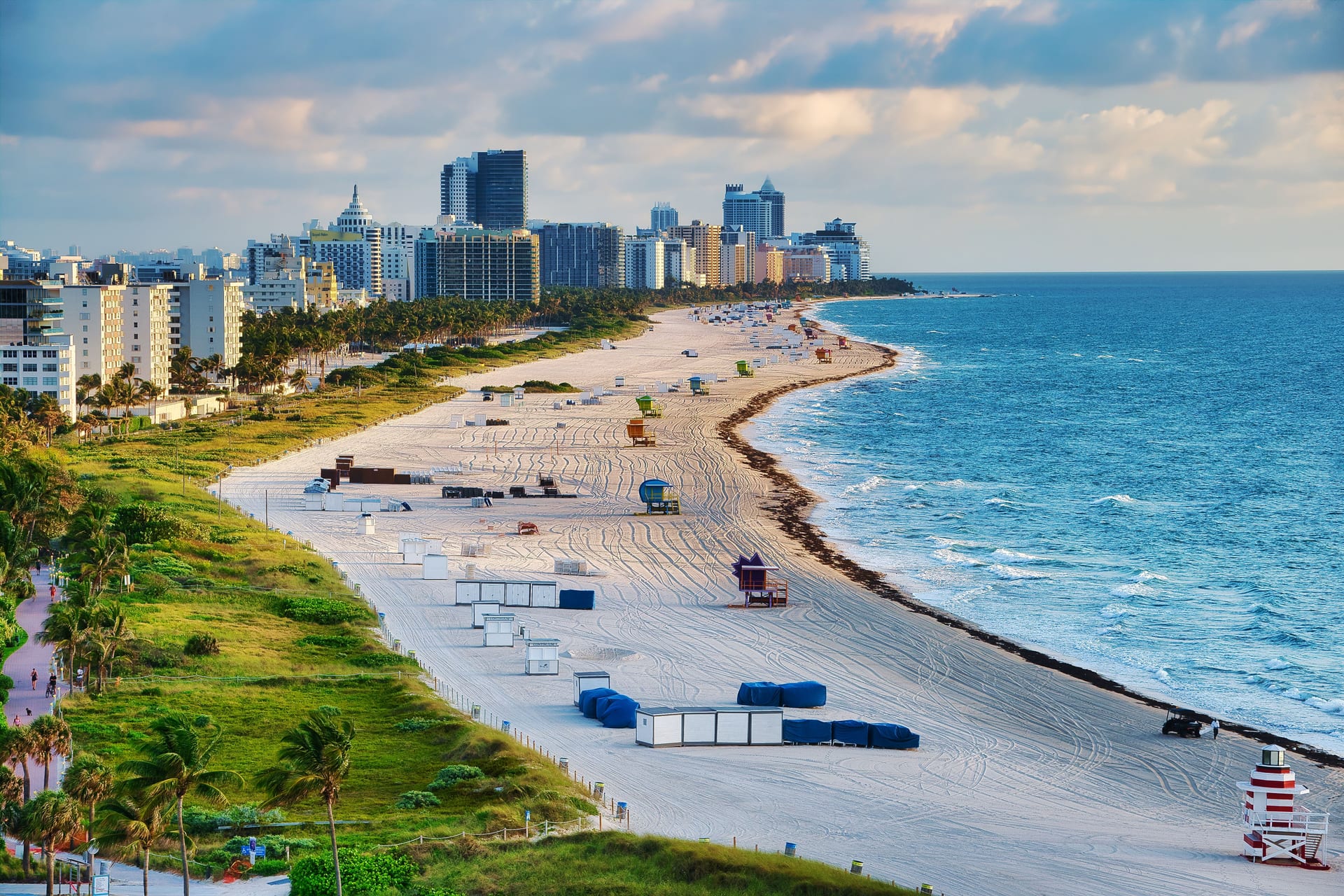
Atlanta offers a major business hub with a wide cultural footprint, but its sprawling geography makes neighbourhood choice and commuting plans important. Miami puts beach access, Latin American ties and a more international street culture into the mix, while heat, storms and housing pressure weigh on year-round routines.
The grey shape is all 283 cities; each row says whether lower or higher is better. Ratings out of 10 are our reviewed estimates; the rest is published data. How we measure
Set how much each area counts. The ranking updates as you go. Climate and values are left out because there is no better or worse there, only your taste.
Leads on safety & health and moving & settling in; stands out for beach & sea and safe at night.
Leads on money and nature & outdoors; stands out for fewer muggy days and hiking.
Scores out of 100, averaged from the areas you weighted. For a ranking built around your own situation, take the quiz.
Rent on a new lease, everyday prices and tax.
The year month by month. Whether it suits you is yours to judge.
Solid line: average daytime high. Dashed: night-time low. Point at the chart for any month; point at a city name to shade its range.
How easily you get to water, mountains and green space.
Getting around on foot, food, culture and the feel of the streets.
Crime, how safe people feel, and the care you would get.
Jobs, working culture, schools and raising kids.
Visas, language, paperwork and staying connected.
Where each city sits. There is no right end of these scales.
Housing and suburban space are real advantages, and residential areas are generally comfortable. The price is weak mixed-use urbanism, so most everyday trips are planned around driving.
Miami sprawls. Outside a few dense pockets it is a car city through and through, with low walkability and neighbourhoods stitched together by highway rather than sidewalk, much like Los Angeles.
Safety is Atlanta's softer spot. Violent crime, including homicide, runs high for a US city, and residents tend to read certain areas and late nights with caution.
Serious violent crime is lower than its reputation suggests, but day-to-day petty crime and how safe the streets feel after dark sit in middling territory, on par with Los Angeles and a notch below New York. Driving is the real hazard, with traffic safety worse than most large US peers.
Across sectors, Atlanta offers a broad career base, with strong job-market depth, low unemployment, and a dense professional network. The medical infrastructure is strong, with major hospital systems, reliable emergency care and care delivered entirely in English.
Across several industries, Miami offers a solid English-speaking market. The medical care itself is strong, with good hospitals, capable specialists, and English spoken everywhere in the system.
Atlanta's cultural pull is the real thing, above all its music. Beyond the BeltLine and a few parks, this is a car city without much built public space to gather in.
Nightlife is world-class, the restaurant scene is broad and ambitious, and the Cuban and wider Latin American influence gives the food a character no other US city replicates. Miami is glamorous and clean where it wants to be, grittier across the sprawl beyond.
Choose Atlanta for a deeper professional base and more room to shape a routine around work and neighbourhood. Miami is the draw for coastal life and international energy, if the climate risks and housing trade-offs are acceptable.
These numbers treat everyone the same. The quiz weighs them by your budget, climate taste, family and work, and ranks all 283 cities for you.