
 New Zealand
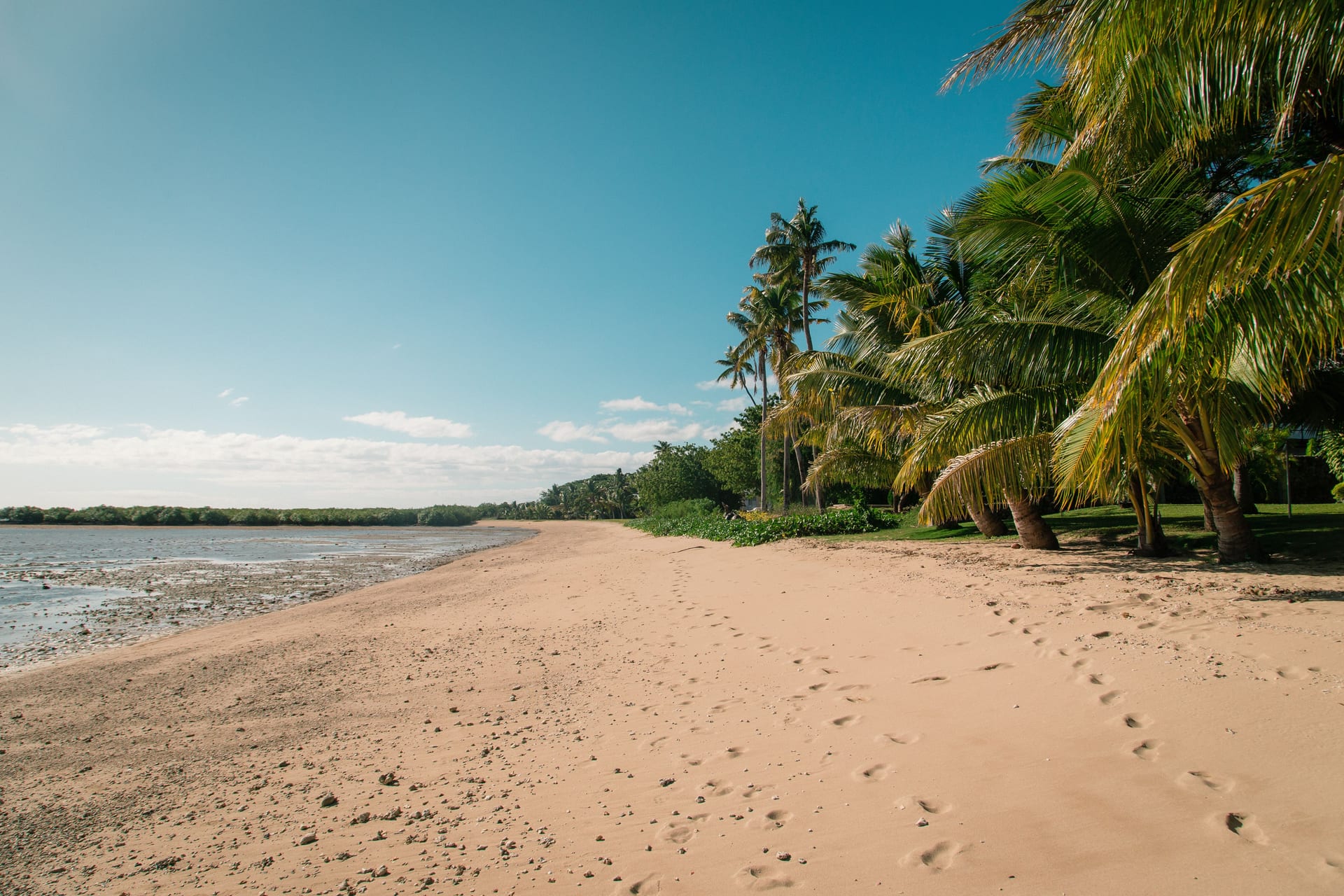
 Fiji
Auckland makes sense if
- A calmer day-to-day safety profile matters most to you.
- Access to stronger healthcare matters most to you.
- You want the broader career options in this comparison.
Auckland is New Zealand's busiest city, where coastal weekends and the Hauraki Gulf sit alongside a broad job market and a sprawling, expensive housing search. Nadi is Fiji's small gateway town, warm and close to the water but short on city amenities and career options. This is a choice between a full urban base and a tropical small-town pace.
The grey shape is all 283 cities; each row says whether lower or higher is better. Ratings out of 10 are our reviewed estimates; the rest is published data. How we measure
Set how much each area counts. The ranking updates as you go. Climate and values are left out because there is no better or worse there, only your taste.
Leads on nature & outdoors, city life, safety & health, work & family and moving & settling in; stands out for fewer muggy days and cafés.
Leads on money; stands out for mountains and traffic flow.
Scores out of 100, averaged from the areas you weighted. For a ranking built around your own situation, take the quiz.
Rent on a new lease, everyday prices and tax.
The year month by month. Whether it suits you is yours to judge.
Solid line: average daytime high. Dashed: night-time low. Point at the chart for any month; point at a city name to shade its range.
How easily you get to water, mountains and green space.
Getting around on foot, food, culture and the feel of the streets.
Crime, how safe people feel, and the care you would get.
Jobs, working culture, schools and raising kids.
Visas, language, paperwork and staying connected.
Where each city sits. There is no right end of these scales.
Auckland is low-density and built around the car, sprawling across hills and harbours rather than concentrating into walkable cores. Outside a handful of central pockets, getting around on foot or by transit is a stretch, and most neighbourhoods assume a vehicle.
Nadi is a small town, not a city, and it shows. It is spread out and car-dependent, with limited walkability and a quiet, unhurried tempo.
Auckland is a safe city by any reasonable measure. Serious violent crime is rare, the country ranks among the most politically stable anywhere, and roads are managed well.
Serious violent crime is rare, and the place feels broadly calm. Opportunistic theft is a more realistic concern, and walking around late at night warrants ordinary caution.
Auckland is easy to enter for English speakers, with a steady job base and local pay above the corpus midpoint. Care is solid and entirely English-speaking, with reliable emergency services and relatively simple insurance compared to many wealthy countries.
Local work in Nadi is extremely narrow and concentrated in a few industries. Healthcare is the weak point.
Auckland punches above its size on local culture, with a strong café habit, plenty of vegetarian and vegan cooking, and a Pacific and Asian influence that gives the food scene its own character. Auckland is clean and well-tended, its harbour edge and the Viaduct genuinely pleasant to walk.
Local Fijian and Indo-Fijian culture is genuine and present, and everything happens in English, which makes daily life easy to slot into. What it has is cheap: the beaches and markets are free, living costs little, and there's a modest run of events.
Auckland is the stronger fit if you need healthcare, local work and the services of a large city, and can manage its housing burden. Nadi suits someone with portable income who wants warm water close and a slower island routine. Be realistic about its limited amenities and employment options before choosing the tropical setting.
These numbers treat everyone the same. The quiz weighs them by your budget, climate taste, family and work, and ranks all 283 cities for you.