
 United States
Boston makes sense if
- A calmer day-to-day safety profile matters most to you.
- Access to stronger healthcare matters most to you.
- You want the broader career options in this comparison.
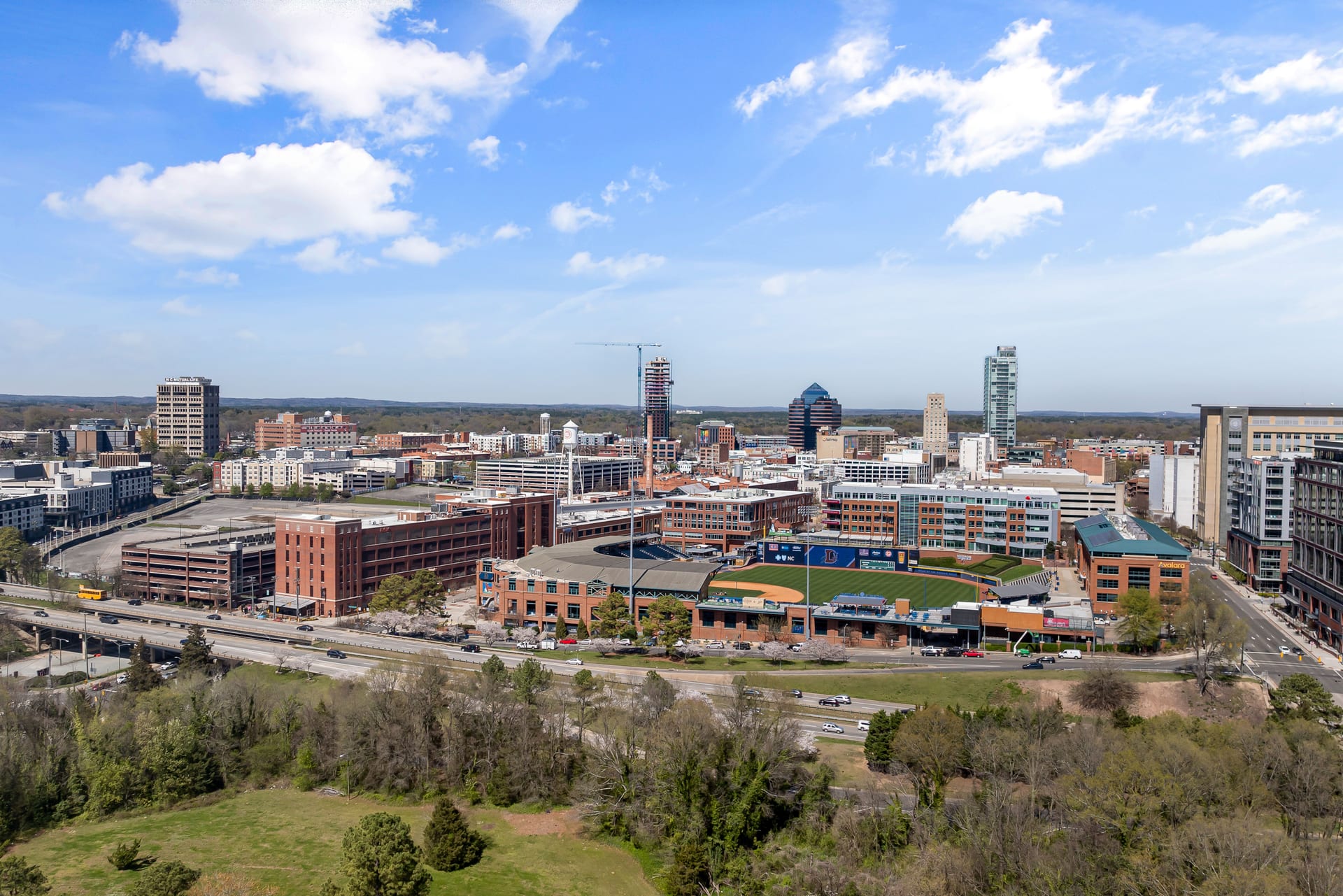
Boston is compact and walkable, with a serious career scene built around universities and hospitals. Raleigh-Durham spreads across three mid-sized cities, trading density and nightlife for a deep research and tech economy and a leafy, car-dependent routine.
The grey shape is all 283 cities; each row says whether lower or higher is better. Ratings out of 10 are our reviewed estimates; the rest is published data. How we measure
Set how much each area counts. The ranking updates as you go. Climate and values are left out because there is no better or worse there, only your taste.
Leads on city life and work & family; stands out for life without a car and public transport.
Leads on money; stands out for easier house-hunting and space for the money.
Scores out of 100, averaged from the areas you weighted. For a ranking built around your own situation, take the quiz.
Rent on a new lease, everyday prices and tax.
The year month by month. Whether it suits you is yours to judge.
Solid line: average daytime high. Dashed: night-time low. Point at the chart for any month; point at a city name to shade its range.
How easily you get to water, mountains and green space.
Getting around on foot, food, culture and the feel of the streets.
Crime, how safe people feel, and the care you would get.
Jobs, working culture, schools and raising kids.
Visas, language, paperwork and staying connected.
Where each city sits. There is no right end of these scales.
The core is dense and walkable, with mixed-use neighbourhoods and a car-light daily rhythm. Space is the constraint, while the well-regarded suburbs offer more room.
Walkability is poor and a car is effectively mandatory; transit barely registers. The flip side is space, with generous houses and well-kept residential neighbourhoods that draw people who want room to spread out.
Boston's homicide rate is low for a big American city, and most central neighbourhoods feel fine on foot after dark. Recorded violent crime, mostly assaults, is higher than in Austin or Miami, and traffic is somewhat less forgiving than the calm street life suggests.
A safe place by US standards, with low homicide rates and residents who generally feel secure day and night. Property and petty crime exist but stay moderate.
The job market is deep across biotech, finance, education, and tech, with unemployment low and a dense professional network built on the university pipeline. Medically, this is one of the best-served cities on earth, anchored by famous teaching hospitals and research institutions, with care delivered in English as a matter of course.
Career prospects are especially strong in Raleigh-Durham, with a deep job market, low unemployment, and a well-developed professional network. Major university hospitals make for genuinely strong clinical quality and reliable emergency care.
Restaurants, cafes, and museums are abundant and high quality, and the seafood and academic-town energy give the place a distinct feel. Boston is historic, walkable and generally well cared-for, with the Common, the waterfront and old squares giving it a public realm most American cities lack.
A solid, growing food and coffee scene, with good restaurants, strong cafes and a respectable museum and music offering for its size. Free university culture, lectures and events soften that, and costs stay moderate.
Boston fits someone who wants a walkable city and established institutions. Raleigh-Durham is stronger if your field matches the Research Triangle and you are comfortable driving most places. Test the commute and neighborhood layout before you commit.
These numbers treat everyone the same. The quiz weighs them by your budget, climate taste, family and work, and ranks all 283 cities for you.