 United States

Las Vegas makes sense if
- You want the easier housing and budget equation in this comparison.
- You want the deeper culture and food scene.
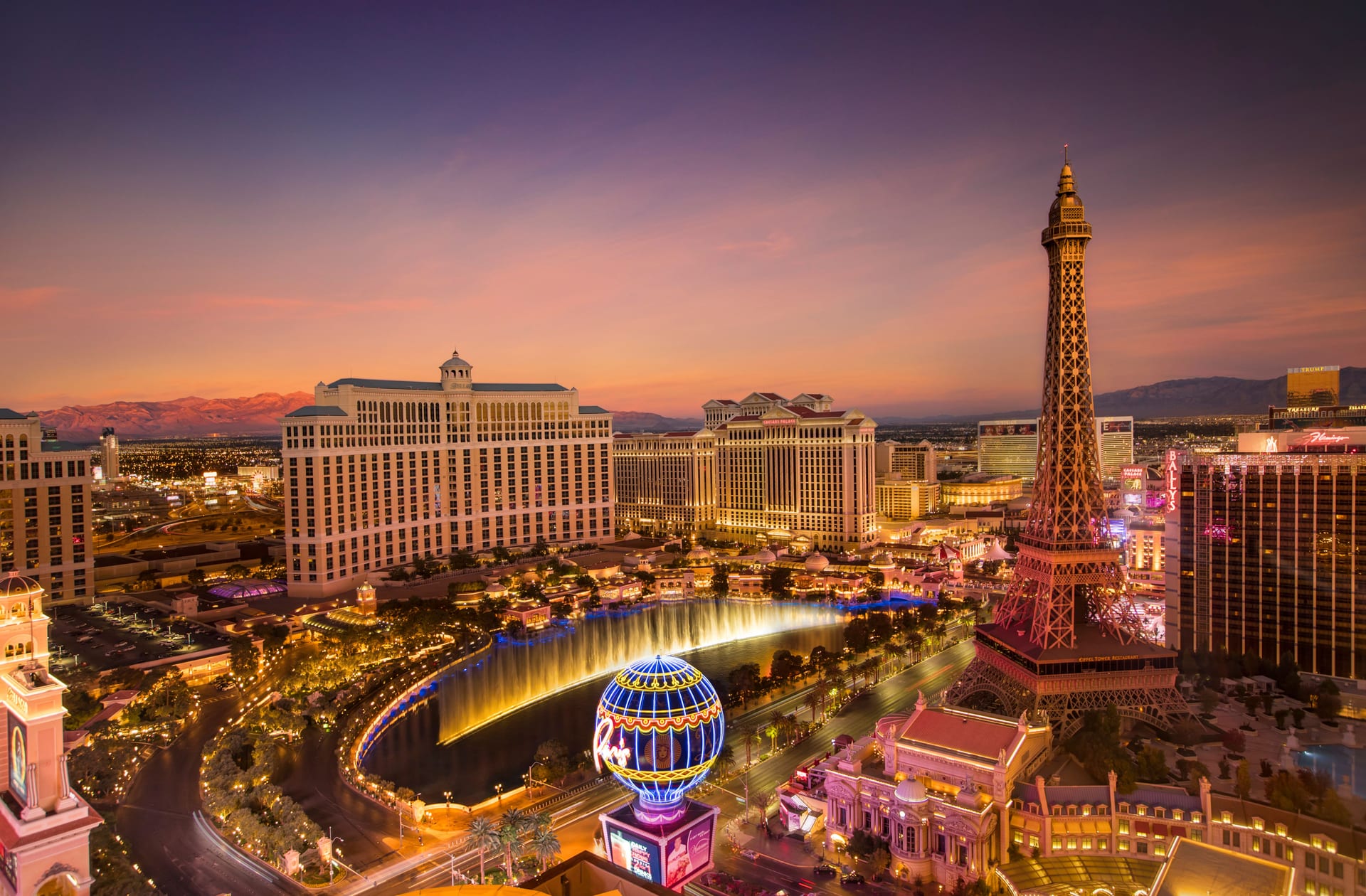
Las Vegas is a desert city of wide suburban valleys, fierce heat and car-dependent routines beyond the Strip. San Diego's daily rhythm bends toward the coast, with mild weather and an outdoor pace, though housing and other living costs are high.
The grey shape is all 283 cities; each row says whether lower or higher is better. Ratings out of 10 are our reviewed estimates; the rest is published data. How we measure
Set how much each area counts. The ranking updates as you go. Climate and values are left out because there is no better or worse there, only your taste.
Leads on nature & outdoors, city life, safety & health and work & family; stands out for beach & sea and outdoor childhood.
Leads on money; stands out for nightlife and easier house-hunting.
Scores out of 100, averaged from the areas you weighted. For a ranking built around your own situation, take the quiz.
Rent on a new lease, everyday prices and tax.
The year month by month. Whether it suits you is yours to judge.
Solid line: average daytime high. Dashed: night-time low. Point at the chart for any month; point at a city name to shade its range.
How easily you get to water, mountains and green space.
Getting around on foot, food, culture and the feel of the streets.
Crime, how safe people feel, and the care you would get.
Jobs, working culture, schools and raising kids.
Visas, language, paperwork and staying connected.
Where each city sits. There is no right end of these scales.
A sprawling, low-density valley laid out for cars, where walking anywhere useful is rarely an option. Like Phoenix, the design assumes a vehicle for everything, with mixed-use streetscapes scarce outside the Strip.
Built for the car and spread thin, San Diego asks you to drive for almost everything, with walkable stretches confined to a few districts. Density is low, the tempo relaxed, and many neighbourhoods read as comfortable suburb rather than dense city.
The homicide rate runs higher than calmer Western cities like Austin or Denver, and perceptions of safety after dark are middling. Petty crime is a more persistent nuisance than in many US peers.
By big-US-city standards this is a reassuring place, with serious violent crime notably lower than in Los Angeles or Denver and a generally settled feel. Everyday petty crime and perceptions of safety land in the middle rather than the top.
A job market tilted heavily toward hospitality, gaming, and tourism, which leaves it narrower than the more diversified economies of Phoenix, Austin, or Denver. Care is reachable and emergency services reliable, and every interaction happens in English, but the depth of the system is thinner than in larger US cities.
For work in San Diego, the English-speaking market is broad, with solid industry breadth and a healthy technology base. The medical care itself is strong, with capable hospitals and care delivered entirely in English.
The restaurant range is excellent for the population, nightlife is world-class, and there is no shortage of shows, museums, and music. Las Vegas keeps the Strip maintained, but off it the desert sprawl is uneven, and the city is built for the car.
A capable, well-rounded scene without the depth of Los Angeles up the coast. San Diego is affluent and generally clean, though homelessness is visible downtown.
San Diego suits someone seeking coastal outdoor life and a slower pace, with a substantial budget for housing. Las Vegas is the more affordable desert option if driving and intense summer heat are acceptable.
These numbers treat everyone the same. The quiz weighs them by your budget, climate taste, family and work, and ranks all 283 cities for you.