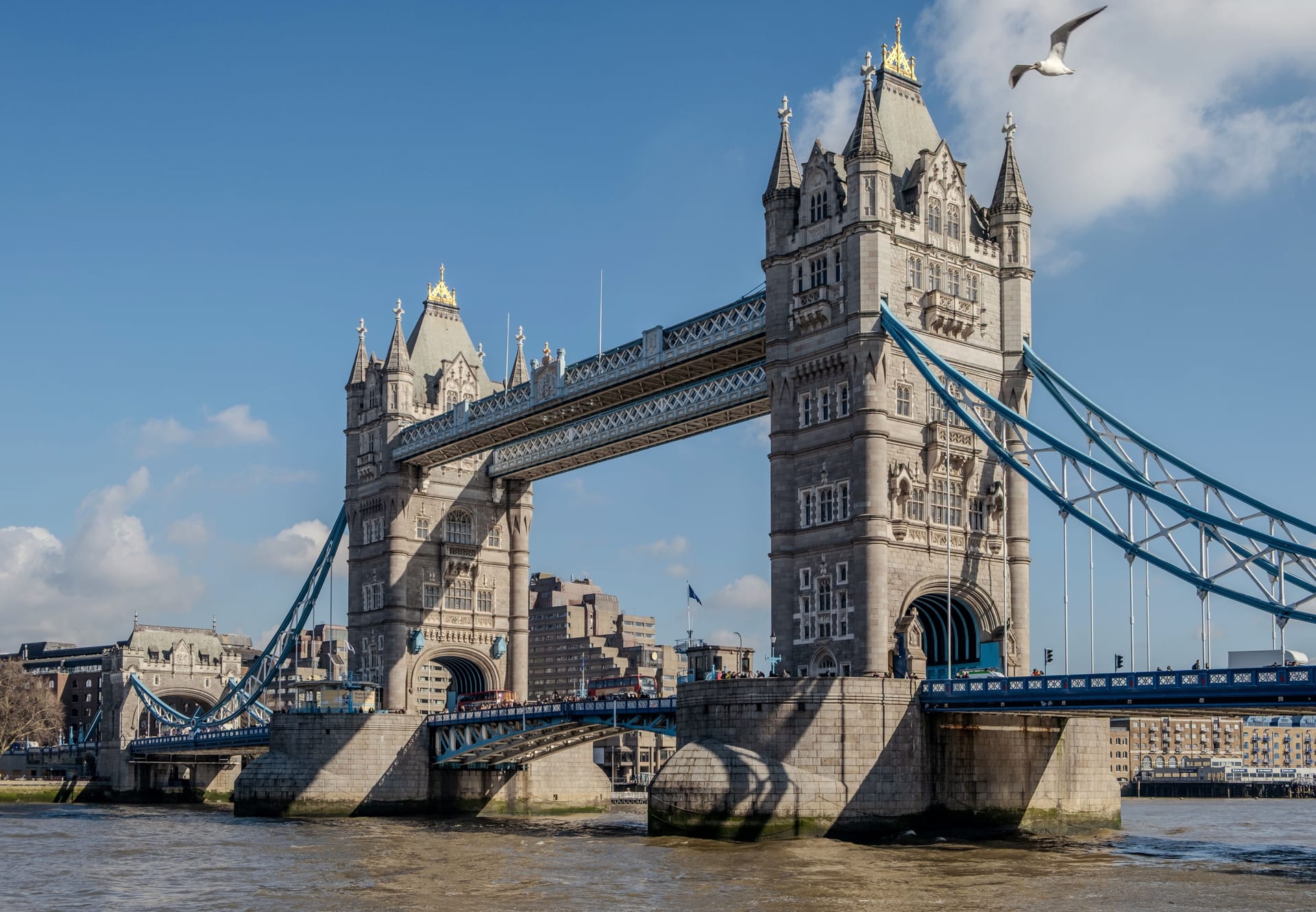
 United Kingdom

 United States
London makes sense if
- A calmer day-to-day safety profile matters most to you.
- Access to stronger healthcare matters most to you.
- You value stronger public spaces and everyday city life.
London offers a deep English-language job market, but damp, dim winters can wear on daily life. New York packs work, culture and ambition into a walkable archipelago; its affordability lead in this comparison is relative, since rent remains a defining pressure.
The grey shape is all 283 cities; each row says whether lower or higher is better. Ratings out of 10 are our reviewed estimates; the rest is published data. How we measure
Set how much each area counts. The ranking updates as you go. Climate and values are left out because there is no better or worse there, only your taste.
Leads on city life, safety & health, work & family and moving & settling in; stands out for easier health insurance and lower medical costs.
Leads on money and nature & outdoors; stands out for mountains and broadband speed.
Scores out of 100, averaged from the areas you weighted. For a ranking built around your own situation, take the quiz.
Rent on a new lease, everyday prices and tax.
The year month by month. Whether it suits you is yours to judge.
Solid line: average daytime high. Dashed: night-time low. Point at the chart for any month; point at a city name to shade its range.
How easily you get to water, mountains and green space.
Getting around on foot, food, culture and the feel of the streets.
Crime, how safe people feel, and the care you would get.
Jobs, working culture, schools and raising kids.
Visas, language, paperwork and staying connected.
Where each city sits. There is no right end of these scales.
Vast, dense, and built for getting around without a car, London rewards people who like walking and good transit over space. Neighbourhoods each have a strong character and most daily errands are close at hand.
The streets blend shops, homes, and work at every turn, and the pace stays high day and night. The trade-off is space: apartments run famously small, and square footage costs dearly.
Serious violence is rare and the city is broadly safe by the standards of major world capitals, with low homicide and strong road safety. The weaker spot is petty crime, with pickpocketing and phone snatching a genuine nuisance in busy central areas.
New York City is safer than its reputation suggests, with serious violent crime low for a megacity its size. Petty theft and the occasional unease on late-night transit are real, and how secure the streets feel varies by neighbourhood and hour.
Opportunity is broad, professional networks are dense, and the startup scene is mature. Care is delivered in English, which removes a barrier that trips up newcomers almost everywhere else, and the underlying quality is solid.
New York's professional market is exceptionally deep, spanning many industries with low unemployment, dense networks, and English-language work throughout. The hospitals here are world-class, with leading specialists and strong emergency care, and language is never a barrier.
Few cities anywhere can match what London offers here. The public realm still delivers: royal parks, the riverside, garden squares.
Restaurants span every cuisine and price point, the museums and galleries rank among the best anywhere, and the music, theatre, and nightlife never really stop. The public realm is world-class: Central Park, the High Line, the waterfront, the plazas.
London is a more balanced option if climate and a broad employment market matter. New York is the high-intensity choice for walkable density and career ambition, with expensive housing shaping nearly every decision.
These numbers treat everyone the same. The quiz weighs them by your budget, climate taste, family and work, and ranks all 283 cities for you.