 Australia
Adelaide makes sense if
- You want the easier housing and budget equation in this comparison.
- You want the deeper culture and food scene.
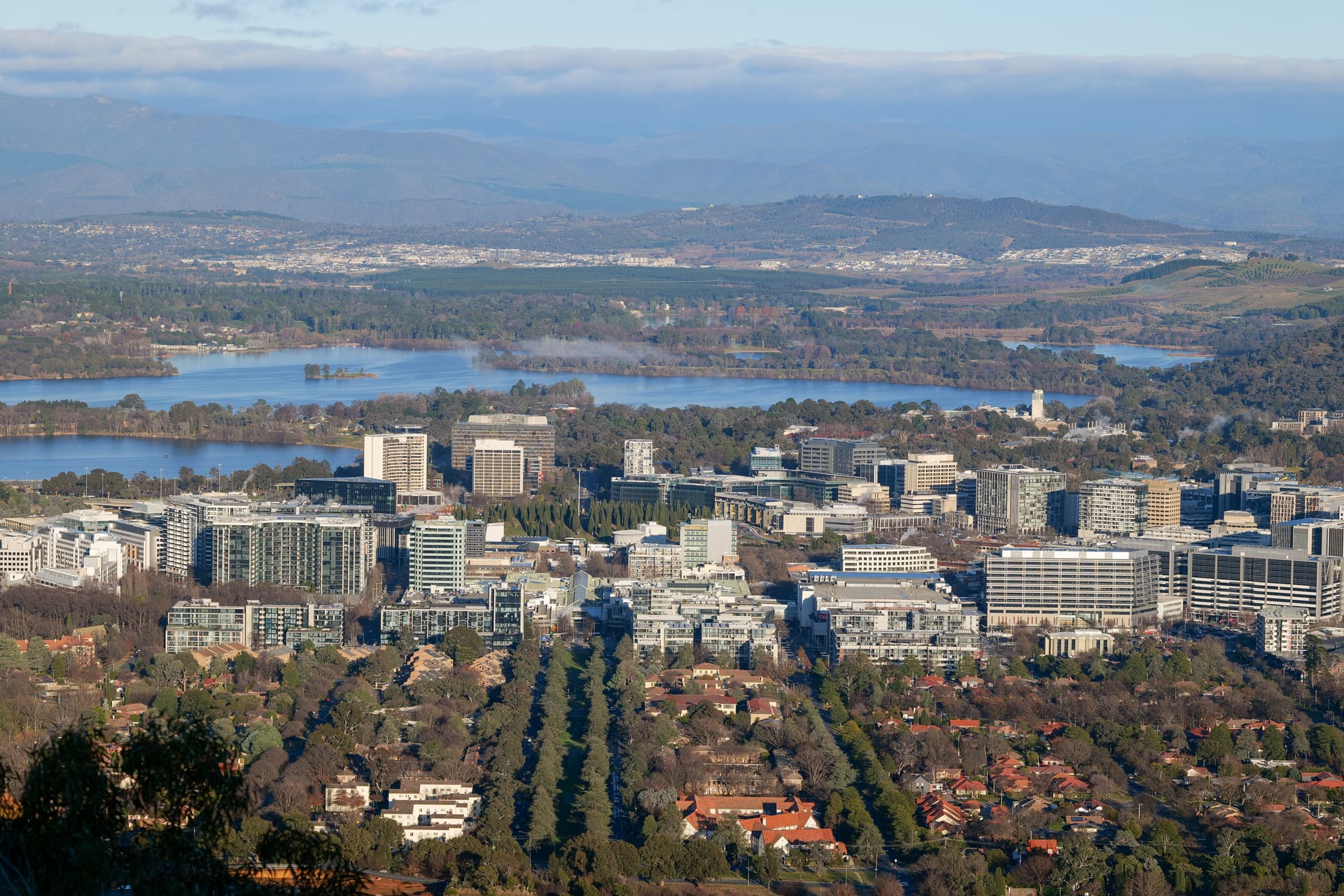
Adelaide is a low-rise state capital with parklands, beaches, and the Adelaide Hills shaping an unhurried routine. Canberra is purpose-built and inland, with broad skies, a suburban pace, and national museums close at hand.
The grey shape is all 283 cities; each row says whether lower or higher is better. Ratings out of 10 are our reviewed estimates; the rest is published data. How we measure
Set how much each area counts. The ranking updates as you go. Climate and values are left out because there is no better or worse there, only your taste.
Leads on nature & outdoors; stands out for lakes & rivers and national parks nearby.
Leads on city life; stands out for beach & sea and walkability.
Scores out of 100, averaged from the areas you weighted. For a ranking built around your own situation, take the quiz.
Rent on a new lease, everyday prices and tax.
The year month by month. Whether it suits you is yours to judge.
Solid line: average daytime high. Dashed: night-time low. Point at the chart for any month; point at a city name to shade its range.
How easily you get to water, mountains and green space.
Getting around on foot, food, culture and the feel of the streets.
Crime, how safe people feel, and the care you would get.
Jobs, working culture, schools and raising kids.
Visas, language, paperwork and staying connected.
Where each city sits. There is no right end of these scales.
The famous grid keeps the centre legible and the surrounding neighbourhoods are pleasant and roomy, with houses that come with real space, a luxury in pricier capitals. Density is low, walkable mixed-use pockets are limited, and the overall pace is gentle to the point of sleepy.
Low density and spacious suburbs are the defining pattern, while walkability is weak and car dependence is high. Housing space and suburb quality are clear strengths, so daily life feels spread out rather than densely urban.
Adelaide is very safe. Violent crime is rare, the streets feel calm after dark, and residents report a strong everyday sense of security.
Violent crime is rare, the streets feel calm after dark, and roads are well managed with little of the chaos of larger capitals. Residents generally move around day or night without much thought for personal safety.
Adelaide offers a credible English-speaking market and low unemployment, with local pay high by the standards of this corpus. Healthcare is dependable, anchored in Australia's universal Medicare system with solid hospitals and reliable emergency care.
Canberra has a strong English-speaking employment base and low unemployment. Care is solid and runs entirely in English under Australia's universal system.
Food and wine are where Adelaide punches above its size, with a strong cafe and restaurant scene fed by the surrounding vineyards and a calendar of festivals that briefly turns the quiet city loud. Adelaide is clean and orderly, its parklands ring and the Torrens riverbank kept in good order, North Terrace lined with free state museums and galleries.
The cafe culture is genuinely good and the national museums and galleries are a real draw, punching above the city's size. Canberra is planned and pristine, immaculately maintained, and its free national museums and galleries around the lake are a genuine gift.
Adelaide is more appealing for residents who want coastal access, food and wine nearby, and a little more city energy. Canberra suits people who value green, low-stress streets and a government-centred professional base, though its quiet evenings can feel limiting.
These numbers treat everyone the same. The quiz weighs them by your budget, climate taste, family and work, and ranks all 283 cities for you.