Affordability
63/100Canberra's open-market one-bedroom rent on a new lease is about A$2,070 per month. That is roughly 32% of one typical employee's mean net pay, a rent burden labelled manageable solo.
Climate
temperateCanberra offers bright, relatively dry conditions for much of the year, with many more bright than rainy-grey days. Winters are the cost of that clarity: July averages about 7°C, so the season is genuinely cold by the city's standards. Air is exceptionally clean, but bushfire smoke risk is a serious counterweight.
Nature access
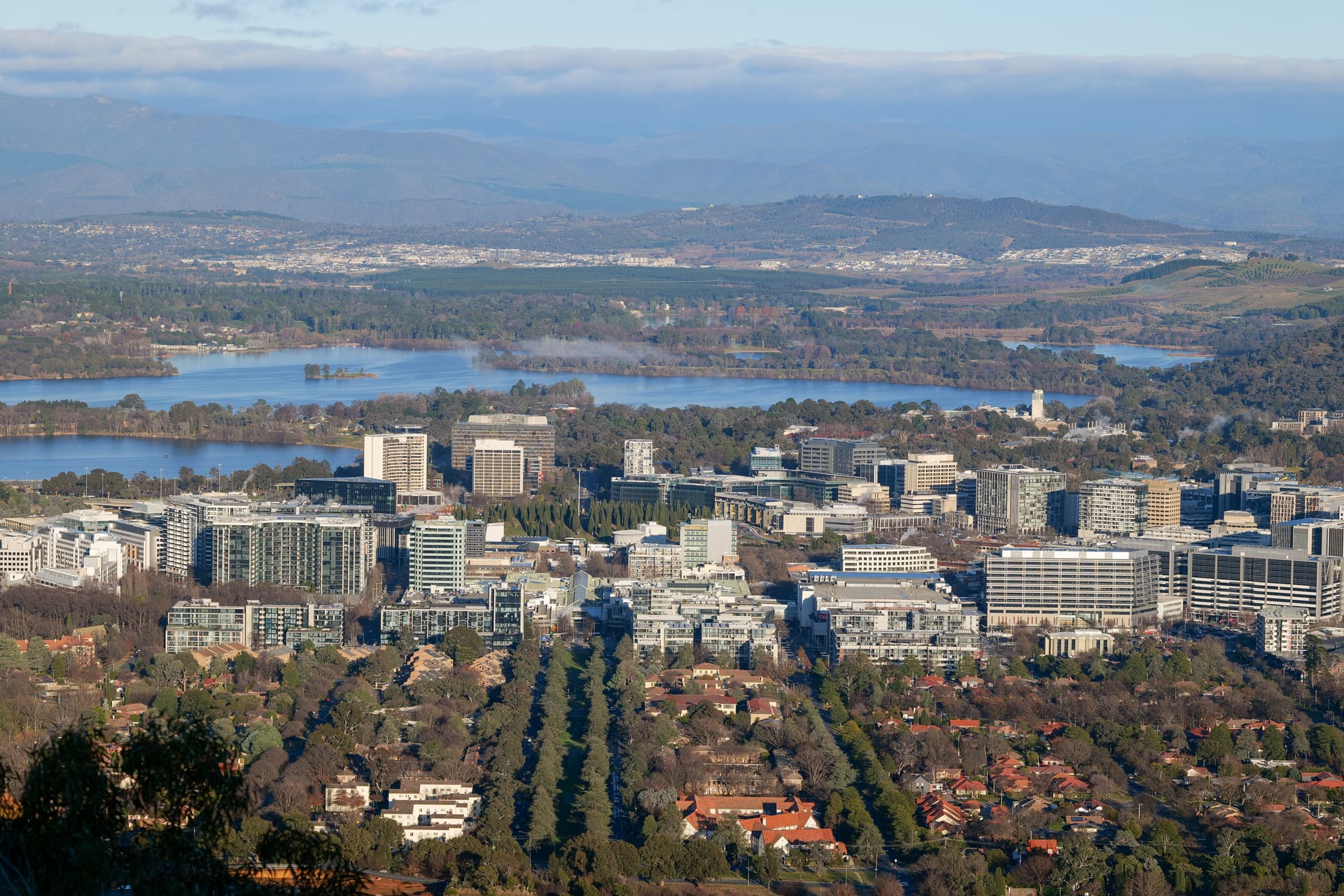
leafyThis is the city's strongest hand. Bush, hills, and national parks sit minutes from the suburbs, with excellent hiking, cycling, and weekend escapes into the surrounding ranges. The obvious gap is the ocean. Landlocked and a couple of hours from the nearest beach, it can't match the surf-on-your-doorstep life of Sydney or Brisbane.
Urban form
mid-sizedThe metro footprint is small, with a recorded population of roughly 484,630. Low density and spacious suburbs are the defining pattern, while walkability is weak and car dependence is high. Housing space and suburb quality are clear strengths, so daily life feels spread out rather than densely urban.
Public life & spaces
85/100Canberra is planned and pristine, immaculately maintained, and its free national museums and galleries around the lake are a genuine gift. The civic monuments and Lake Burley Griffin are handsome by design. But it's low-density and built for the car, and away from the free institutions the city runs expensive.
Safety
85/100One of the safest cities in a famously safe country. Violent crime is rare, the streets feel calm after dark, and roads are well managed with little of the chaos of larger capitals. Residents generally move around day or night without much thought for personal safety.
Healthcare
76/100Care is solid and runs entirely in English under Australia's universal system. Quality and emergency reliability are on par with Sydney, and doctor availability is reasonable, though as a smaller city it leans on fewer major hospitals than the big metros. Some specialist needs may mean a trip elsewhere.
Family life
69/100A strong place to raise children. It is safe, school quality is high, parks and playgrounds are everywhere, and the outdoor, work-life balance is better than in the busier capitals. Childcare cost and availability is the weaker note, a common Australian strain rather than a local quirk.
Career
70/100Canberra has a strong English-speaking employment base and low unemployment. The economy is specialised, while professional networks and the startup scene are modest. Local pay is high, making local employment a genuine strength despite the narrow industry mix.
Culture & food
65/100The cafe culture is genuinely good and the national museums and galleries are a real draw, punching above the city's size. Restaurants are decent without rivalling Sydney's depth. Nightlife is the clear weak spot, low-key and limited, so anyone after a busy after-dark scene will find it sleepy.
Ease of integration
78/100As a native-English city in a country used to newcomers, settling in socially is straightforward, with no language barrier to clear. The culture is open, liberal, and high in civic trust. Because so much of the city revolves around government and professional circles, connections often form through work, and the smaller scale means a tighter, more local feel than Sydney.
Connectivity
55/100Roads are uncongested and cycling infrastructure is strong, but public transport is thin and built around buses and a single light-rail line. Intercity rail is poor and the airport, while functional, offers limited connections, so reaching the rest of the country and the world usually means a car or a flight via Sydney.
Social values
progressiveSocially progressive and strongly secular, even by Australian standards. The city is welcoming to LGBTQ residents, scores well on gender equality, and carries little of the traditionalism found in more conservative places. Public life is liberal, trusting, and orderly.
Relocation ease
59/100For an English speaker the day-to-day landing is smooth: no language barrier, straightforward banking, and a relatively easy housing search by Australian standards. The friction is upstream and geographic. Visas and work authorization take real effort, and Australia's sheer distance from Europe and the Americas makes this a long-haul move.