
 Indonesia
Bali (Denpasar) makes sense if
- A calmer day-to-day safety profile matters most to you.
- You want the deeper culture and food scene.
Denpasar's island setting puts beaches, tourism and Balinese cultural life close to home, though much of the working economy is tied to visitors. Surabaya is a large, practical commercial city with a stronger local business base and urban services, but without Bali's immediate access to coast and nature.
The grey shape is all 283 cities; each row says whether lower or higher is better. Ratings out of 10 are our reviewed estimates; the rest is published data. How we measure
Set how much each area counts. The ranking updates as you go. Climate and values are left out because there is no better or worse there, only your taste.
Leads on nature & outdoors and city life; stands out for beach & sea and hiking.
Narrowly best on safety & health: 52 vs Bali (Denpasar)'s 51; stands out for train connections and job market.
Scores out of 100, averaged from the areas you weighted. For a ranking built around your own situation, take the quiz.
Rent on a new lease, everyday prices and tax.
The year month by month. Whether it suits you is yours to judge.
Solid line: average daytime high. Dashed: night-time low. Point at the chart for any month; point at a city name to shade its range.
How easily you get to water, mountains and green space.
Getting around on foot, food, culture and the feel of the streets.
Crime, how safe people feel, and the care you would get.
Jobs, working culture, schools and raising kids.
Visas, language, paperwork and staying connected.
Where each city sits. There is no right end of these scales.
Denpasar sits inside a metropolitan area of about two million people, so the wider urban footprint is larger than the city label suggests. The city remains difficult to walk, with a patchy mixed-use fabric and heavy dependence on cars.
A sprawling, car-and-motorbike city built around roads rather than footpaths. Walkability is poor and getting around without a vehicle is genuinely hard, more so than in Manila.
Serious violent crime is rare, with a homicide rate as low as the Gulf's safest cities and a general sense of ease day to day. The weak spots are the roads, where traffic accidents are common across the island, and petty theft aimed at visitors.
Violent crime is low and the homicide rate is among the region's lowest, on par with Bali and well below Manila or Mexico City. Most residents feel comfortable day and night.
Bali's conventional local career market is thin even though unemployment is low, with limited English-language access and very low local pay. Healthcare is the island's soft underbelly.
Surabaya offers a steady local base and low unemployment, but the career ceiling is modest. Care is functional but middling.
The international crowd is large and easy to plug into, and restaurants and nightlife are livelier than the modest scale suggests. Bali keeps its tourist strips tidy, but step away and the litter and traffic grime are constant, and there's little built civic space beyond the temples.
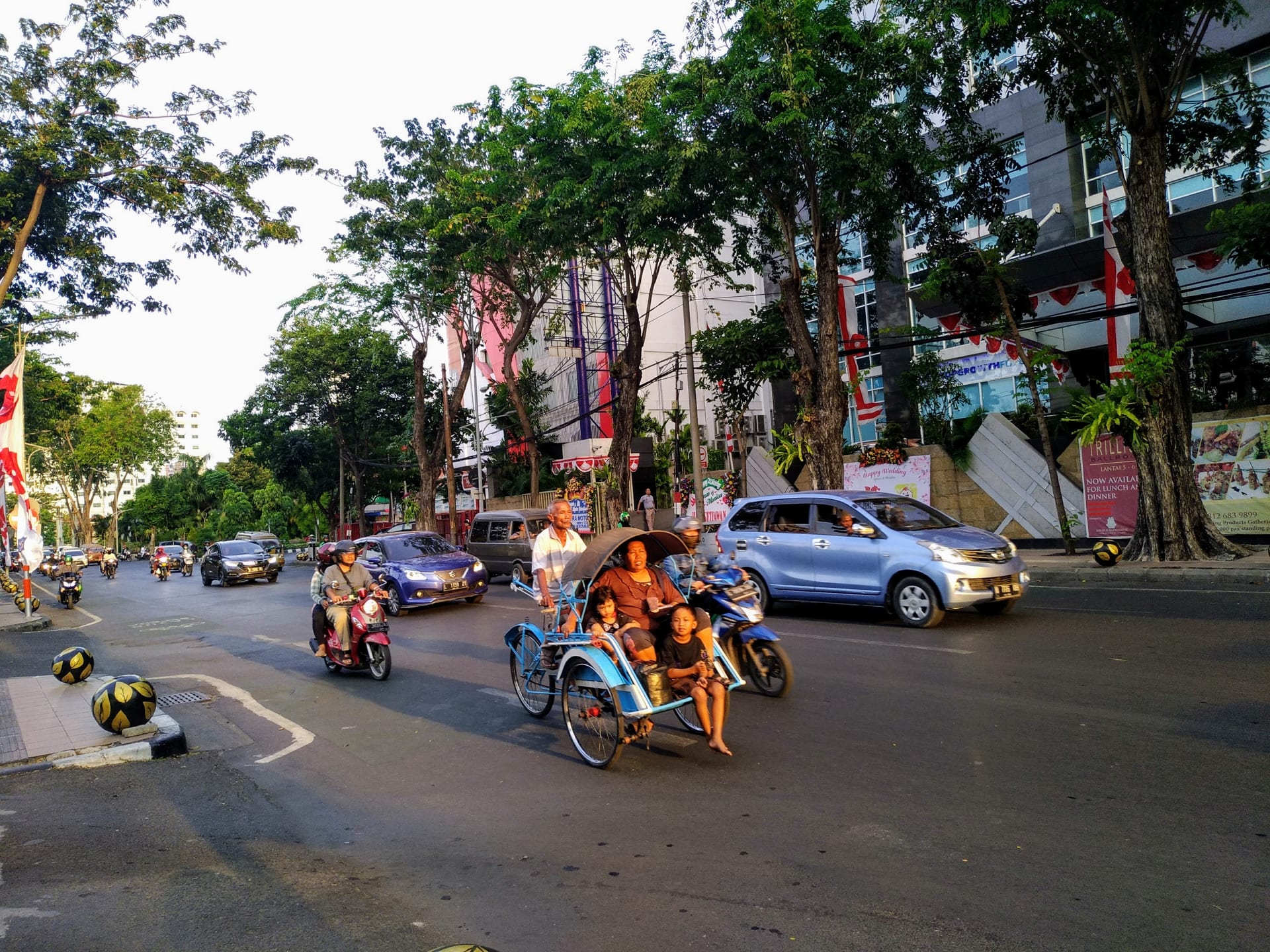
Strong on everyday Indonesian eating, with rumah makan, warungs, and a growing cafe habit, though the dining ceiling is lower than Bali's. Surabaya is a hot, industrial Indonesian city with heavy traffic and only modest upkeep, its life pulled toward malls and cars rather than any walkable square, though a few renovated parks help.
Choose Bali if the outdoor setting and cultural texture matter more than a broad local job market. Surabaya is more suitable for a conventional Indonesian city routine and locally based work, while accepting a denser, more built-up environment.
These numbers treat everyone the same. The quiz weighs them by your budget, climate taste, family and work, and ranks all 283 cities for you.