 United Kingdom
Cambridge makes sense if
- A calmer day-to-day safety profile matters most to you.
- Access to stronger healthcare matters most to you.
- You want the broader career options in this comparison.
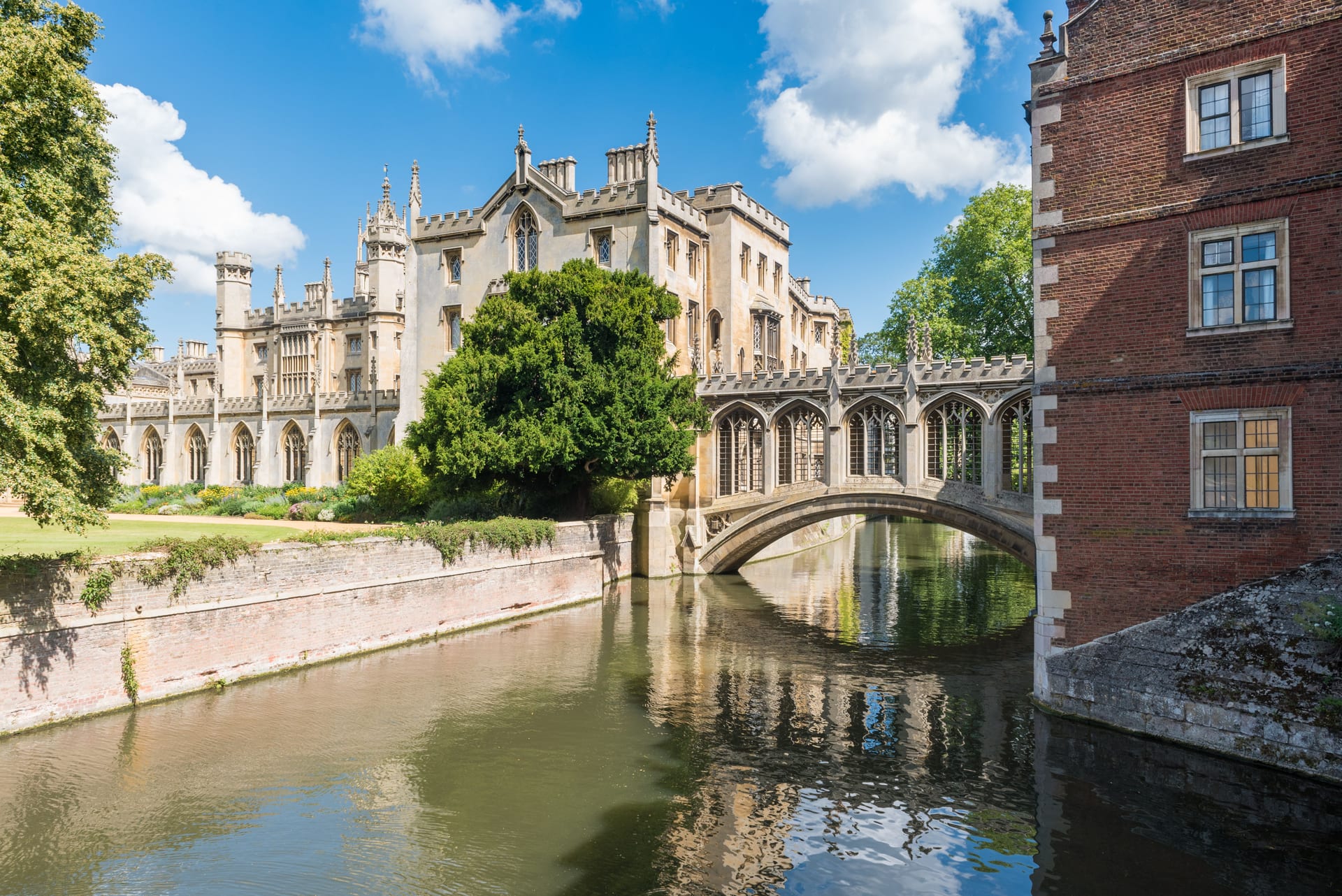
Cambridge's college courts, cycling and carefully kept centre create a quiet university-town rhythm. Manchester's music venues, restaurants and galleries keep evenings busier, while the former offers calmer public spaces and streets.
The grey shape is all 283 cities; each row says whether lower or higher is better. Ratings out of 10 are our reviewed estimates; the rest is published data. How we measure
Set how much each area counts. The ranking updates as you go. Climate and values are left out because there is no better or worse there, only your taste.
Leads on nature & outdoors and moving & settling in; stands out for music & art scene and nightlife.
Leads on safety & health and work & family; stands out for safe at night and clean, cared-for streets.
Scores out of 100, averaged from the areas you weighted. For a ranking built around your own situation, take the quiz.
Rent on a new lease, everyday prices and tax.
The year month by month. Whether it suits you is yours to judge.
Solid line: average daytime high. Dashed: night-time low. Point at the chart for any month; point at a city name to shade its range.
How easily you get to water, mountains and green space.
Getting around on foot, food, culture and the feel of the streets.
Crime, how safe people feel, and the care you would get.
Jobs, working culture, schools and raising kids.
Visas, language, paperwork and staying connected.
Where each city sits. There is no right end of these scales.
Daily life is highly walkable, with most short trips working on foot or by bike and little need for a car. The cost of that compactness is cramped housing and a quiet tempo.
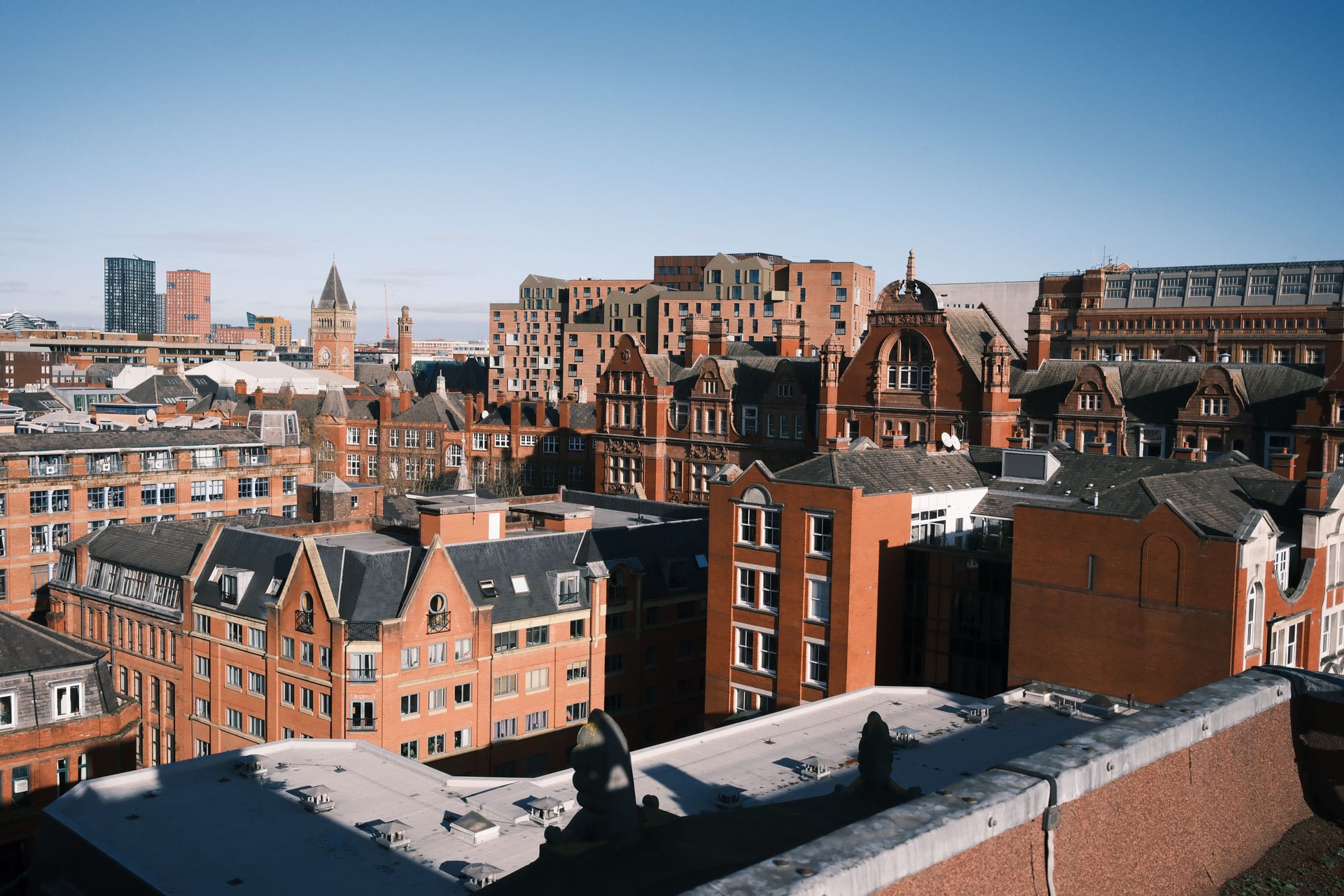
Manchester is a compact, mid-sized city, far smaller than London but the largest hub in its region by a wide margin. The centre is walkable and the neighbourhoods have distinct character, from converted mills to leafier suburbs.
Traffic is gentle and well-managed, helped by all the cycling. Petty theft, bike theft especially, is the main thing residents actually contend with, a little more than in smaller Scottish cities.
Serious violent crime is low and the roads are safe by international standards. The texture is more uneven on the ground: petty crime and a sense of caution after dark in parts of the centre pull perceived safety down to ordinary big-city levels, a notch below quieter Edinburgh.
Its work market has unusual depth in science, technology, and research, with strong professional networks and a well-developed startup scene. Care runs through the NHS and is delivered in plain English, which removes a layer of stress most newcomers abroad never escape.
Manchester has a deep local job market, with strong industry coverage, abundant English-language roles, and substantial professional and startup networks. Care runs through the NHS, so out-of-pocket costs are minimal and everything operates in English without insurance hurdles.
Strong on cafes, museums, and the cultural weight that centuries of university life leave behind, with a genuinely good vegetarian and vegan scene. Cambridge is pristine and well-heeled, its college courts and manicured lawns kept in immaculate order.
The music heritage is world-famous, the live scene and nightlife rival anything in the country, and the restaurants and cafes have caught up fast. Manchester carries its industrial past openly, upkeep is uneven and some streets feel neglected.
Choose Manchester if live music, nightlife and a broad cultural calendar will shape your week. Cambridge is the better fit for a tidy, quieter place to live and a stronger safety profile.
These numbers treat everyone the same. The quiz weighs them by your budget, climate taste, family and work, and ranks all 283 cities for you.