 Mexico
Cancún makes sense if
- You want the easier housing and budget equation in this comparison.
- Access to stronger healthcare matters most to you.
- You want the broader career options in this comparison.
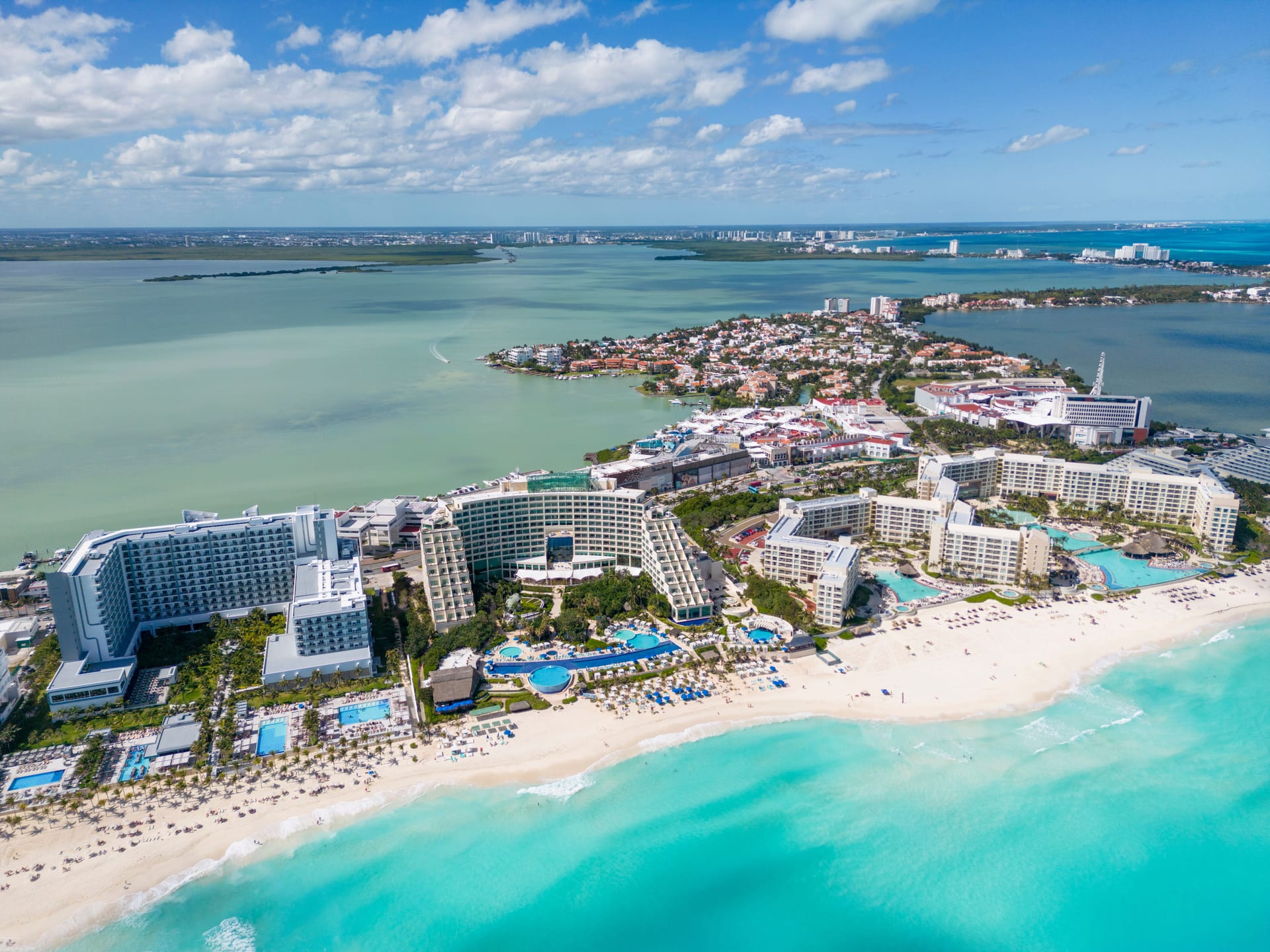
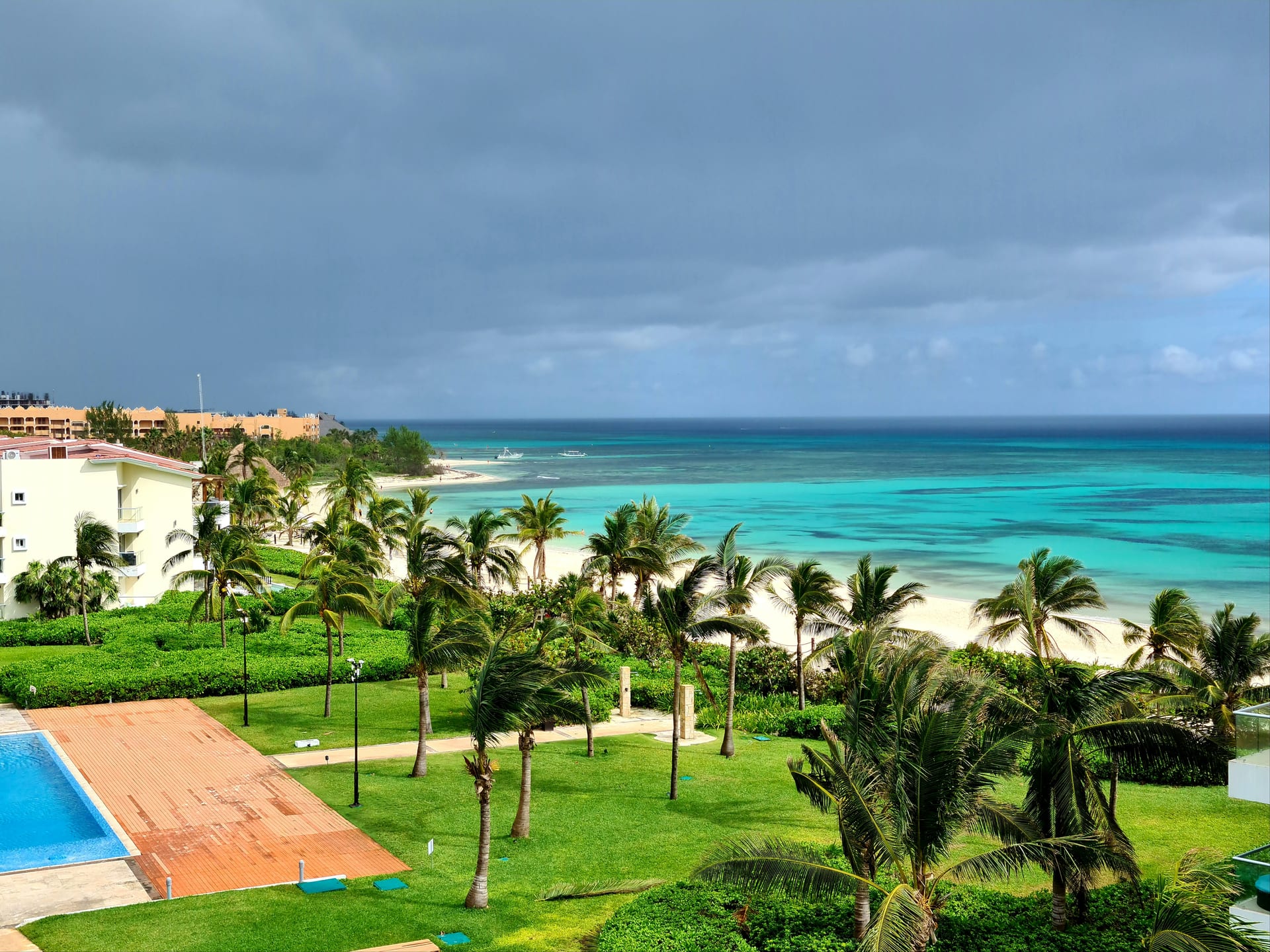
Cancún splits between its hotel zone and a rougher downtown, while Playa del Carmen concentrates visitor life along Quinta Avenida. Both are resort-oriented and beach-led, but Playa's main strip is easier to explore on foot.
The grey shape is all 283 cities; each row says whether lower or higher is better. Ratings out of 10 are our reviewed estimates; the rest is published data. How we measure
Set how much each area counts. The ranking updates as you go. Climate and values are left out because there is no better or worse there, only your taste.
Narrowly best on work & family: 45 vs Playa del Carmen's 42.
Leads on nature & outdoors; stands out for walkability and vegetarian & vegan.
Scores out of 100, averaged from the areas you weighted. For a ranking built around your own situation, take the quiz.
Rent on a new lease, everyday prices and tax.
The year month by month. Whether it suits you is yours to judge.
Solid line: average daytime high. Dashed: night-time low. Point at the chart for any month; point at a city name to shade its range.
How easily you get to water, mountains and green space.
Getting around on foot, food, culture and the feel of the streets.
Crime, how safe people feel, and the care you would get.
Jobs, working culture, schools and raising kids.
Visas, language, paperwork and staying connected.
Where each city sits. There is no right end of these scales.
Getting around generally means a car, and walkability is patchy outside a few pockets. Anyone expecting the texture of a large Mexican city like Guadalajara will find Cancún quieter and more purpose-built.
The core is walkable enough, but it sprawls and leans on cars beyond the center. The pace is relaxed, calmer than Mexico City, with little of the texture of an established place.
Day-to-day violent crime sits at a moderate level and traffic is reasonably orderly, but petty theft and a thinner sense of safety after dark are worth taking seriously. Quintana Roo has seen security concerns tied to organised crime, and the wider national political stability picture is shaky, which weighs on the overall sense of ease.
Safety here is uneven and worth taking seriously. The wider state has seen cartel-linked violence spill into tourist areas, and residents tend to feel less secure walking at night than they would in calmer Mexican cities like Mérida.
Cancún's local market is narrow, with limited industry depth and little professional or startup momentum. Private clinics and hospitals serve the tourist economy and English is spoken more readily here than in much of Mexico, which smooths the experience for newcomers.
Playa del Carmen has a narrow local market, with very limited industry depth and few obvious paths beyond its modest base. Private clinics cover routine needs adequately and many staff speak English, which eases the experience for newcomers.
Food and nightlife are lively in the way a tourism hub tends to be, with plenty of restaurants, bars and an international crowd that makes settling in socially easy. Cancun splits in two: the hotel zone is kept tidy for visitors while downtown is rougher and grimier.
Restaurants, cafes, and nightlife are plentiful and varied, geared to a steady flow of visitors and a large foreign community, and vegetarian eaters are well served. Playa del Carmen is a resort town, its Quinta Avenida strip kept clean for the tourists who fill it.
Playa del Carmen suits someone who wants a compact pedestrian strip by the beach. Cancún offers a slightly broader local job market, though it remains narrow and better for people earning remotely.
These numbers treat everyone the same. The quiz weighs them by your budget, climate taste, family and work, and ranks all 283 cities for you.