
Living in Playa del Carmen
A Caribbean resort town on Mexico's Riviera Maya that grew up around tourism and an outsized international crowd. Day-to-day costs run low and the beach is steps away, but it is far smaller, less rooted, and less culturally deep than Mérida or Mexico City. Life here orbits the coast, the cafes, and a transient expat scene.
Playa del Carmen at a glance
Vital stats
Shown in USD: the local currency (MXN) moves too fast for stable monthly figures.
Where Playa del Carmen stands out
The metrics where Playa del Carmen sits farthest from the middle worldwide, good and bad.
Cheap to arrive, expensive to stay?
A typical one-bedroom in Playa del Carmen runs $559/mo. That is beyond the mean net pay of a typical local employee. This is a solo-newcomer stress test: sitting tenants, shared homes, subsidised housing and informal rents are deliberately outside the numerator.
The fastest way to test a shortlist is to go. A week on the ground tells you things no ranking can.
Partner link
Approved language-learning and international money resources for practical next steps.
Daily life in Playa del Carmen
How Playa del Carmen scores
Category by category
Affordability
63/100Playa del Carmen's open-market one-bedroom rent on a new lease is about $559 per month. The rent-to-income measure reaches its 120% ceiling against one typical employee's mean net pay, so the underlying burden may be higher; the band is beyond local pay.
Climate
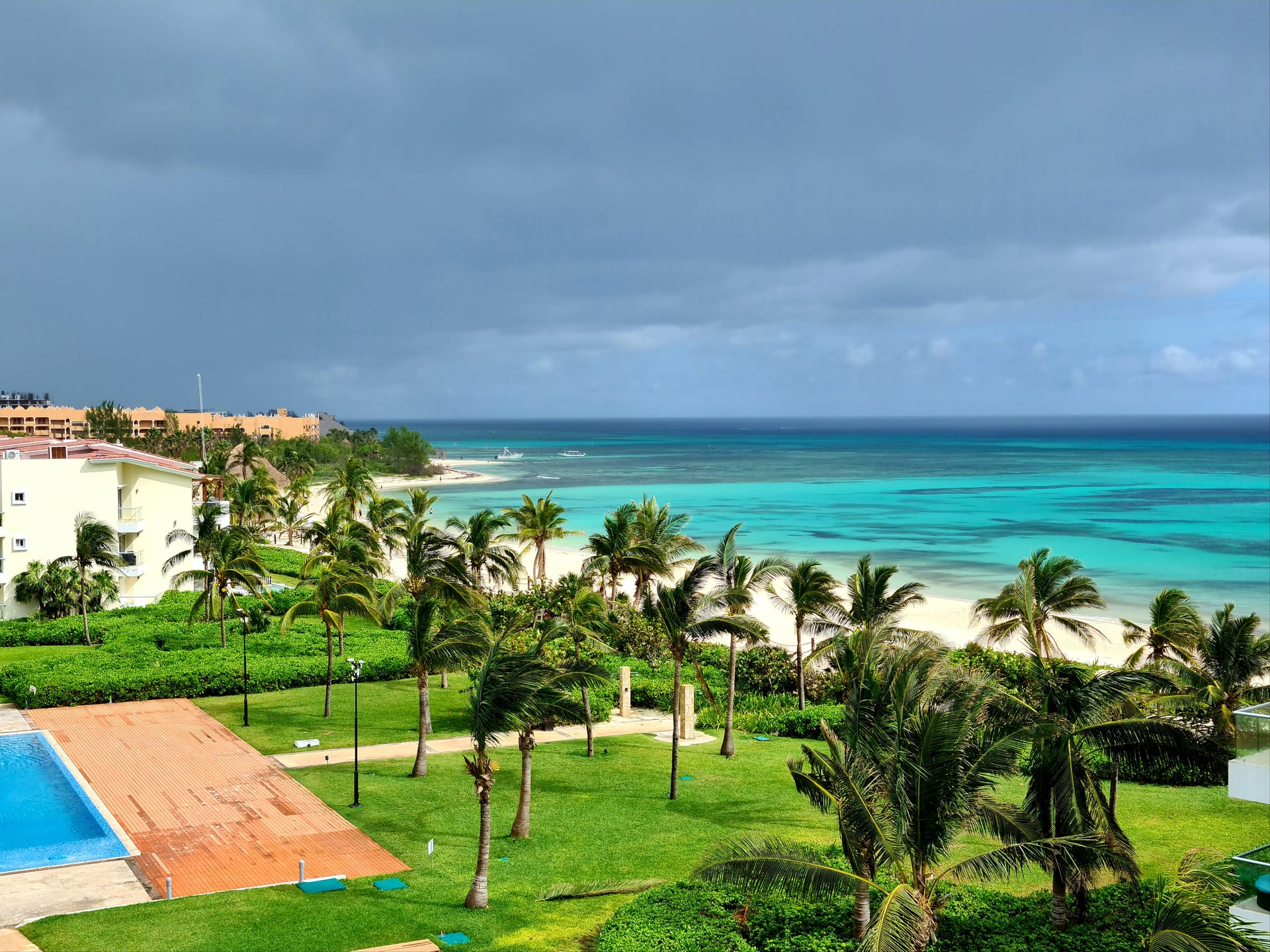
tropicalPlaya del Carmen delivers genuine tropical warmth throughout the year. Persistent mugginess affects almost every day, and storm exposure is high. Skies are less consistently clear than the tropical image implies, with bright spells interrupted by rainy-grey stretches. The clean air is a welcome counterweight.
Nature access
coastalThe beach is the whole point, and on ocean access this is about as good as it gets, with reefs, cenotes, and protected coast all close at hand. Weekends open onto jungle, lagoons, and national parks within easy reach. What it lacks is elevation, there are no mountains or proper hiking, and green space inside the town itself is thin.
Urban form
small cityThis is a small town that swelled fast around tourism, not a real city, so the urban fabric is patchy and built around a single long pedestrian avenue and the highway behind it. The core is walkable enough, but it sprawls and leans on cars beyond the center. The pace is relaxed, calmer than Mexico City, with little of the texture of an established place.
Public life & spaces
56/100Playa del Carmen is a resort town, its Quinta Avenida strip kept clean for the tourists who fill it. Beyond that pedestrian spine there is little civic plaza depth, no real shared square. The beaches and nightlife are mostly pay-gated, and prices skew touristy, so genuinely free daily life is scarce.
Safety
47/100Safety here is uneven and worth taking seriously. The wider state has seen cartel-linked violence spill into tourist areas, and residents tend to feel less secure walking at night than they would in calmer Mexican cities like Mérida. Petty theft is a steady background concern. Broader political stability across Mexico is a weak point too.
Healthcare
46/100Private clinics cover routine needs adequately and many staff speak English, which eases the experience for newcomers. Quality and hospital access are middling rather than strong, and serious or specialist care often means a trip to Cancún or further afield. Doctor availability is thin for the population, and out-of-pocket costs sit higher than in well-funded public systems.
Family life
40/100Not an obvious choice for raising children. Child safety rates poorly and schools are average at best, with the better international options carrying a price. Outdoor childhood is a genuine plus given the climate and coast. But the work culture offers little balance, and parental support is minimal compared with Northern Europe.
Career
43/100Playa del Carmen has a narrow local market, with very limited industry depth and few obvious paths beyond its modest base. Typical local pay is very low by international standards, while remote work is a much better fit for people earning elsewhere. English-language roles exist, but professional networks and the tech scene offer little additional depth.
Culture & food
60/100Restaurants, cafes, and nightlife are plentiful and varied, geared to a steady flow of visitors and a large foreign community, and vegetarian eaters are well served. What is shallow is the deeper cultural layer: museums, music, and rooted local life are limited, and far thinner than in Mérida or Mexico City. This is the most international town on the coast, with a foreign presence rivaling almost anywhere in Mexico.
Ease of integration
74/100Spanish is the language of daily life, but English goes a long way given how international the town is, and the foreign community is one of the largest in the country. That makes a soft landing easy and connections with other newcomers quick to form. The flip side is transience: much of the crowd is passing through, so building lasting, locally rooted ties takes more effort.
Connectivity
37/100The basics function but rarely impress. Digital infrastructure is a real weak spot for a town that sells itself to remote workers, and public transport barely exists, leaving most journeys to colectivos, taxis, or a car. The nearby Cancún airport is a strong asset for getting in and out. Utilities and bureaucracy are serviceable but inconsistent.
Social values
progressiveSocially relaxed and open, helped by the constant flow of foreigners and tourism money. Attitudes toward newcomers and LGBTQ residents are welcoming by regional standards, and public life leans secular and liberal. It is more easygoing on these fronts than smaller, more traditional Mexican cities, though civic trust and gender equality still lag.
Relocation ease
54/100Mexico is one of the easier countries to move to, with an accessible residence path and relatively light barriers to settling in. Spanish helps but is not essential to get started given the English-speaking scene, and cultural adjustment tends to be gentle. Banking and housing paperwork can be fiddly, and the slow grind of local bureaucracy is a familiar frustration.
The trade-offs
A year in Playa del Carmen
Jun peaks around 30°C, Jan days top out near 26°C, and the year brings roughly 167 bright days.
Can you actually move here?
The hard limits people most often bring to a move, scored against Playa del Carmen's data.
Moving with a pet
Bringing a pet to Mexico is straightforward, with simple import requirements and no quarantine for cats and dogs arriving with the right health paperwork. Among relocation destinations this is one of the lower-hassle moves for animals.
Who Playa del Carmen works for
Answer the questionnaire and see where Playa del Carmen lands for you.
Take the free questionnaireWhere else to look
Playa del Carmen vs. comparable cities
Objective scores (0–100) for Playa del Carmen and its 4 nearest comparable cities.
The cities people weigh against Playa del Carmen
Unexpected siblings
Far from Playa del Carmen on the map, close across all 14 categories of daily life.

