
 United States
Charlotte makes sense if
- You want the easier housing and budget equation in this comparison.
Charlotte's newer banking districts and tidy neighbourhoods suit a car-based routine, with housing pressure lower than in Miami. Miami brings Cuban and wider Latin American influence to its restaurants and nightlife, and its cultural calendar stays lively.
The grey shape is all 283 cities; each row says whether lower or higher is better. Ratings out of 10 are our reviewed estimates; the rest is published data. How we measure
Set how much each area counts. The ranking updates as you go. Climate and values are left out because there is no better or worse there, only your taste.
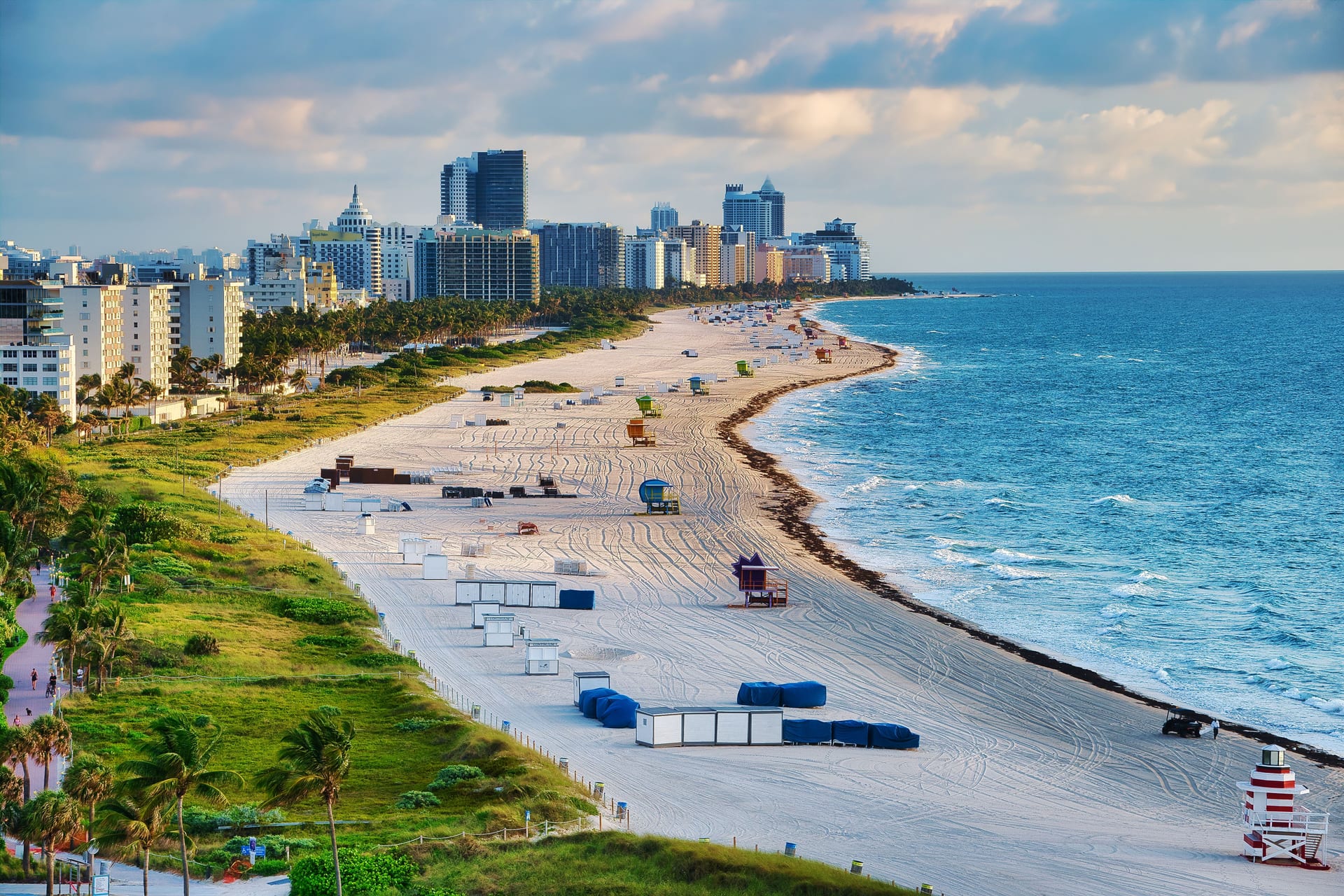
Leads on city life and moving & settling in; stands out for beach & sea and local culture.
Leads on money; stands out for fewer muggy days and easier house-hunting.
Scores out of 100, averaged from the areas you weighted. For a ranking built around your own situation, take the quiz.
Rent on a new lease, everyday prices and tax.
The year month by month. Whether it suits you is yours to judge.
Solid line: average daytime high. Dashed: night-time low. Point at the chart for any month; point at a city name to shade its range.
How easily you get to water, mountains and green space.
Getting around on foot, food, culture and the feel of the streets.
Crime, how safe people feel, and the care you would get.
Jobs, working culture, schools and raising kids.
Visas, language, paperwork and staying connected.
Where each city sits. There is no right end of these scales.
Charlotte has room, but its urban life is spread thin. The suburbs are comfortable and spacious, while mixed-use streets and a continuous walkable centre remain limited.
Miami sprawls. Outside a few dense pockets it is a car city through and through, with low walkability and neighbourhoods stitched together by highway rather than sidewalk, much like Los Angeles.
A middling safety read for a larger Sun Belt city. Petty crime, perceived safety, and walking around after dark all sit in average territory, neither reassuring nor alarming.
Serious violent crime is lower than its reputation suggests, but day-to-day petty crime and how safe the streets feel after dark sit in middling territory, on par with Los Angeles and a notch below New York. Driving is the real hazard, with traffic safety worse than most large US peers.
Charlotte combines a deep local job market with low unemployment and abundant English-language work. Clinical access is the strong half: good hospital coverage, reliable emergency care, and care delivered entirely in English.
Across several industries, Miami offers a solid English-speaking market. The medical care itself is strong, with good hospitals, capable specialists, and English spoken everywhere in the system.
A respectable mid-tier scene that rewards locals more than visitors. Costs stay moderate rather than cheap, and the free-culture offering is modest.
Nightlife is world-class, the restaurant scene is broad and ambitious, and the Cuban and wider Latin American influence gives the food a character no other US city replicates. Miami is glamorous and clean where it wants to be, grittier across the sprawl beyond.
Charlotte makes more sense if housing costs and a deep local job market come first. Miami is the pick for food, music and nightlife with an unmistakably international character.
These numbers treat everyone the same. The quiz weighs them by your budget, climate taste, family and work, and ranks all 283 cities for you.