
 Thailand
 Vietnam
Chiang Mai makes sense if
- You want the easier housing and budget equation in this comparison.
- Access to stronger healthcare matters most to you.
Chiang Mai's temples, Lanna food and cafe scene create an easygoing daily rhythm, and private clinics offer decent English-speaking care. Hanoi has more local employment depth, though its pay is modest and English-first roles are scarce.
The grey shape is all 283 cities; each row says whether lower or higher is better. Ratings out of 10 are our reviewed estimates; the rest is published data. How we measure
Set how much each area counts. The ranking updates as you go. Climate and values are left out because there is no better or worse there, only your taste.
Leads on nature & outdoors and moving & settling in; stands out for hiking and space for the money.
Leads on city life; stands out for job market and professional network.
Scores out of 100, averaged from the areas you weighted. For a ranking built around your own situation, take the quiz.
Rent on a new lease, everyday prices and tax.
The year month by month. Whether it suits you is yours to judge.
Solid line: average daytime high. Dashed: night-time low. Point at the chart for any month; point at a city name to shade its range.
How easily you get to water, mountains and green space.
Getting around on foot, food, culture and the feel of the streets.
Crime, how safe people feel, and the care you would get.
Jobs, working culture, schools and raising kids.
Visas, language, paperwork and staying connected.
Where each city sits. There is no right end of these scales.
A genuinely small, low-rise city that moves at a calm pace, far removed from the intensity of Bangkok. The old walled center is compact and human-scaled, but the place sprawls outward and most daily life runs on scooters and cars rather than transit or footpaths.
A low-rise, motorbike-driven sprawl rather than a vertical metropolis, with walkability held back by patchy pavements and relentless two-wheeled traffic. Getting around without a scooter is hard, and neighbourhoods blur into one another.
Violent crime is rare and the city feels relaxed day and night, in line with Thailand's generally low-crime reputation. The serious caveat is the roads: traffic deaths are high, scooter accidents common, and driving standards loose.
Violent crime is rare and the homicide rate is very low, on par with Ho Chi Minh City and not far off Berlin. Streets feel safe to walk at night, and petty crime is manageable by regional standards.
Chiang Mai is a poor fit for a conventional local career: the market is small, English-language access is limited and local pay is very low. Care is decent for the cost, with private hospitals that handle most needs and reasonable English among staff used to foreign patients.
Hanoi's local market functions and unemployment is exceptionally low, but local pay is low by the wider benchmark. Public healthcare is middling, with doctors stretched thin and emergency reliability that lags Bangkok.
Northern Thai food is the daily pleasure, and the cafe scene is exceptional, easily rivalling Bangkok and reflecting a strong local culture rooted in temples, crafts, and Lanna traditions. Chiang Mai is calmer and easier than Bangkok, though seasonal burning smog and dust still settle over it.
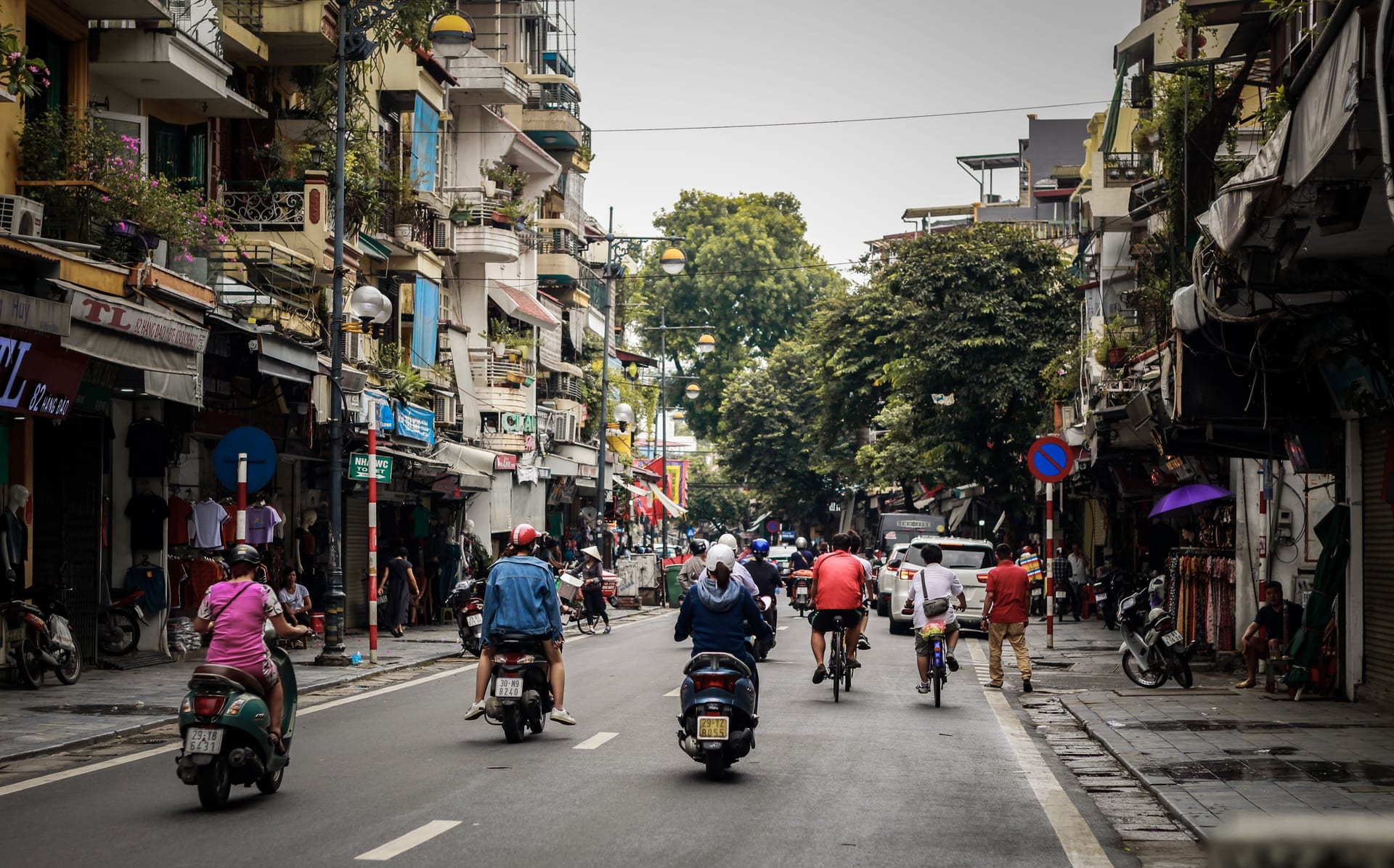
The cafe culture is exceptional, the local food scene runs deep and the sense of distinct, intact local identity is among the strongest in the region. Hanoi's Old Quarter is a glorious tangle of traffic, fumes and street grime, with cared-for space limited to Hoan Kiem lake and a few French-era squares.
Chiang Mai suits someone bringing remote work and wanting a gentler food-and-cafe routine with accessible private care. Hanoi is a stronger choice for locally based work, provided you have a clear plan for language and income.
These numbers treat everyone the same. The quiz weighs them by your budget, climate taste, family and work, and ranks all 283 cities for you.