Affordability
74/100Hanoi's open-market one-bedroom rent on a new lease is about $272 per month. That is roughly 92% of one typical employee's mean net pay, a rent burden labelled solo unlikely.
Climate
subtropicalA distinct cooler season gives Hanoi some seasonal variety, but summer is hot, humid, and oppressive. The sky brings only about 135 bright days and 140 rainy-grey days a year, while air quality is a serious weakness. Seasonal darkness is limited, so haze and moisture matter more than short winter days.
Nature access
lakes & riversGreenery inside the city is thin, with little park space per resident and few large open spaces to escape to on foot. What saves it is the surroundings: limestone karsts, the northern mountains and Halong Bay are all within weekend reach, giving strong escape potential beyond the urban sprawl. Lakes dot the city itself, more than most regional capitals manage.
Urban form
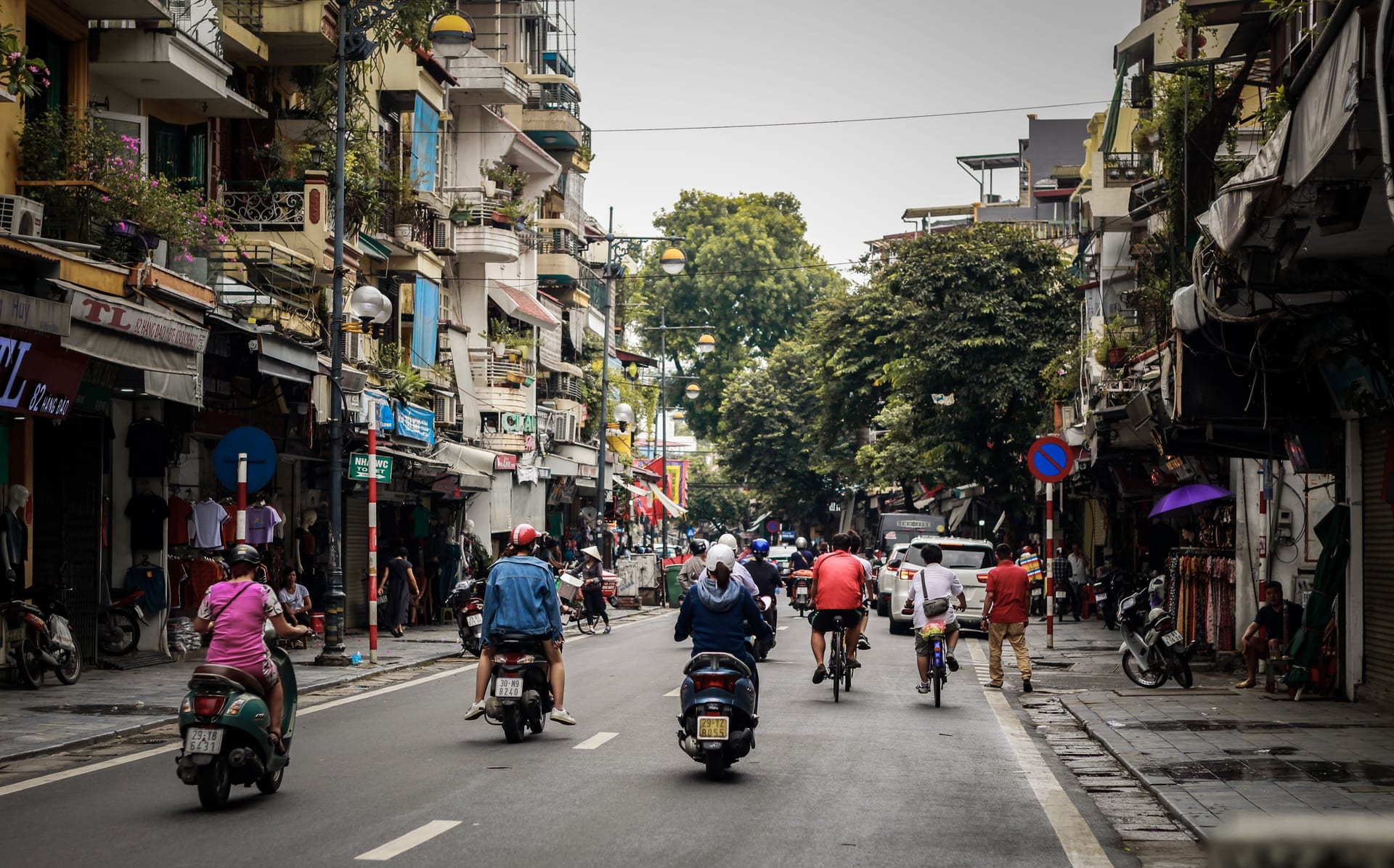
megacityA low-rise, motorbike-driven sprawl rather than a vertical metropolis, with walkability held back by patchy pavements and relentless two-wheeled traffic. Getting around without a scooter is hard, and neighbourhoods blur into one another. The pace, though, is noticeably calmer than Tokyo or Ho Chi Minh City, closer to Bangkok's everyday rhythm.
Public life & spaces
52/100Hanoi's Old Quarter is a glorious tangle of traffic, fumes and street grime, with cared-for space limited to Hoan Kiem lake and a few French-era squares. But that chaos is the appeal: pavement cafés, lakeside mornings and street food cost almost nothing and run all day. Clean and orderly it is not.
Safety
65/100Violent crime is rare and the homicide rate is very low, on par with Ho Chi Minh City and not far off Berlin. Streets feel safe to walk at night, and petty crime is manageable by regional standards. The serious danger is the roads: traffic is chaotic and the accident rate is high, among the region's worst.
Healthcare
46/100Public healthcare is middling, with doctors stretched thin and emergency reliability that lags Bangkok. Private and international clinics fill the gap for those who can pay, and out-of-pocket costs stay low. English-speaking care exists but is patchier than in Manila or Singapore, so expats often lean on a handful of known international hospitals.
Family life
42/100A workable rather than outstanding place to raise children. Childcare is affordable and easy to arrange, child safety is reasonable, and the work culture leaves more breathing room than Tokyo's. Schools and family housing are middling, and outdoor childhood options are limited by the thin green space and traffic.
Career
66/100Hanoi's local market functions and unemployment is exceptionally low, but local pay is low by the wider benchmark. English-first roles are scarce. Remote work is the stronger route for people earning abroad, while the local pay scale remains a serious constraint.
Culture & food
75/100This is where Hanoi shines. The cafe culture is exceptional, the local food scene runs deep and the sense of distinct, intact local identity is among the strongest in the region. Restaurants, nightlife and museums are all solid. The international community is smaller and the language barrier higher than in Bangkok, so the texture is more authentically Vietnamese than expat-polished.
Ease of integration
52/100Daily life runs in Vietnamese, and English thins out quickly away from tourist zones and younger crowds, so making local friends takes effort and some language learning. Locals tend to be warm and open to foreigners, more so than in Tokyo. The expat scene is smaller and tighter than the sprawling networks of Bangkok or Ho Chi Minh City.
Connectivity
36/100A weak spot overall. Public transport is thin, a young metro only just taking shape, and cycling infrastructure is close to nonexistent in the motorbike crush. Digital connectivity is a bright spot, with fast, cheap internet on par with Bangkok. The airport connects well across Asia but trails Bangkok's hub, and intercity rail is slow.
Social values
mixedPublic life is fairly secular and everyday openness to foreigners is decent, ahead of Tokyo. Society leans traditional and conservative, with social liberalism more muted than in Bangkok or Berlin, though attitudes toward LGBTQ life are quietly more relaxed than the formal picture suggests. Civic trust and institutional orderliness are low.
Relocation ease
42/100Settling in takes patience. Visas and work authorization are more of a slog than in Bangkok or Tokyo, bureaucracy is paper-heavy, and the language barrier is steep with no easy English fallback. The compensation is housing: finding a place to rent is genuinely easy, quicker and less fraught than almost anywhere comparable.