 France
Marseille makes sense if
- You want the broader career options in this comparison.
- You want the deeper culture and food scene.
Marseille and Montpellier cost almost the same, yet they feel markedly different. Montpellier is safer, cleaner, and easier to navigate, while Marseille brings the deeper port culture, food scene, and access to the Calanques.
The grey shape is all 283 cities; each row says whether lower or higher is better. Ratings out of 10 are our reviewed estimates; the rest is published data. How we measure
Set how much each area counts. The ranking updates as you go. Climate and values are left out because there is no better or worse there, only your taste.
Narrowly best on city life: 65 vs Marseille's 62; stands out for cycling infrastructure and running & cycling routes.
Narrowly best on moving & settling in: 62 vs Montpellier's 60; stands out for flight connections and local culture.
Scores out of 100, averaged from the areas you weighted. For a ranking built around your own situation, take the quiz.
Rent on a new lease, everyday prices and tax.
The year month by month. Whether it suits you is yours to judge.
Solid line: average daytime high. Dashed: night-time low. Point at the chart for any month; point at a city name to shade its range.
How easily you get to water, mountains and green space.
Getting around on foot, food, culture and the feel of the streets.
Crime, how safe people feel, and the care you would get.
Jobs, working culture, schools and raising kids.
Visas, language, paperwork and staying connected.
Where each city sits. There is no right end of these scales.
A compact, human-scaled city after the sprawl of Paris, walkable in its core and built on a workable mix of homes, shops and life at street level. It is smaller and less dense than the capital, which suits people who want a big-city feel without the crush.
Montpellier is compact and built for walking, with a tight medieval core and tram lines that make a car optional. It is a mid-sized city rather than a metropolis, so it lacks the heft of Lyon or Marseille but keeps a human scale.
Marseille's reputation is worse than its recorded crime. Traffic safety is reasonable.
Violent crime is rare and the city feels secure on that front, with traffic safety also strong. Where it slips is petty crime, the pickpocketing and opportunistic theft common to busy southern European cities, so the streets ask for ordinary city awareness rather than worry.
The local market is limited in breadth. Backed by France's strong public system, with good hospitals, capable specialists and very low out-of-pocket costs once enrolled.
The local market remains thin, with high unemployment and few roles designed for English-only applicants. France's public system delivers solid quality care here, with good hospitals and emergency cover and low out-of-pocket costs once enrolled.
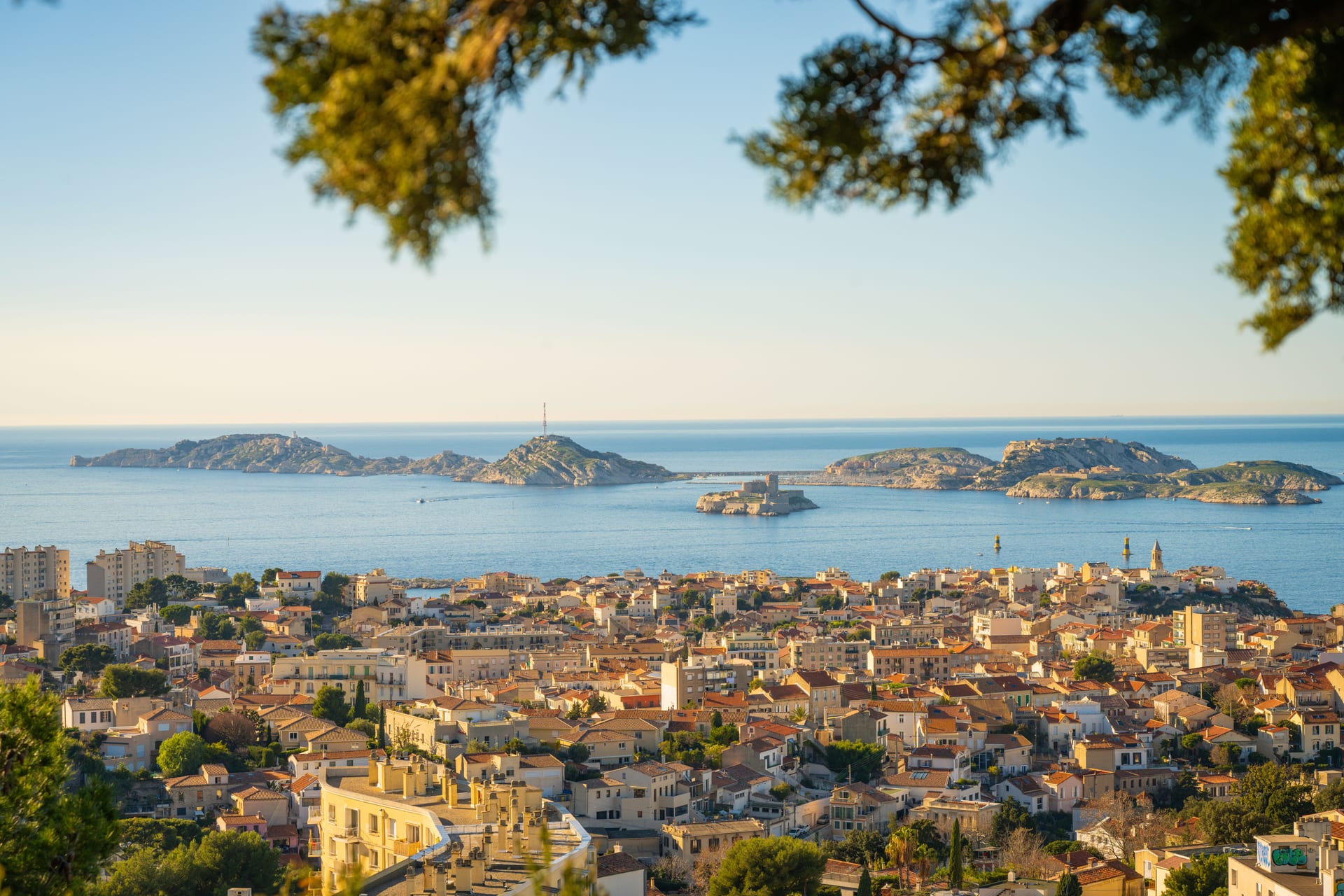
Marseille's fierce local identity is its strongest cultural asset, a port culture shaped by North African, Italian and Provençal layers and proud of being nothing like Paris. What redeems it is the sea: the Vieux-Port, the seafront, the Calanques on the doorstep, all alive and free.
There is plenty of life for a city this size, fuelled by a large student population. Montpellier is a clean, sunny southern city, its student-filled old town well kept and walkable.
Choose Montpellier for safety, walkable public life, and a lively student setting; healthcare is marginally stronger there. Choose Marseille for its narrow career lead, distinctive food, maritime character, and immediate coastal nature, with more everyday grit.
These numbers treat everyone the same. The quiz weighs them by your budget, climate taste, family and work, and ranks all 283 cities for you.