 Fiji

 New Zealand
Nadi makes sense if
- You want the easier housing and budget equation in this comparison.
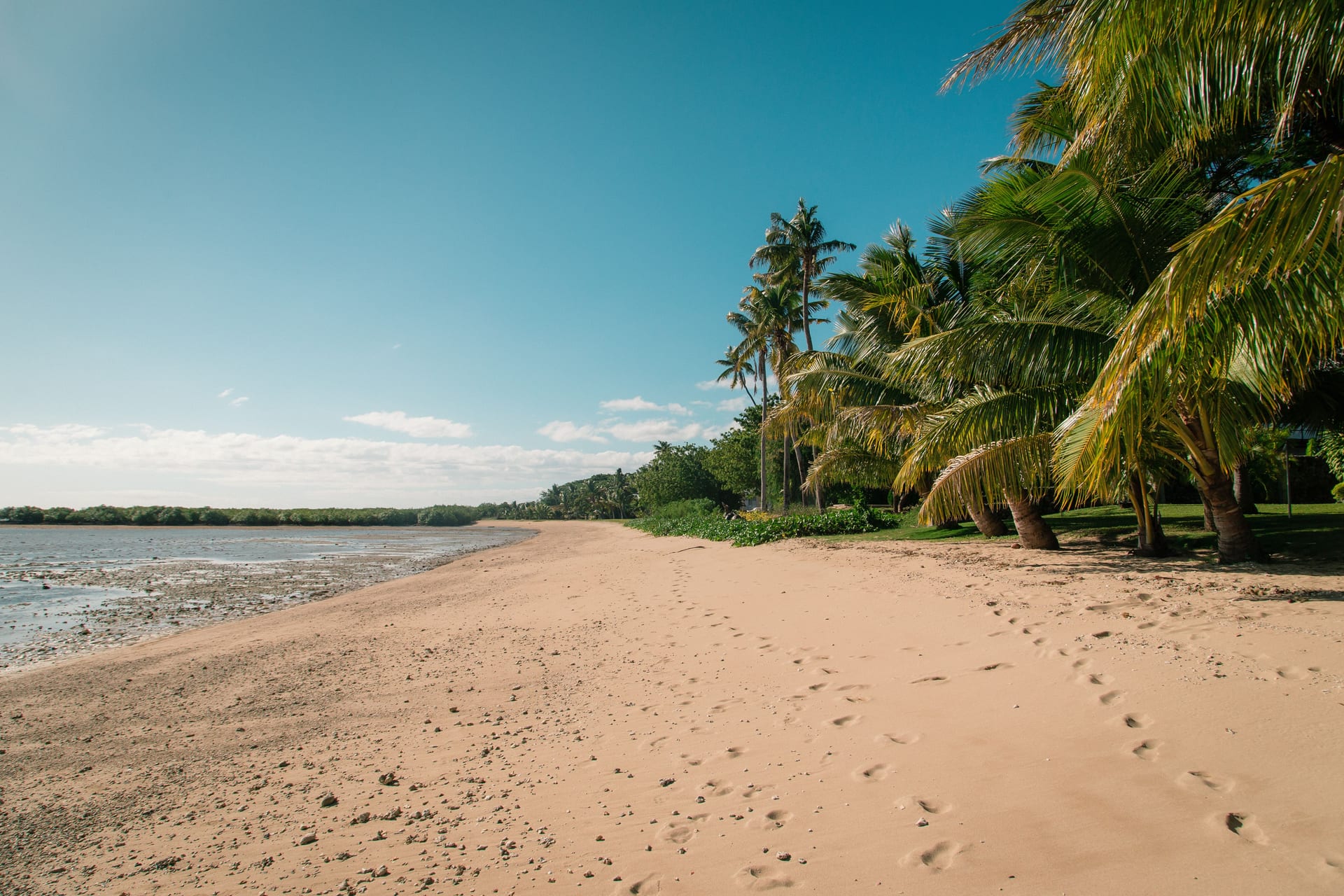
Nadi is a sleepy tropical town where warm water is close, but urban amenities and career choices are sparse. Wellington has a walkable capital core and clean air, with damp grey weather and a compact job market.
The grey shape is all 283 cities; each row says whether lower or higher is better. Ratings out of 10 are our reviewed estimates; the rest is published data. How we measure
Set how much each area counts. The ranking updates as you go. Climate and values are left out because there is no better or worse there, only your taste.
Leads on nature & outdoors, city life, safety & health, work & family and moving & settling in; stands out for fewer muggy days and cafés.
Leads on money; stands out for cheaper eating out and brighter winters.
Scores out of 100, averaged from the areas you weighted. For a ranking built around your own situation, take the quiz.
Rent on a new lease, everyday prices and tax.
The year month by month. Whether it suits you is yours to judge.
Solid line: average daytime high. Dashed: night-time low. Point at the chart for any month; point at a city name to shade its range.
How easily you get to water, mountains and green space.
Getting around on foot, food, culture and the feel of the streets.
Crime, how safe people feel, and the care you would get.
Jobs, working culture, schools and raising kids.
Visas, language, paperwork and staying connected.
Where each city sits. There is no right end of these scales.
Nadi is a small town, not a city, and it shows. It is spread out and car-dependent, with limited walkability and a quiet, unhurried tempo.
Wellington is a small, low-density city with a core that is easy to walk. The wider layout is quieter and less connected, with middling car dependence and mixed-use neighbourhoods that do not cover every daily need.
Serious violent crime is rare, and the place feels broadly calm. Opportunistic theft is a more realistic concern, and walking around late at night warrants ordinary caution.
Violent crime is rare, the streets feel calm day and night, and the country's political stability is rock solid. Petty theft exists as it does anywhere, but the overall sense of personal security is one of Wellington's quiet strengths.
Local work in Nadi is extremely narrow and concentrated in a few industries. Healthcare is the weak point.
Local jobs are a reasonable option, with strong English-language access and a modest technology base. Care is solid and reliable, with dependable emergency services and no language barrier in any clinic or hospital.
Local Fijian and Indo-Fijian culture is genuine and present, and everything happens in English, which makes daily life easy to slot into. What it has is cheap: the beaches and markets are free, living costs little, and there's a modest run of events.
The cafe and coffee scene is excellent, restaurants and arts venues are strong, and the national museum anchors a lively events calendar. Wellington is clean and compact, its walkable waterfront and cafe-dense centre a pleasure to wander, with the free Te Papa museum anchoring the harbour edge.
Wellington is the stronger fit for walkable city life and capital services, if you can accept changeable, damp weather and a smaller job market. Nadi suits someone seeking tropical warmth and island access, with work and services arranged in advance.
These numbers treat everyone the same. The quiz weighs them by your budget, climate taste, family and work, and ranks all 283 cities for you.