Affordability
64/100Hobart's open-market one-bedroom rent on a new lease is about A$1,719 per month. That is roughly 34% of one typical employee's mean net pay, a rent burden labelled manageable solo.
Climate
temperateHobart has mild summers and cool winters, with very little muggy weather and exceptionally clean air. About 188 bright days a year sit alongside roughly 87 rainy-grey days, making winter changeable and sometimes grey. Wildfire smoke remains a notable risk, even though severe-weather risk is otherwise low.
Nature access
great hikingThis is the city's defining strength. Wilderness sits genuinely at the edge of town, with kunanyi/Mount Wellington rising over the suburbs and Tasmania's national parks and wild coastline within easy reach. Hiking, forest, mountains, and water access all rate near the top of the scale. For weekend escapes into nature, few places match it.
Urban form
mid-sizedWith a metro population of about 255,250, Hobart is genuinely small and low-density. That keeps neighbourhoods roomy and suburban life calm, but it also means limited mixed-use urbanism, modest walkability, and strong reliance on cars. The centre has workable walking pockets, while the wider city feels more like a large town.
Public life & spaces
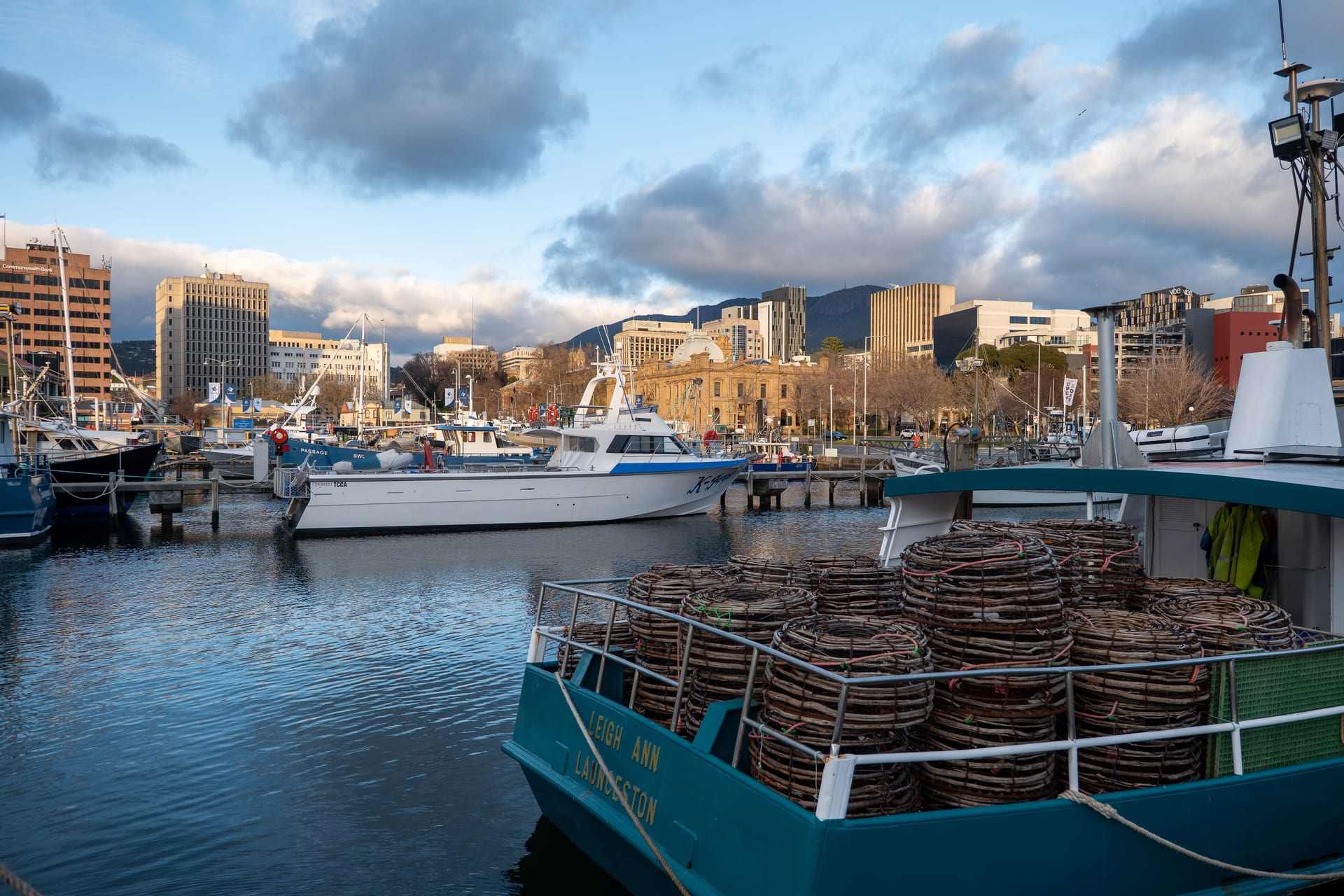
81/100Hobart is clean and compact, its historic Salamanca waterfront genuinely walkable and well-kept. The Saturday Salamanca market and the harbour edge are free, and it runs cheaper than the mainland cities. It's small, though — the public realm is modest in scale, and much of life here is quiet by design.
Safety
85/100One of the safer corners of an already safe country. Violent crime is rare, the streets feel calm after dark, and residents report a strong everyday sense of security. Traffic is light and the small scale keeps things orderly. On this axis Hobart edges out even larger Australian cities.
Healthcare
69/100Care is solid and entirely English-speaking, with competent hospitals and reasonable emergency cover. As a smaller capital, though, it carries fewer specialists and less hospital depth than Sydney or Melbourne, so complex cases can mean travelling to the mainland. For routine needs it works well.
Family life
68/100A strong choice for raising children, built on safety, good schools, and an outdoor childhood that is hard to beat anywhere. Parks and playgrounds are plentiful and the work-life rhythm is unhurried. Childcare supply and the cost of family-sized housing are the softer spots, much as across Australia.
Career
53/100The weakest part of the picture by a wide margin. The job market is thin and narrow, professional networks are small, and there is almost no startup or tech ecosystem to speak of compared with Sydney or Melbourne. Unemployment is low and English-language work is universal, but anyone needing a broad career market will feel the limits. Remote workers fare best.
Culture & food
71/100Punches above its size thanks to a serious art and museum scene, good cafes, and a distinctive local food and drink culture. Restaurants and produce are well regarded, even if the range is narrower than the mainland capitals. Nightlife is quiet, and the international community stays small, so the city can feel insular to some newcomers.
Ease of integration
59/100English is the native language, so day-to-day life and admin carry no language barrier, and the culture is open, secular, and socially liberal. The flip side is a small, fairly homogeneous population with little of the diversity found in Sydney or Melbourne. Locals are friendly, but breaking into established circles in a tight-knit place takes patience.
Connectivity
46/100This is where the small scale bites. Public transport is limited and built around buses, there is no intercity rail, and air links are thin, with most journeys routing through the mainland. Internet and utilities are dependable and roads rarely clog, but getting around without a car, or flying far, is harder than in any major Australian city.
Social values
progressiveLiberal, secular, and easygoing, in line with the Australian mainstream. Attitudes toward LGBTQ residents and gender equality are progressive, and public life is relaxed and tolerant. The population is less internationally diverse than the big cities, but the prevailing outlook is open and accepting.
Relocation ease
57/100Australia's visa and work-authorization process is a real hurdle and not quick, the same gate every Australian city sits behind. Once through, the lack of a language barrier and straightforward banking and admin smooth the landing considerably. Finding housing in a tight local market is the main day-to-day friction.