Affordability
74/100Suva's open-market one-bedroom rent on a new lease is about $381 per month. That is roughly 62% of one typical employee's mean net pay, a rent burden labelled sharing likely.
Climate
tropicalSuva stays warm throughout the year, with little seasonal darkness and air that is cleaner than in many cities. The problem is the sky and the feel of the air: only about 70 days are bright, with roughly 212 rainy-grey days and muggy conditions for almost the whole year. Severe-weather risk is the clear trade-off.
Nature access
forestedThe wider setting is the draw. Forests, hills and national parks sit within easy reach for weekends, and the rainforest interior is genuinely close. Inside the city itself green space is thinner, with only a handful of parks and limited room per person, and the cycling and running infrastructure is modest.
Urban form
small cityThis is a small, low-rise harbour city, tiny next to the Pacific-rim metros and slow in tempo. Walkability around the compact centre is workable but limited, and most longer trips lean on a car or minibus. Anyone after the density and bustle of a big city will find Suva quiet by comparison.
Public life & spaces
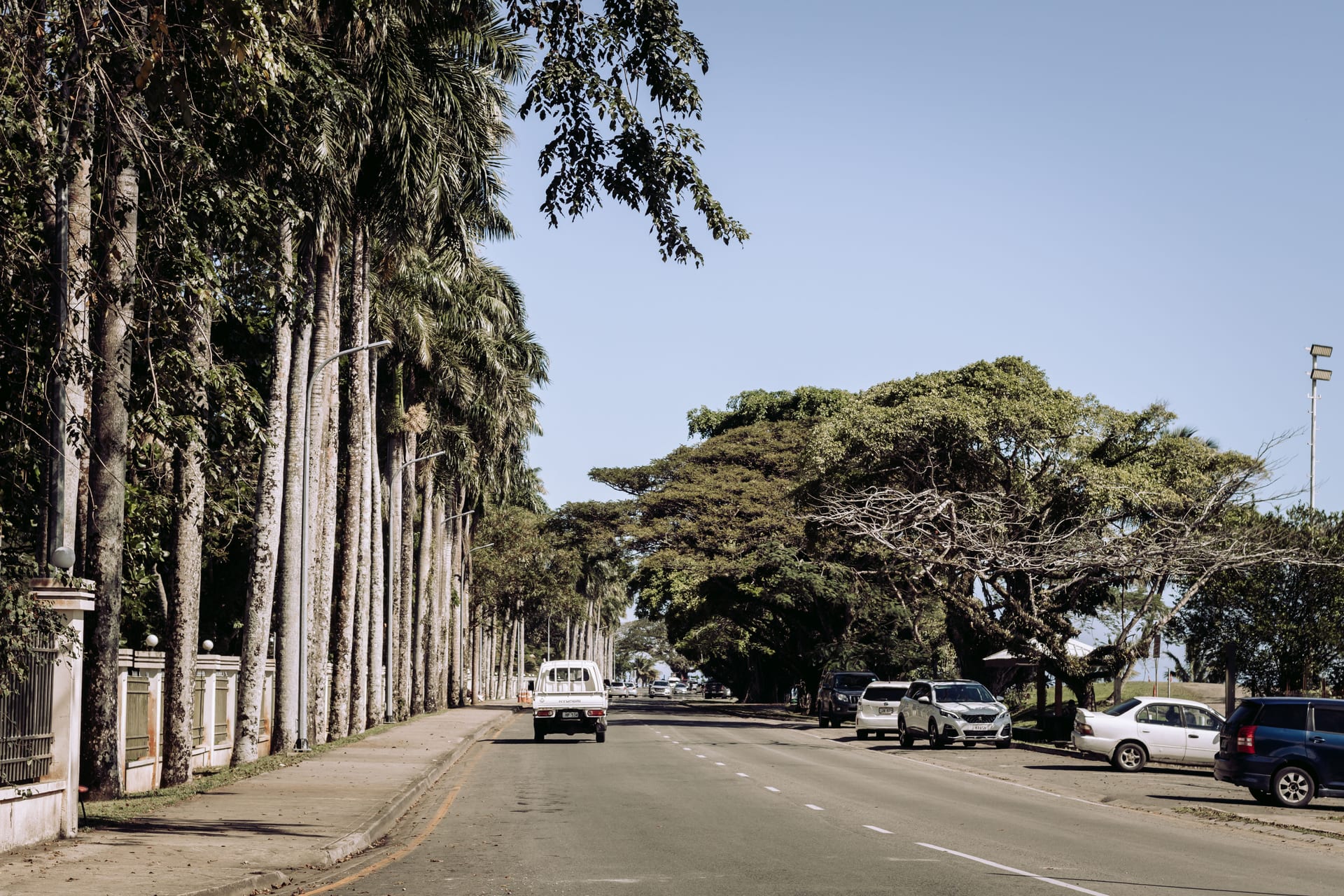
33/100Suva, Fiji's humid capital, is worn and patchily kept, its civic space limited to some colonial buildings and the seawall. But life here is cheap and lived outdoors — the markets are lively, the coast is free, and there's a modest local culture. It's affordable, not polished; the upkeep is thin.
Safety
63/100Serious violent crime is rare, and the homicide rate sits low, which underpins a generally safe feel by day. Petty theft and opportunistic crime are more of a concern, and walking alone late at night warrants some caution. Politically the country has had its turbulent stretches but reads as broadly stable now.
Healthcare
43/100This is one of Suva's weaker axes. Hospital quality, emergency care and the number of doctors all sit low, and serious cases are often referred onward to Australia or New Zealand. The clear upside is language: care is delivered in English, so navigating the system is straightforward for newcomers.
Family life
45/100Family life leans heavily on the outdoors, with a relaxed work-life rhythm and reasonably available childcare. The harder parts are formal: school quality is limited, parental leave provision is thin, and parents seeking strong academic options often look to private or international schooling.
Career
41/100Local work is limited and specialist industries are thin, although English-language roles are relatively accessible. Suva suits people with income already secured better than those relying on a local job search. Local pay is low, and the professional network and technology scenes offer little depth.
Culture & food
50/100The strength here is the living Fijian and Indo-Fijian culture, woven through food, markets and everyday life, and the ease of getting by in English. Restaurants and cafes cover the basics rather than dazzle, and nightlife, museums and the arts scene stay modest. Expect warmth and authenticity over a polished urban menu.
Ease of integration
63/100With English as the main language alongside Fijian and Hindi, the language barrier essentially disappears for English speakers, which makes early connections far easier. Fijians are known for being notably open and welcoming to outsiders, and cultural adjustment tends to be gentle. The local social fabric is friendly and informal, so newcomers integrate without much friction.
Connectivity
23/100Infrastructure is one of the city's real constraints. Public transport is basic, there are no intercity trains, internet speeds lag, and utilities can be unreliable. Government processes remain heavily paper-based and slow to digitize. Traffic, on the small scale of the city, is at least manageable.
Social values
traditionalSuva is socially conservative and fairly traditional, with religion woven into public life and limited movement on LGBTQ acceptance, gender equality and broader liberal attitudes. The notable exception is a genuine openness to foreigners. Newcomers find a warm welcome, even if prevailing social values stay traditional.
Relocation ease
53/100The biggest advantage is the absence of a language barrier, which smooths almost everything, and cultural adjustment for most arrivals is gentle. Finding housing is relatively easy. Working against that are slow, paper-heavy bureaucracy, awkward work authorization, and banking setup that takes patience.