
 Côte d'Ivoire
 Spain
Abidjan makes sense if
- You want the broader career options in this comparison.
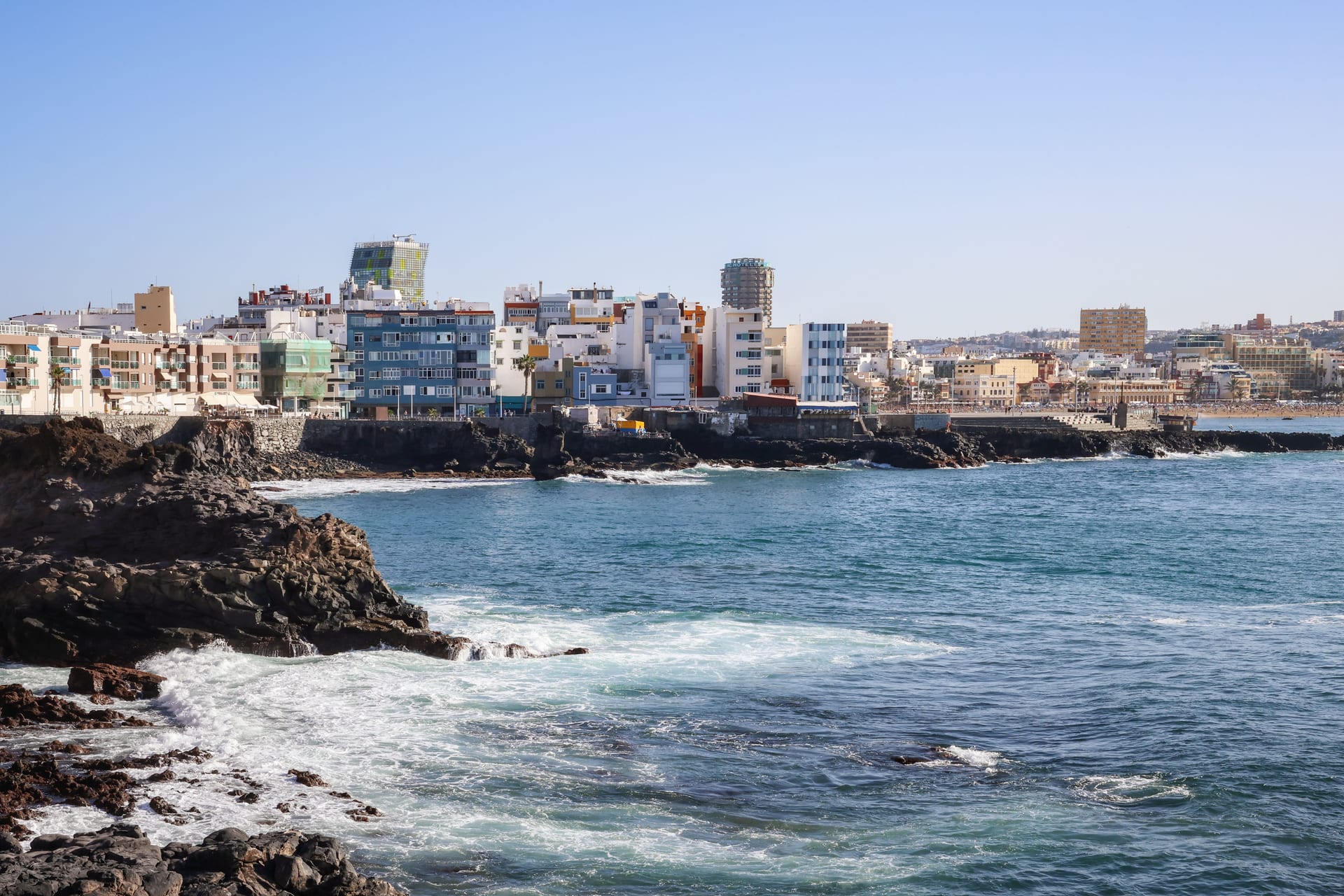
Las Palmas de Gran Canaria offers a walkable old town, the Las Canteras promenade and a mild Atlantic climate; portable income makes that life easier to sustain. Abidjan is a larger Francophone business hub with more local career options, but infrastructure and services are less dependable. The choice is an easy coastal routine or a work-led urban base.
The grey shape is all 283 cities; each row says whether lower or higher is better. Ratings out of 10 are our reviewed estimates; the rest is published data. How we measure
Set how much each area counts. The ranking updates as you go. Climate and values are left out because there is no better or worse there, only your taste.
Leads on nature & outdoors, city life, safety & health, work & family and moving & settling in; stands out for fewer muggy days and bright days.
Tied best on money with Las Palmas de Gran Canaria, both 72; stands out for forests and job market.
Scores out of 100, averaged from the areas you weighted. For a ranking built around your own situation, take the quiz.
Rent on a new lease, everyday prices and tax.
The year month by month. Whether it suits you is yours to judge.
Solid line: average daytime high. Dashed: night-time low. Point at the chart for any month; point at a city name to shade its range.
How easily you get to water, mountains and green space.
Getting around on foot, food, culture and the feel of the streets.
Crime, how safe people feel, and the care you would get.
Jobs, working culture, schools and raising kids.
Visas, language, paperwork and staying connected.
Where each city sits. There is no right end of these scales.
A large, fast-moving, fairly dense city where getting around really means a car. Walkability is poor, pedestrian planning is weak, and the quality of residential neighbourhoods and outer suburbs is uneven.
A compact, low-rise city with an unhurried pace, calmer than busy Madrid and on a par with Málaga. The core is walkable and daily life rarely demands a car, though it spreads out rather than rising into a dense centre.
Recorded homicide is low for the region, which sets it apart from a place like Lagos, but petty street crime, perceived safety, and comfort walking after dark all rate poorly, so caution becomes a daily habit. Road safety is middling, and the broader political backdrop has been historically unsettled.
Reassuringly safe. Violent crime is very low, the roads are among the safer in the region, and walking around at night feels comfortable, in line with other Spanish cities.
Abidjan has a functioning local market and low unemployment, but it remains thin on industry breadth, professional networks, and startup depth. The supply of doctors is very thin, hospital access and overall care quality are limited, and emergency reliability cannot be counted on.
Local employment is the clear limitation in Las Palmas. Solid, dependable public healthcare without quite the depth of the big mainland hospitals in Madrid.
The strongest reason to be here. Abidjan runs on energy more than upkeep: litter collects, drains clog, and cared-for public space barely reaches past the Plateau towers and the lagoon edge.
A capable food and culture scene with a notably large international community, though a step down from the mainland heavyweights. Las Palmas keeps its beachfront and centre decently kept, with a few worn districts at the edges.
Las Palmas is the clearer fit if you can bring your income and want walkable streets, beaches and reliable everyday services. Abidjan offers more local career momentum, but English-language roles are scarce and daily logistics take effort. A confirmed job can make Abidjan worthwhile; without one, the island's simpler routine has a stronger case.
These numbers treat everyone the same. The quiz weighs them by your budget, climate taste, family and work, and ranks all 283 cities for you.