
Living in Abidjan
Côte d'Ivoire's economic engine and one of West Africa's biggest cities, the Francophone counterweight to Anglophone Lagos and Accra. Daily life runs cheap and the cultural energy is real, but healthcare, schools, and basic infrastructure lag well behind, and local incomes are low.
Abidjan at a glance
Vital stats
Shown in USD: the local currency (XOF) moves too fast for stable monthly figures.
Where Abidjan stands out
The metrics where Abidjan sits farthest from the middle worldwide, good and bad.
Cheap to arrive, expensive to stay?
A typical one-bedroom in Abidjan runs $249/mo. That is beyond the mean net pay of a typical local employee. This is a solo-newcomer stress test: sitting tenants, shared homes, subsidised housing and informal rents are deliberately outside the numerator.
The fastest way to test a shortlist is to go. A week on the ground tells you things no ranking can.
Partner link
Approved language-learning and international money resources for practical next steps.
Daily life in Abidjan
How Abidjan scores
Category by category
Affordability
68/100Abidjan's open-market one-bedroom rent on a new lease is about $249 per month. The rent-to-income measure reaches its 120% ceiling against one typical employee's mean net pay, so the underlying burden may be higher; the band is beyond local pay.
Climate
tropicalAbidjan is warm with little seasonal variation, but the wet season shapes daily life. Only about 87 days are bright, while roughly 187 are rainy-grey, and muggy conditions are near constant. The city avoids a cold season, yet humidity and limited clear weather make the climate tiring for some.
Nature access
forestedNot a city for outdoor escape. Green space per resident is scarce, there are no mountains or real hiking nearby, and routes for running or cycling are thin. The redeeming feature is the Atlantic coast, with beaches a short trip away, plus lagoons and patches of forest within reach on a weekend.
Urban form
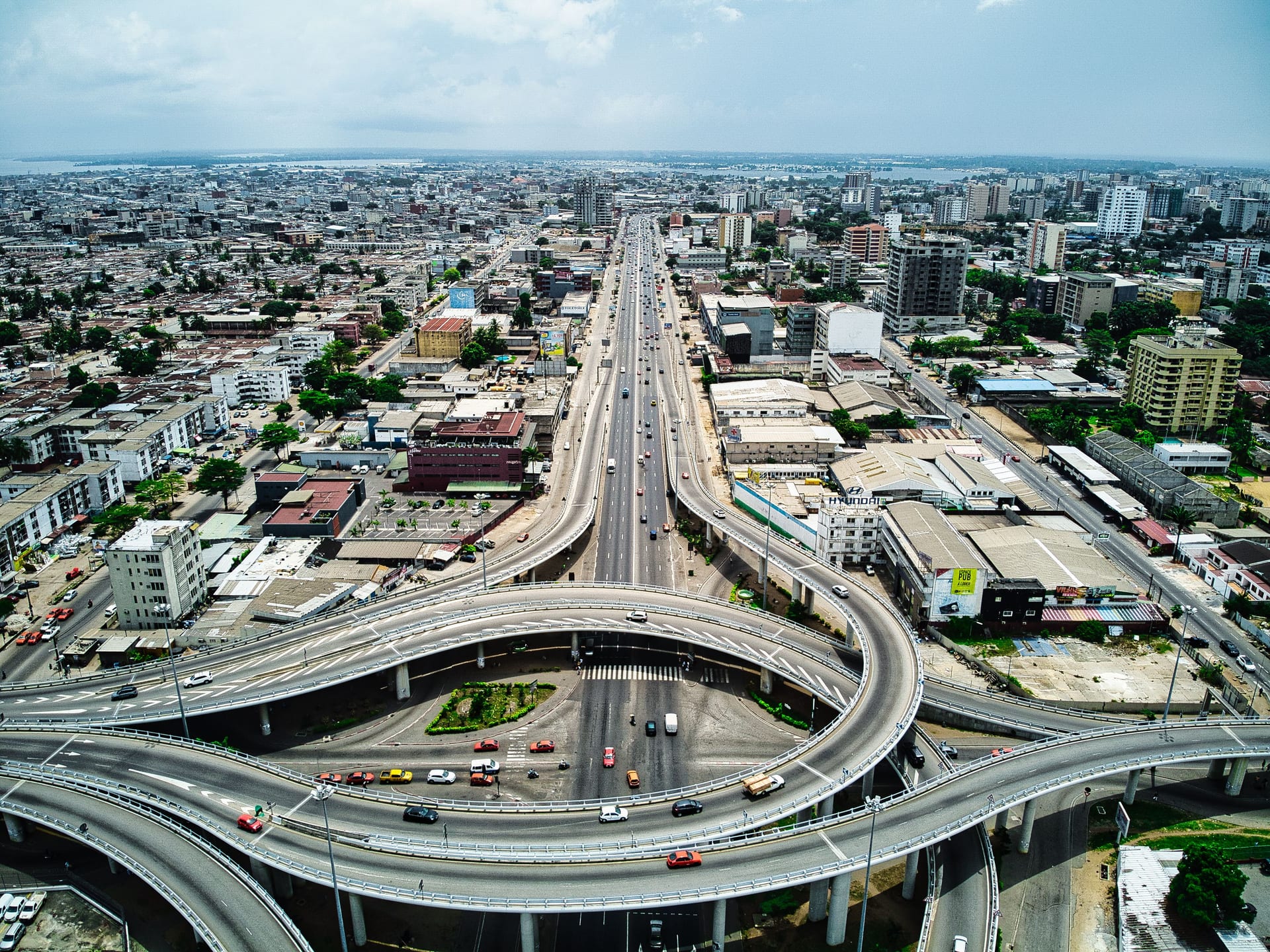
megacityA large, fast-moving, fairly dense city where getting around really means a car. Walkability is poor, pedestrian planning is weak, and the quality of residential neighbourhoods and outer suburbs is uneven. Some districts mix housing, shops, and work reasonably well, and the overall tempo runs energetic without tipping into Lagos-scale intensity.
Public life & spaces
33/100Abidjan runs on energy more than upkeep: litter collects, drains clog, and cared-for public space barely reaches past the Plateau towers and the lagoon edge. The city sprawls and leans on cars, with few squares to linger in. But the maquis bars and street food cost almost nothing, and life spills outdoors late.
Safety
40/100A mixed picture. Recorded homicide is low for the region, which sets it apart from a place like Lagos, but petty street crime, perceived safety, and comfort walking after dark all rate poorly, so caution becomes a daily habit. Road safety is middling, and the broader political backdrop has been historically unsettled.
Healthcare
37/100One of the weakest areas. The supply of doctors is very thin, hospital access and overall care quality are limited, and emergency reliability cannot be counted on. English-speaking medical care is hard to find, and insurance and out-of-pocket costs add friction. Many residents with means rely on private clinics or travel abroad for serious treatment.
Family life
35/100A hard place to raise children by most measures. Schools rate poorly, playgrounds and child-friendly public space are scarce, child safety is a concern, and formal parental leave is minimal. Childcare is relatively available and affordable, and the working culture leaves some room for family life, but the fundamentals are thin.
Career
53/100Abidjan has a functioning local market and low unemployment, but it remains thin on industry breadth, professional networks, and startup depth. English-language roles are scarce, and remote work is not a strong fallback. Local pay is very low, so local opportunity does not necessarily mean strong earnings.
Culture & food
61/100The strongest reason to be here. Abidjan has a genuine music and art scene, lively nightlife that outpaces regional peers like Accra and Dakar, a strong sense of local Ivorian culture, and a solid restaurant spread. Cafés and vegetarian options are thinner, and for a non-French speaker the language gap can wall off a lot of it.
Ease of integration
70/100French is the language of everything, with English spoken only in limited circles, so building a local life means functioning in French. Ivorians tend to be open and welcoming toward newcomers, and there is a real international and diaspora presence, but socially the city leans more traditional than liberal, which shapes how easily some people settle in.
Connectivity
26/100Generally underdeveloped. Internet speeds, public transport, cycling provision, and intercity rail are all weak, and government processes remain largely paper-based. The bright spots are the international airport, a strong hub for the region, and road congestion that, while present, is less punishing than in some peer megacities. Utilities are serviceable but not dependable.
Social values
traditionalCôte d'Ivoire is relatively open to foreigners and diverse by regional standards, and public life is fairly secular. On other fronts it is more conservative: social liberalism, gender equality, and especially LGBTQ acceptance all rate low, and everyday civic trust and orderliness are limited. Newcomers from liberal societies should expect a real shift.
Relocation ease
41/100Residence permits are comparatively manageable, easier than the process in Cape Town, and that is the smoothest part of the move. Almost everything else takes patience: heavy bureaucracy, a steep cultural adjustment, slow banking and admin setup, and a French-language requirement that is a serious barrier for non-speakers. Work authorization is middling.
The trade-offs
A year in Abidjan
Apr peaks around 29°C, Aug days top out near 25°C, and the year brings roughly 87 bright days.
Can you actually move here?
The hard limits people most often bring to a move, scored against Abidjan's data.
Moving with a pet
Bringing a pet into Abidjan is moderate in difficulty, on par with Marrakech, so the move calls for vaccination records, a health certificate, and some paperwork rather than a quick stamp at the border.
Who Abidjan works for
Answer the questionnaire and see where Abidjan lands for you.
Take the free questionnaireWhere else to look
Abidjan vs. comparable cities


Objective scores (0–100) for Abidjan and its 4 nearest comparable cities.
The cities people weigh against Abidjan
Unexpected siblings
Far from Abidjan on the map, close across all 14 categories of daily life.

