
 Paraguay
 Bolivia
Asunción makes sense if
- You want the easier housing and budget equation in this comparison.
- A calmer day-to-day safety profile matters most to you.
- Access to stronger healthcare matters most to you.
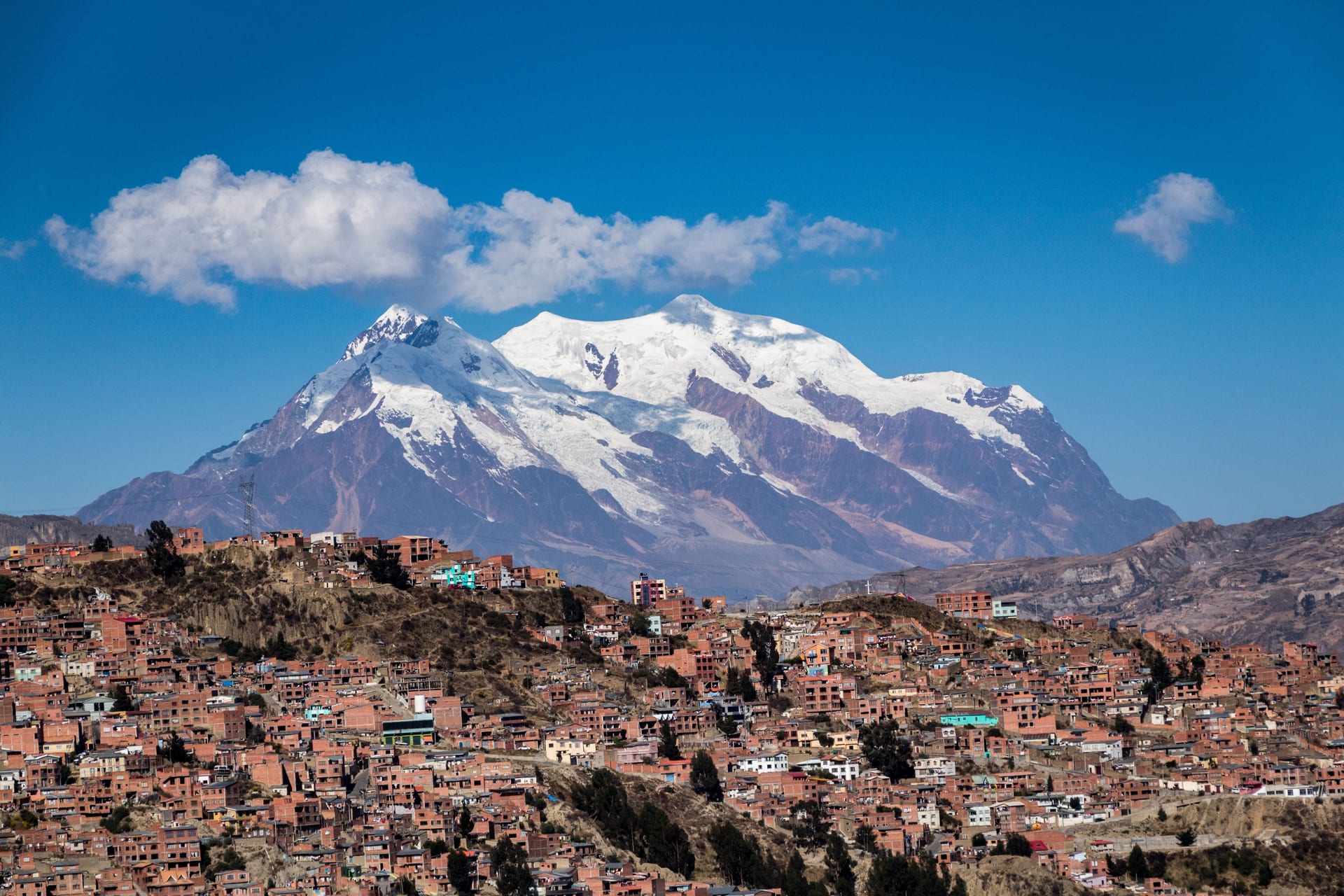
Asunción is a warm, low-slung river capital where life is slow and welcoming, with weaker infrastructure and limited local work. La Paz rises steeply through a high Andean basin, with a distinctive indigenous culture and a city routine shaped by altitude and hills. Asunción's services and safety results are stronger; La Paz offers a cheaper, more culturally distinctive setting.
The grey shape is all 283 cities; each row says whether lower or higher is better. Ratings out of 10 are our reviewed estimates; the rest is published data. How we measure
Set how much each area counts. The ranking updates as you go. Climate and values are left out because there is no better or worse there, only your taste.
Leads on nature & outdoors and city life; stands out for hiking and mountains.
Leads on safety & health, work & family and moving & settling in; stands out for simpler taxes and space for the money.
Scores out of 100, averaged from the areas you weighted. For a ranking built around your own situation, take the quiz.
Rent on a new lease, everyday prices and tax.
The year month by month. Whether it suits you is yours to judge.
Solid line: average daytime high. Dashed: night-time low. Point at the chart for any month; point at a city name to shade its range.
How easily you get to water, mountains and green space.
Getting around on foot, food, culture and the feel of the streets.
Crime, how safe people feel, and the care you would get.
Jobs, working culture, schools and raising kids.
Visas, language, paperwork and staying connected.
Where each city sits. There is no right end of these scales.
The city is not especially easy to walk, and high car dependence combines with limited mixed-use development to spread daily life out. Homes offer a little more space than in denser cities, but a car remains the practical default.
Built into a canyon, La Paz climbs and drops in ways few cities do, knitted together by an extensive cable-car network that doubles as transit. It is a mid-sized capital rather than a sprawling metropolis, with walkable older quarters but punishingly steep gradients that make getting around on foot hard work.
Safety in Asunción calls for ordinary city caution, with petty crime and night-time wariness part of daily life. Political stability is middling, so the concerns are practical rather than constant crisis.
Serious violent crime is comparatively low for the region. Petty theft, pickpocketing and caution after dark are real day-to-day concerns, while protests and blockades can disrupt the city.
Asunción's local career market is small and only lightly connected to international work. Hospital access, emergency reliability and the general quality of care all trail Buenos Aires and the larger regional hubs.
The local career base is narrow, with limited English-language roles, a small startup scene, and a thin professional network. Healthcare is one of the weaker areas.
A quieter cultural scene than Buenos Aires or Mexico City, with fewer restaurants, museums and nightlife venues. Asuncion is hot and dusty, its streets unevenly kept and some corners frankly neglected.
The real depth is local rather than cosmopolitan. La Paz is dense and chaotic, its upkeep uneven, its market streets always busy.
Asunción is the more practical choice if you value an easier climate and stronger healthcare and safety results, while accepting a thin job market. La Paz may appeal if you want a vivid Andean setting and can adapt to the altitude and patchier infrastructure. Think about health, transit and climate before letting the lower cost lead the decision.
These numbers treat everyone the same. The quiz weighs them by your budget, climate taste, family and work, and ranks all 283 cities for you.