 Germany
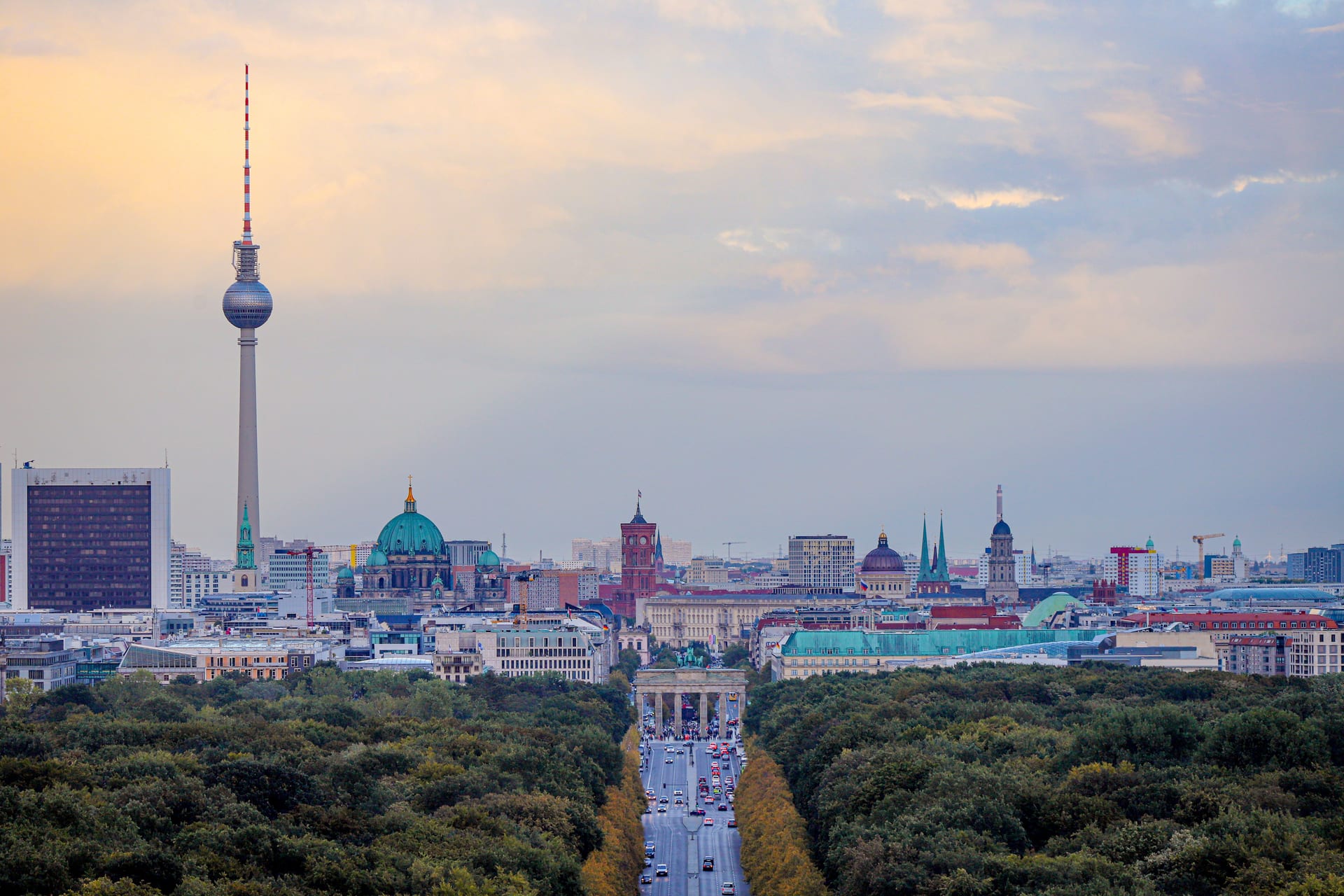
Berlin makes sense if
- You want the broader career options in this comparison.
- You want the deeper culture and food scene.
Berlin offers a deeper career market and a larger cultural scene, though the sprawling city and dark winter take adjustment. Düsseldorf is a strong career-first choice with deep professional networks, but grey winters remain. Choose Berlin's scale and creative range or Düsseldorf's more focused business environment.
The grey shape is all 283 cities; each row says whether lower or higher is better. Ratings out of 10 are our reviewed estimates; the rest is published data. How we measure
Set how much each area counts. The ranking updates as you go. Climate and values are left out because there is no better or worse there, only your taste.
Leads on nature & outdoors, city life and work & family; stands out for startup & tech scene and lakes & rivers.
Narrowly best on safety & health: 76 vs Berlin's 75; stands out for easier house-hunting.
Scores out of 100, averaged from the areas you weighted. For a ranking built around your own situation, take the quiz.
Rent on a new lease, everyday prices and tax.
The year month by month. Whether it suits you is yours to judge.
Solid line: average daytime high. Dashed: night-time low. Point at the chart for any month; point at a city name to shade its range.
How easily you get to water, mountains and green space.
Getting around on foot, food, culture and the feel of the streets.
Crime, how safe people feel, and the care you would get.
Jobs, working culture, schools and raising kids.
Visas, language, paperwork and staying connected.
Where each city sits. There is no right end of these scales.
Density is comfortable rather than crushing, blocks mix homes, shops, and workshops, and most errands happen on foot or by transit. Apartment living is the norm; sprawling space is not the local currency.
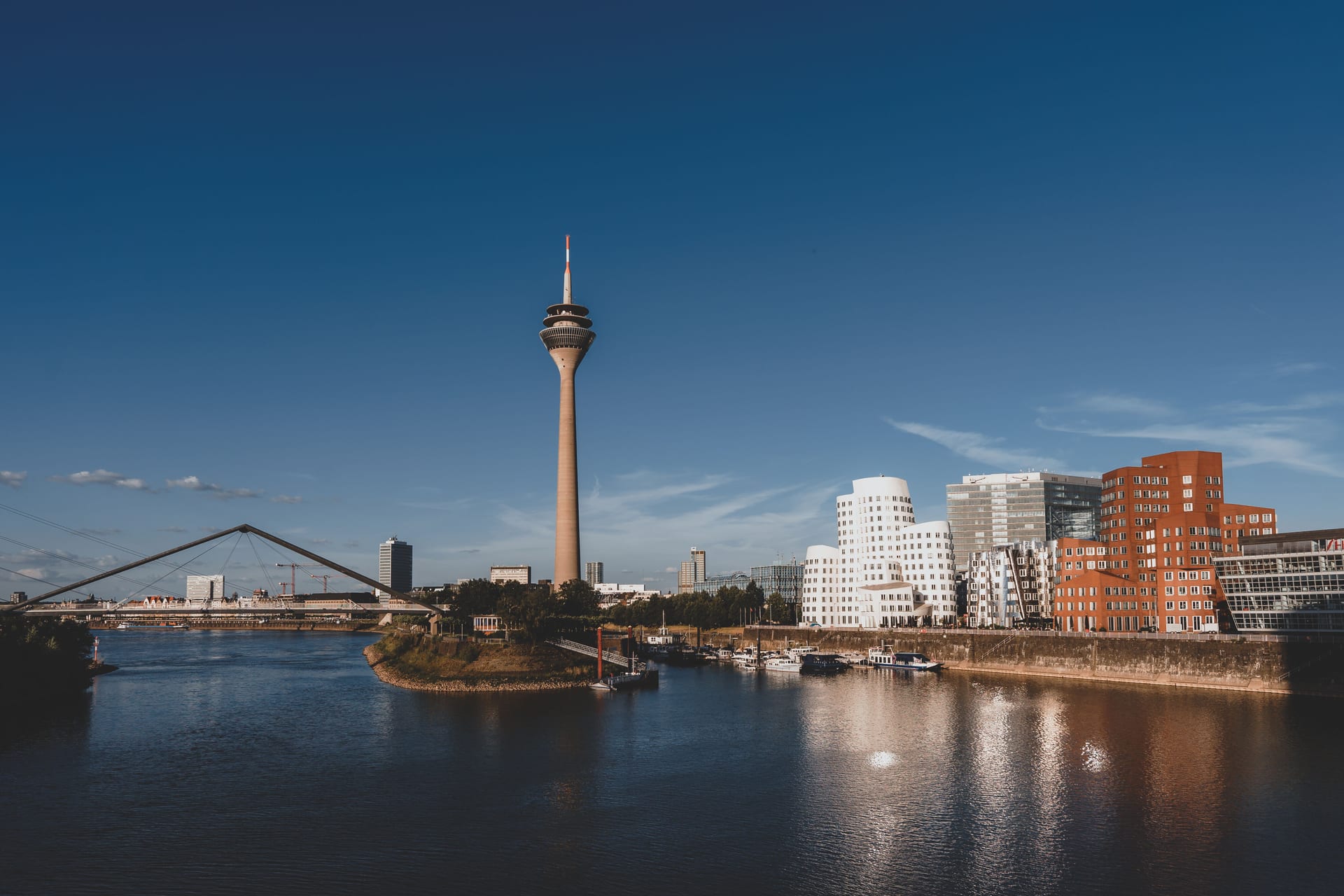
The Altstadt and the Königsallee shopping strip give the centre its character. It is less dense and calmer in pace than Berlin, which suits people who want a city without the churn.
Berlin is a safe place to live by most measures. Serious violent crime is rare, the roads are well managed, and politically the country is steady.
Safety is a clear strength. Violent crime is very low, streets feel secure by day and after dark, and traffic is well managed.
Berlin offers a deep career market, with strong demand, dense professional networks, and a substantial startup and technology base. Care quality is high and financial exposure is low, thanks to the strong statutory insurance system.
Düsseldorf has a strong local job market, backed by deep professional networks and low unemployment. Care here is excellent, with high-quality hospitals and dependable emergency services typical of western Germany.
Few cities anywhere match Berlin for culture. What it offers instead is space: Tempelhofer Feld's open runways, lakeside summers, riverbanks and squares that cost nothing.
The cultural offer is rounded and genuinely cosmopolitan, with strong restaurants, good cafes, and an art and museum scene that punches above the city's size. Düsseldorf is affluent and orderly, its polished Rhine waterfront and tidy streets kept in good shape.
Düsseldorf makes sense if your work benefits from its established professional networks and you prefer a more focused city. Berlin offers more cultural variety and career breadth, with a larger, less compact daily routine. Both demand patience with the winter sky; decide whether your network is better served by a business base or a broader city.
These numbers treat everyone the same. The quiz weighs them by your budget, climate taste, family and work, and ranks all 283 cities for you.