
Living in Düsseldorf
Düsseldorf works well as a career-first move: the local market is strong, professional networks run deep, and typical local pay sits above the wider corpus. The compromise is the sky, with few bright days and long, dark, grey winter stretches.
Düsseldorf at a glance
Vital stats
Where Düsseldorf stands out
The metrics where Düsseldorf sits farthest from the middle worldwide, good and bad.
Cheap to arrive, expensive to stay?
A typical one-bedroom in Düsseldorf runs €866/mo. That is ~35% of one typical local employee’s mean net pay. This is a solo-newcomer stress test: sitting tenants, shared homes, subsidised housing and informal rents are deliberately outside the numerator.
The fastest way to test a shortlist is to go. A week on the ground tells you things no ranking can.
Partner link
Approved language-learning and international money resources for practical next steps.
Daily life in Düsseldorf
How Düsseldorf scores
Category by category
Affordability
66/100Düsseldorf's open-market one-bedroom rent on a new lease is about €866 per month. That is roughly 35% of one typical employee's mean net pay, a rent burden labelled manageable solo.
Climate
wet & greyDüsseldorf's climate is cool, damp and often grey. Bright days are limited, and winter brings very little daylight, while summers stay mild with few muggy spells. Air quality is fairly clean and severe weather is uncommon, so the main trade-off is persistent gloom rather than heat or storms.
Nature access
leafyDüsseldorf is a river city rather than a wilderness one. The Rhine runs right through it, parks and cycling paths are easy to reach, and the Grafenberger Wald gives a quick green escape. There is no coast, no mountains, and green space per resident is thinner than in Munich. Weekend nature means forest and riverbank, not peaks or beaches.
Urban form
mid-sizedCompact and easy to move through on foot, Düsseldorf has well-kept neighbourhoods and a tidy, low-rise feel rather than the sprawl of bigger metros. The Altstadt and the Königsallee shopping strip give the centre its character. It is less dense and calmer in pace than Berlin, which suits people who want a city without the churn.
Public life & spaces
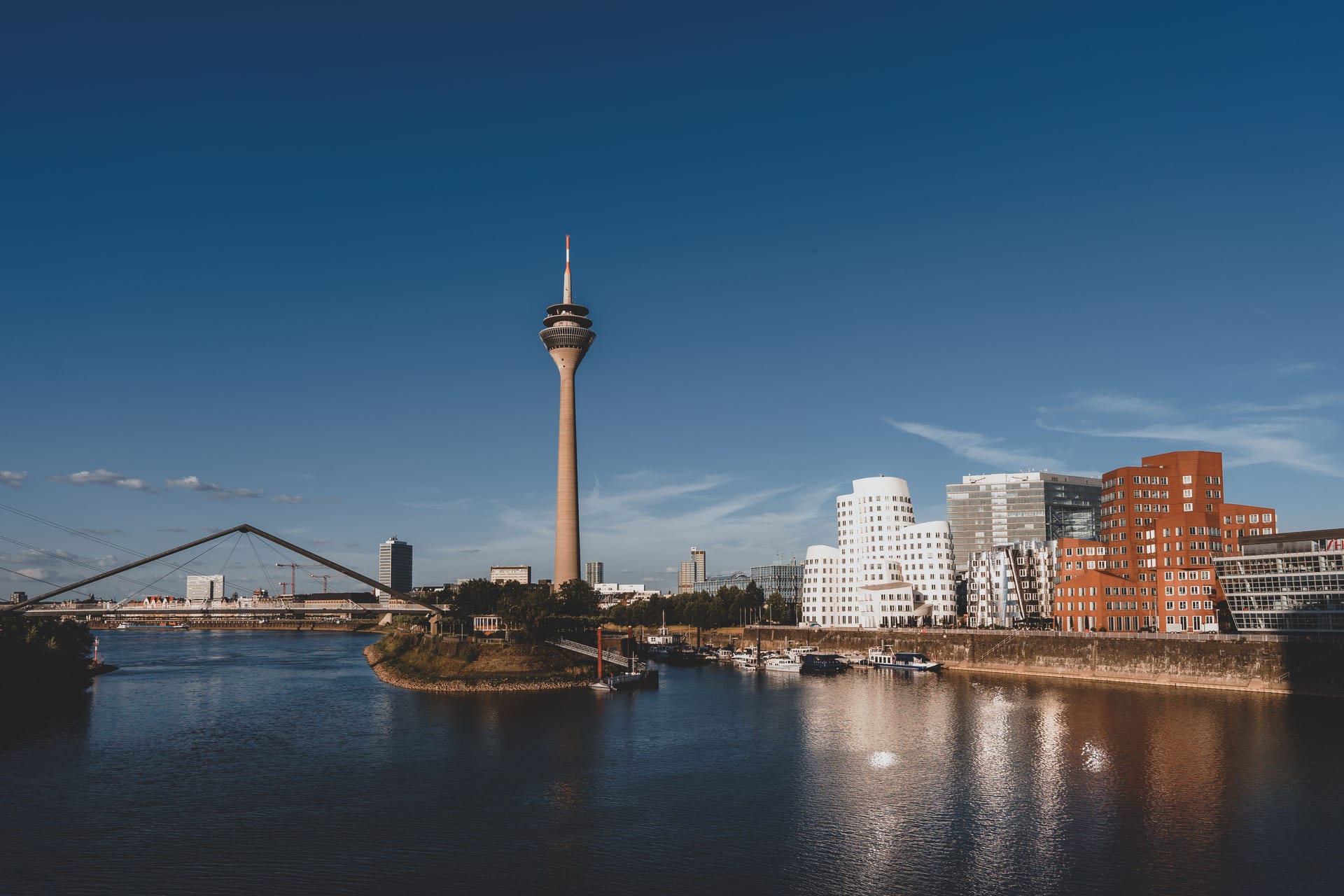
74/100Düsseldorf is affluent and orderly, its polished Rhine waterfront and tidy streets kept in good shape. The shared spaces are solid — the river promenade, the Königsallee and the Altstadt squares all pull crowds. The riverfront is free, but this is a wealthier city than Berlin, and everyday pleasures carry a higher price tag.
Safety
76/100Safety is a clear strength. Violent crime is very low, streets feel secure by day and after dark, and traffic is well managed. Pickpocketing around the Altstadt nightlife is the main everyday nuisance, on a par with other big German cities. Institutions are stable and policing is predictable. Most residents move around without a second thought.
Healthcare
78/100Care here is excellent, with high-quality hospitals and dependable emergency services typical of western Germany. Out-of-pocket exposure stays low once people are inside the insurance system. Getting set up with insurance takes some paperwork, and while many doctors handle English, it is not guaranteed, so some German helps in a clinic.
Family life
73/100Düsseldorf is a solid, steady place to raise children. It is very safe for them, parental leave and childcare provisions are generous by global standards, and there are plenty of playgrounds and green corners. Schools are decent without being a national standout. The real hurdle is finding a large enough flat at a workable price, which takes patience.
Career
67/100Düsseldorf has a strong local job market, backed by deep professional networks and low unemployment. Typical local pay sits above the wider corpus. English-language roles exist, but German opens more doors, and the startup scene is solid rather than defining.
Culture & food
71/100The cultural offer is rounded and genuinely cosmopolitan, with strong restaurants, good cafes, and an art and museum scene that punches above the city's size. Its international community is unusually deep for a German city this size, the Japanese quarter being the obvious example. Nightlife beats Munich but stays a long way short of Berlin's all-night reputation.
Ease of integration
70/100German is the working language, and while English goes a long way in professional and international circles, real integration rewards learning it. Düsseldorf is diverse, open to foreigners, and home to established expat networks, the Japanese community especially. Locals can read as reserved at first, so warmth tends to build slowly rather than on day one.
Connectivity
65/100Infrastructure is a strong suit. Trains, trams, and the metro are reliable, the airport is one of Germany's busiest, and intercity rail connections across Europe are excellent. Utilities just work. The drag is the German constant: home internet speeds lag European leaders, and public administration remains stubbornly paper-bound and slow to digitize.
Social values
progressiveSocially, Düsseldorf is liberal and secular in the mainstream Rhineland way, more open and easygoing than conservative Bavaria, if not as radically permissive as Berlin. Gender equality and LGBTQ acceptance are well established, diversity is part of daily life, and traditionalism is low. Newcomers from varied backgrounds generally find the climate welcoming.
Relocation ease
58/100Settling in carries the familiar German friction. Visa and work-authorization steps are manageable but bureaucratic, and the admin runs heavily on appointments, forms, and patience. The hardest part is housing: the rental market is tight and competitive, so securing a flat can take real time and persistence. Banking and tax setup add their own paperwork.
The trade-offs
A year in Düsseldorf
Jun peaks around 24°C, Jan days top out near 6°C, and the year brings roughly 148 bright days.
Can you actually move here?
The hard limits people most often bring to a move, scored against Düsseldorf's data.
Moving with a pet
Bringing a pet to Düsseldorf is straightforward. As an EU destination, Germany keeps import rules light for cats and dogs from most countries, generally needing a microchip, rabies vaccination, and the right paperwork rather than long quarantine.
Who Düsseldorf works for
Answer the questionnaire and see where Düsseldorf lands for you.
Take the free questionnaireWhere else to look
Düsseldorf vs. comparable cities
The cities people weigh against Düsseldorf
Unexpected siblings
Far from Düsseldorf on the map, close across all 14 categories of daily life.
