
Living in Berlin
Mild summers are one part of Berlin's appeal, alongside a deep career market and a cooler, darker seasonal rhythm. Typical local employee pay is relatively strong, while winter is the main everyday compromise, with fewer bright days and very little winter brightness. English-language work exists, though German broadens access.
Berlin at a glance
Vital stats
Where Berlin stands out
The metrics where Berlin sits farthest from the middle worldwide, good and bad.
Cheap to arrive, expensive to stay?
A typical one-bedroom in Berlin runs €1,087/mo. That is ~47% of one typical local employee’s mean net pay. This is a solo-newcomer stress test: sitting tenants, shared homes, subsidised housing and informal rents are deliberately outside the numerator.
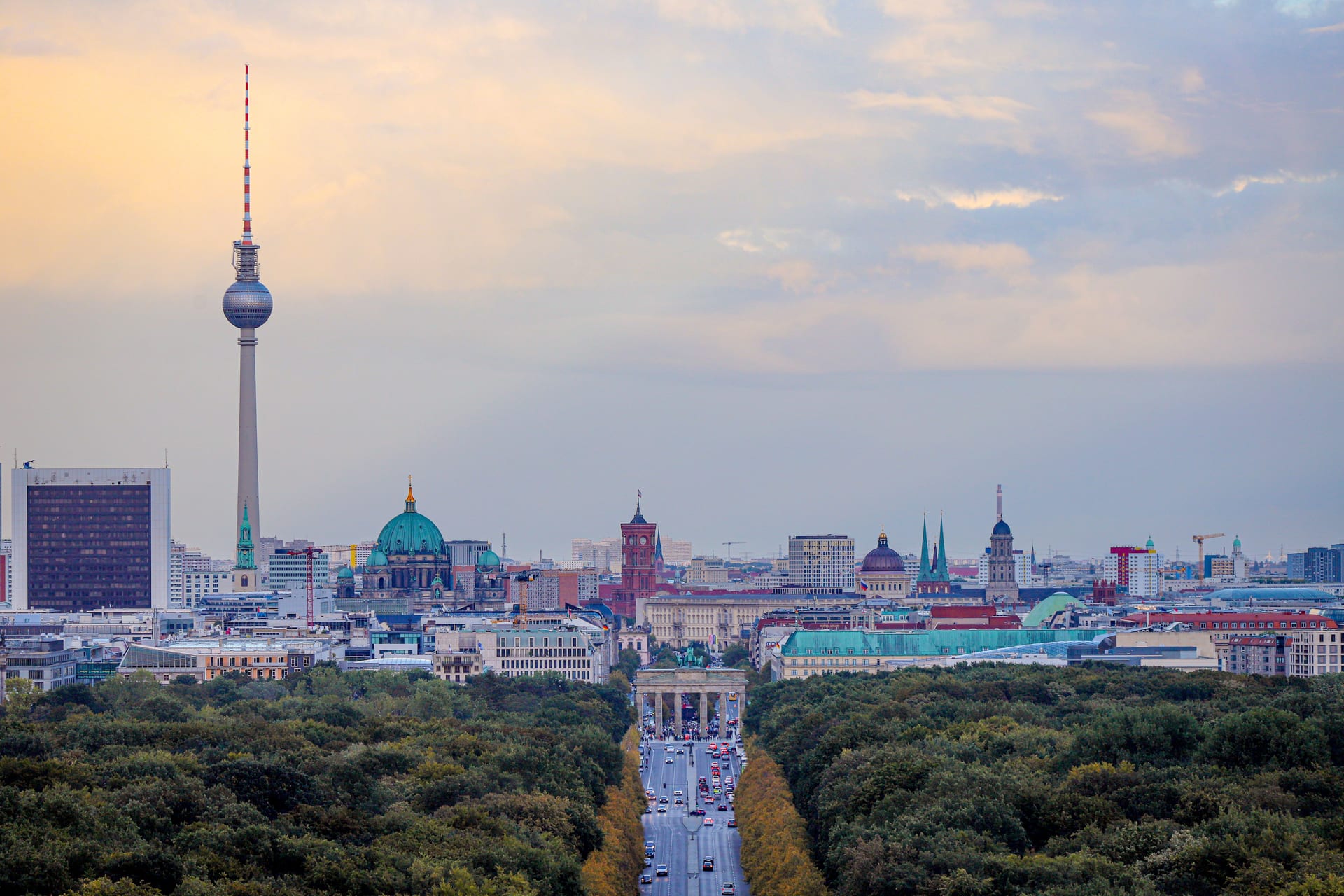
The fastest way to test a shortlist is to go. A week on the ground tells you things no ranking can.
Partner link
Approved language-learning and international money resources for practical next steps.
Daily life in Berlin
How Berlin scores
Category by category
Affordability
64/100Berlin's open-market one-bedroom rent on a new lease is about €1,087 per month. That is roughly 47% of one typical employee's mean net pay, a rent burden labelled tight alone.
Climate
temperateBerlin's summers are mild and comfortable, but winter is the real test. Only about 167 bright days arrive across the year, and the darker season brings long stretches of limited light even though rainy-grey days are not excessive. Air quality is generally clean, and severe weather is uncommon.
Nature access
lakes & riversBerlin is generous with the green that sits inside it: large city parks, lakes on the edges, leafy canals, and good cycling and running routes. What it cannot offer is dramatic landscape. There is no coast, no mountains, and serious hiking or a national park means a real journey out. Flat country surrounds the city.
Urban form
large cityThis is a walkable, low-car city stitched together by neighbourhoods with their own character, from Kreuzberg to Prenzlauer Berg. Density is comfortable rather than crushing, blocks mix homes, shops, and workshops, and most errands happen on foot or by transit. Apartment living is the norm; sprawling space is not the local currency.
Public life & spaces
74/100Berlin wears its scruffiness openly — graffiti and the odd pile of litter, a city that never tries to look polished. What it offers instead is space: Tempelhofer Feld's open runways, lakeside summers, riverbanks and squares that cost nothing. Free outdoor culture runs through the year, though the museums still charge.
Safety
72/100Berlin is a safe place to live by most measures. Serious violent crime is rare, the roads are well managed, and politically the country is steady. The honest caveat is petty crime: pickpocketing and bike theft are common enough to warrant staying alert in crowds and at stations. Walking home at night feels broadly fine.
Healthcare
78/100Care quality is high and financial exposure is low, thanks to the strong statutory insurance system. Hospitals and emergency services are dependable, and doctors are reasonably available. Navigating the insurance setup takes some patience for a newcomer, and while many clinicians speak English, it is not guaranteed at every practice.
Family life
76/100Germany backs families with substance: long parental leave, subsidised childcare, and a work culture that respects evenings and weekends. Children are safe, parks and playgrounds are plentiful, and schools are solid. Finding a large enough apartment in a tight market is the main friction, and outdoor childhood is somewhat limited by the climate.
Career
80/100Berlin offers a deep career market, with strong demand, dense professional networks, and a substantial startup and technology base. Unemployment is around 3.7%, and typical local employee pay is relatively strong. English-language work is available, though German broadens access to some roles.
Culture & food
89/100Few cities anywhere match Berlin for culture. Its nightlife is in a league of its own, the music and art scenes are world-famous, and museums and events stretch across the calendar. Cafes are everywhere and vegetarians and vegans are exceptionally well served. Local culture is strong and unpretentious, and an international crowd threads through it all.
Ease of integration
74/100German is the working language, and while English carries far in Berlin's international circles, real integration and the warmer local friendships tend to come once a person can hold a conversation in German. The city is liberal, secular, and diverse, which makes finding like-minded company easy. Germans can read as reserved at first, so locals warming up takes time and patience.
Connectivity
71/100The bones are excellent: a dense, reliable transit network, frequent intercity trains, strong cycling provision, and utilities to count on. The weak spots are digital. Home internet speeds lag well behind peer cities, and government services remain stubbornly analogue, with much still done on paper and by appointment.
Social values
progressiveBerlin is among the most socially open cities anywhere. Public life is secular, attitudes are liberal, and it is one of the most welcoming places in the world for LGBTQ residents. Gender equality and diversity are taken seriously. The one softer note is everyday openness to foreigners, which can feel cooler than the city's progressive reputation implies.
Relocation ease
56/100Settling in Berlin demands stamina for bureaucracy. Visa and work-authorisation routes are workable but slow, banking and registration involve real friction, and the housing search is genuinely brutal in such a competitive market, the hardest part of landing here. German smooths much of the admin. The broader cultural adjustment, at least, comes fairly gently.
The trade-offs
A year in Berlin
Jun peaks around 26°C, Jan days top out near 5°C, and the year brings roughly 167 bright days.
Can you actually move here?
The hard limits people most often bring to a move, scored against Berlin's data.
Moving with a pet
Bringing a pet to Berlin is straightforward. As an EU country, Germany keeps entry rules clear and predictable, so a microchipped, vaccinated animal with the right paperwork clears the process with little fuss. Securing a pet-friendly flat in a tight rental market is the bigger hurdle.
Who Berlin works for
Answer the questionnaire and see where Berlin lands for you.
Take the free questionnaireWhere else to look
Berlin vs. comparable cities
Objective scores (0–100) for Berlin and its 4 nearest comparable cities.
The cities people weigh against Berlin
Unexpected siblings
Far from Berlin on the map, close across all 14 categories of daily life.

