
 Spain
Granada makes sense if
- You want the easier housing and budget equation in this comparison.
- A calmer day-to-day safety profile matters most to you.
- Access to stronger healthcare matters most to you.
Granada offers a lived-in Andalusian city setting and a deeper cultural and food scene, with a local economy that can be difficult to rely on. Marbella is brighter and more resort-oriented, built around the seafront and an international crowd rather than a broad urban job market.
The grey shape is all 283 cities; each row says whether lower or higher is better. Ratings out of 10 are our reviewed estimates; the rest is published data. How we measure
Set how much each area counts. The ranking updates as you go. Climate and values are left out because there is no better or worse there, only your taste.
Leads on safety & health; stands out for train connections and local culture.
Narrowly best on moving & settling in: 61 vs Granada's 58; stands out for beach & sea and winter comfort.
Scores out of 100, averaged from the areas you weighted. For a ranking built around your own situation, take the quiz.
Rent on a new lease, everyday prices and tax.
The year month by month. Whether it suits you is yours to judge.
Solid line: average daytime high. Dashed: night-time low. Point at the chart for any month; point at a city name to shade its range.
How easily you get to water, mountains and green space.
Getting around on foot, food, culture and the feel of the streets.
Crime, how safe people feel, and the care you would get.
Jobs, working culture, schools and raising kids.
Visas, language, paperwork and staying connected.
Where each city sits. There is no right end of these scales.
Most errands happen on foot, car dependency stays low, and the dense old quarters mix homes, shops and bars at close quarters. The flip side of that intimacy is limited housing space and a population small enough that it can feel provincial next to Seville or Madrid.
Marbella is small and spread along the shore, closer to a string of resort neighbourhoods than a dense city. Getting around really wants a car; walking works in pockets like the old town and the marina but not across the whole place.
Among the safer cities to settle in, with very low rates of serious and violent crime and roads that are markedly safe by southern-European standards. People generally feel comfortable walking at night.
Safety is one of the strongest things going for it. Serious violent crime is rare, the roads are calm, and walking around after dark feels easy in most areas.
Granada's local career ladder is narrow. Public healthcare quality is solid and broadly matches Madrid or Seville, with a respected university hospital anchoring the city.
Marbella is a poor bet for a conventional local career. Care quality is solid and the cost of falling ill is manageable, helped by Spain's public system alongside a busy private sector built for an international clientele.
The local Andalusian identity is exceptionally strong, the tapas tradition of a free dish with every drink remains genuine, and the calendar fills with flamenco, music and festivals around the Alhambra and the historic quarters. Granada is atmospheric but worn, the Albaicín streaked with graffiti and age.
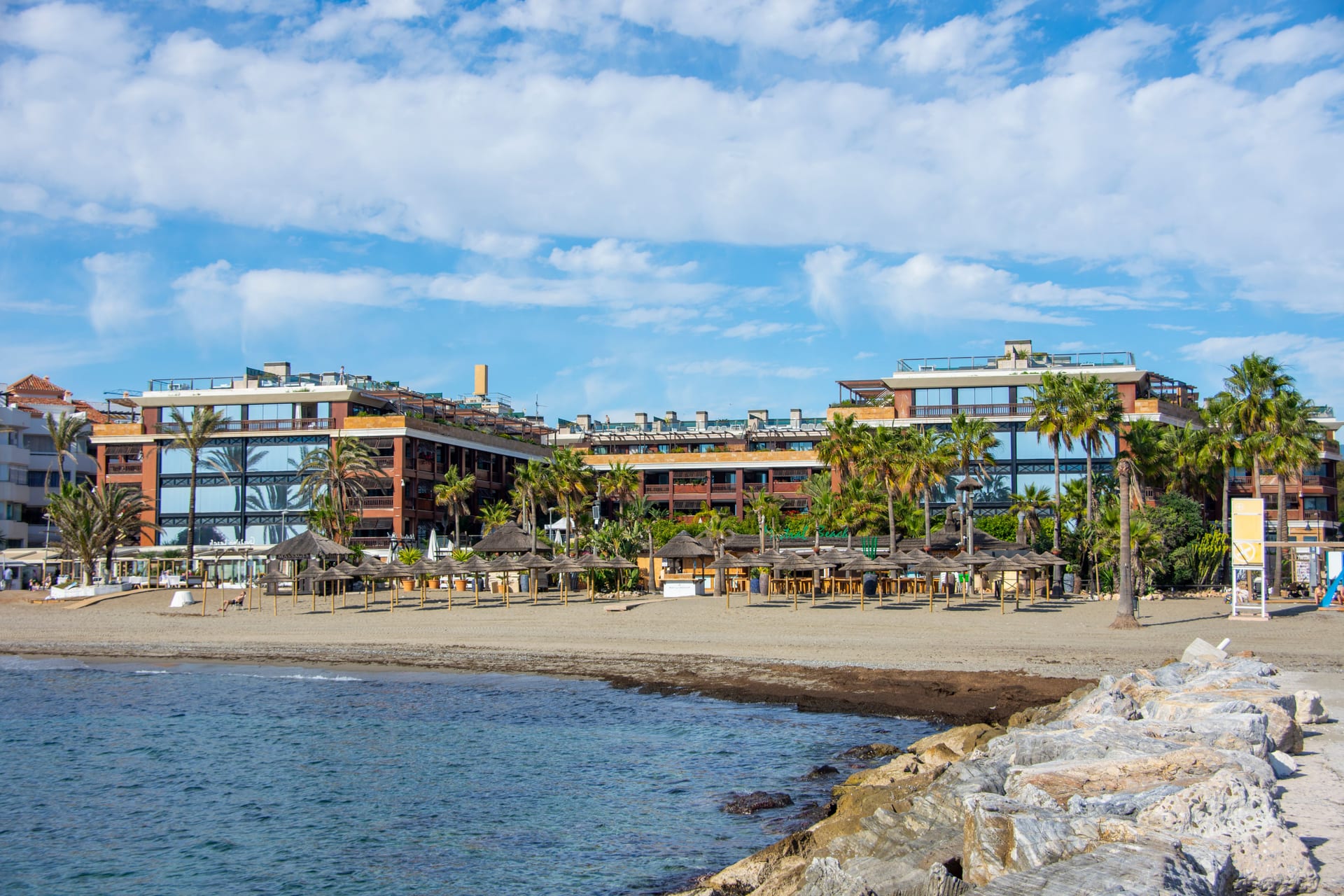
Social life leans toward the marina, the beach clubs and a lively nightlife scene aimed at a moneyed, international crowd. Marbella is manicured and well-tended, its promenade and old town kept to a wealthy resort's standard.
Granada is the better choice for people who want local culture, food, and a more rooted city routine. Marbella suits someone prioritising sea, sun, and an English-friendly international community, especially with income from outside the local market.
These numbers treat everyone the same. The quiz weighs them by your budget, climate taste, family and work, and ranks all 283 cities for you.