
Living in Granada
Granada combines a dry, bright climate with a local economy that asks for compromise. Typical local pay is relatively solid, but the thin employment base makes local job prospects worth weighing carefully before moving here.
Granada at a glance
Vital stats
Where Granada stands out
The metrics where Granada sits farthest from the middle worldwide, good and bad.
Cheap to arrive, expensive to stay?
A typical one-bedroom in Granada runs €640/mo. That is ~36% of one typical local employee’s mean net pay. This is a solo-newcomer stress test: sitting tenants, shared homes, subsidised housing and informal rents are deliberately outside the numerator.
The fastest way to test a shortlist is to go. A week on the ground tells you things no ranking can.
Partner link
Approved language-learning and international money resources for practical next steps.
Daily life in Granada
How Granada scores
Category by category
Affordability
71/100Granada's open-market one-bedroom rent on a new lease is about €640 per month. That is roughly 36% of one typical employee's mean net pay, a rent burden labelled tight alone.
Climate
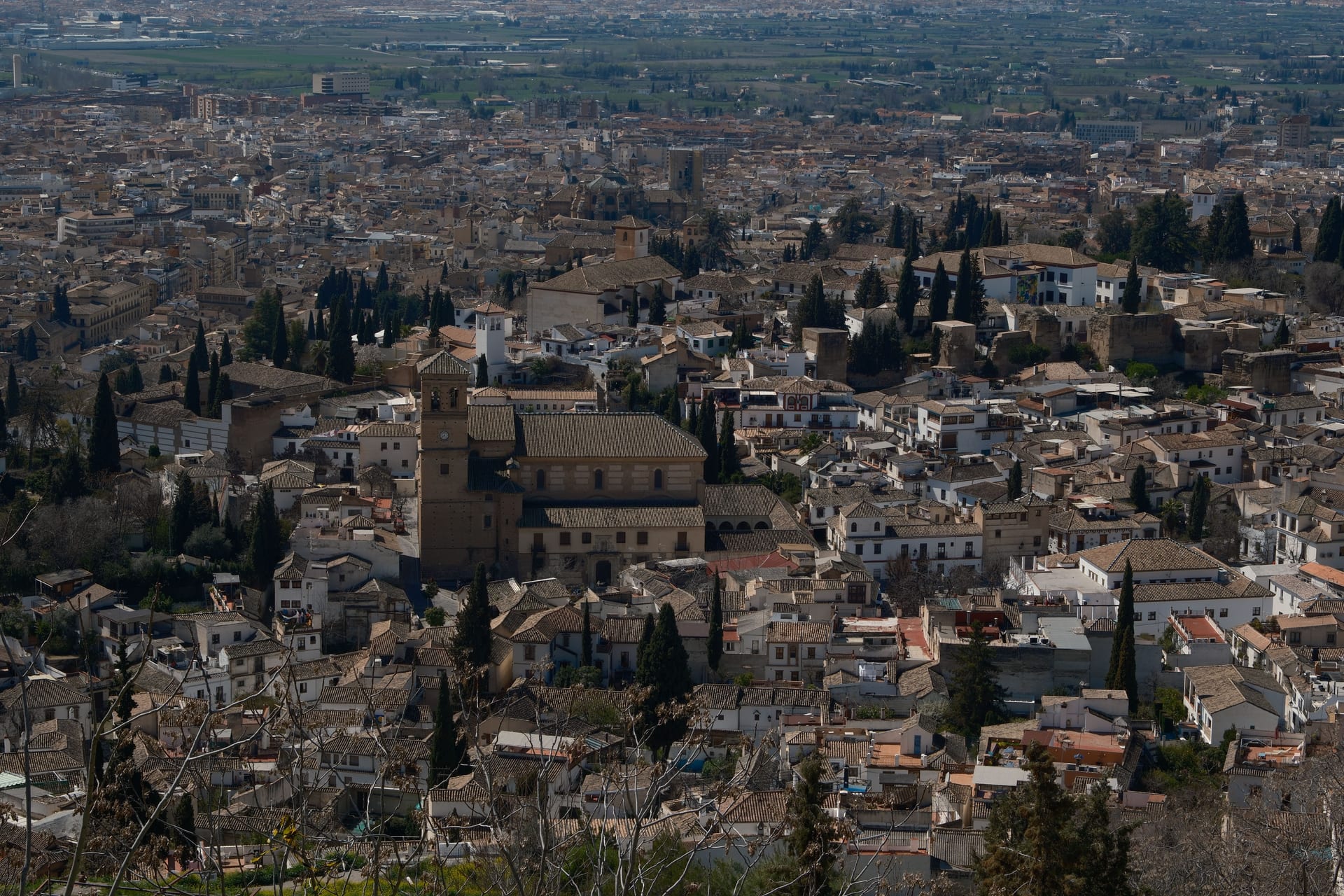
temperateGranada has a bright, dry-feeling climate, with about 265 bright days and relatively few rainy-grey days. Winter is cool, with January averaging around 5°C, while summers are hot without sticky conditions.
Nature access
alpineThis is mountain country first and foremost. The Sierra Nevada rises right behind the city, putting some of Spain's best hiking, skiing and national-park terrain within easy reach, ahead of what Seville, Málaga or Madrid offer. Inside the city itself green space is scarce, the coast takes a drive to reach, and lakes or rivers barely register.
Urban form
small cityCompact and very walkable, with a slow rhythm that sets it apart from busier Spanish capitals. Most errands happen on foot, car dependency stays low, and the dense old quarters mix homes, shops and bars at close quarters. The flip side of that intimacy is limited housing space and a population small enough that it can feel provincial next to Seville or Madrid.
Public life & spaces
70/100Granada is atmospheric but worn, the Albaicín streaked with graffiti and age. What it offers is space and remarkable cheapness: plazas, miradors and walkable Moorish quarters, all enjoyed on a student's budget. The free-tapas tradition and constant festivals mean daily pleasure here costs about as little as anywhere in Spain.
Safety
76/100Among the safer cities to settle in, with very low rates of serious and violent crime and roads that are markedly safe by southern-European standards. People generally feel comfortable walking at night. Petty theft in the tourist-heavy centre is the one thing worth ordinary caution against, in line with most visited Spanish cities.
Healthcare
70/100Public healthcare quality is solid and broadly matches Madrid or Seville, with a respected university hospital anchoring the city. Hospital access and emergency care are dependable. Doctor availability is middling rather than generous, and English is spoken in clinical settings only some of the time, so a working grasp of Spanish smooths most medical encounters.
Family life
65/100A gentle place to raise children, with strong outdoor opportunities, a relaxed work-life culture and high everyday safety. Schools and childcare land around the Andalusian average, a notch below Madrid. Family-sized housing is more attainable here than in pricier Spanish cities, which counts for a lot when stretching a single income.
Career
47/100Granada's local career ladder is narrow. Typical local pay is relatively solid, while English-language roles, professional networks and startup activity remain limited. Remote work is the stronger fit for people who can keep their employer elsewhere.
Culture & food
71/100Punches far above its size culturally. The local Andalusian identity is exceptionally strong, the tapas tradition of a free dish with every drink remains genuine, and the calendar fills with flamenco, music and festivals around the Alhambra and the historic quarters. Restaurants, cafes and nightlife are plentiful for a small city. Day to day, though, life leans heavily on Spanish, and the English-speaking footing is thinner than in Málaga or Lisbon.
Ease of integration
56/100Spanish is the language of daily life and English only goes so far, so building local friendships rewards the effort of learning it. Granadinos tend to be warm and open to newcomers, and the deep student population keeps a steady churn of new faces. The international community is real but smaller than in coastal Andalusia, so integration leans on the local rhythm rather than an expat bubble.
Connectivity
59/100Workable rather than polished. Local buses cover the city reasonably and intercity trains connect onward, but the small airport offers limited routes, so most flights route through Málaga or Madrid. Cycling infrastructure is underdeveloped, road congestion stays low, and home internet is fast and reliable.
Social values
progressiveSocially moderate and welcoming, with good LGBTQ acceptance and broadly liberal attitudes on a par with Seville and Madrid. A current of Catholic tradition runs a little stronger here than in Spain's larger cities, visible in the religious calendar and Semana Santa. Openness to foreigners is genuine if a touch less cosmopolitan than the bigger hubs.
Relocation ease
58/100Spain's residence and work routes are no harder here than elsewhere in the country, and cultural adjustment for newcomers tends to be smooth. The friction shows up in the paperwork: bureaucracy is slow and document-heavy, finding housing can be a grind in a tight rental market, and getting by with limited Spanish is tougher than in more tourist-driven Andalusian towns.
The trade-offs
A year in Granada
Jul peaks around 34°C, Jan days top out near 11°C, and the year brings roughly 265 bright days.
Can you actually move here?
The hard limits people most often bring to a move, scored against Granada's data.
Moving with a pet
Bringing a pet to Granada is straightforward, the same EU-standard process used across Spain, needing a microchip, rabies vaccination and the right paperwork. No quarantine for cats and dogs arriving from most countries.
Who Granada works for
Answer the questionnaire and see where Granada lands for you.
Take the free questionnaireWhere else to look
Granada vs. comparable cities
The cities people weigh against Granada
Unexpected siblings
Far from Granada on the map, close across all 14 categories of daily life.