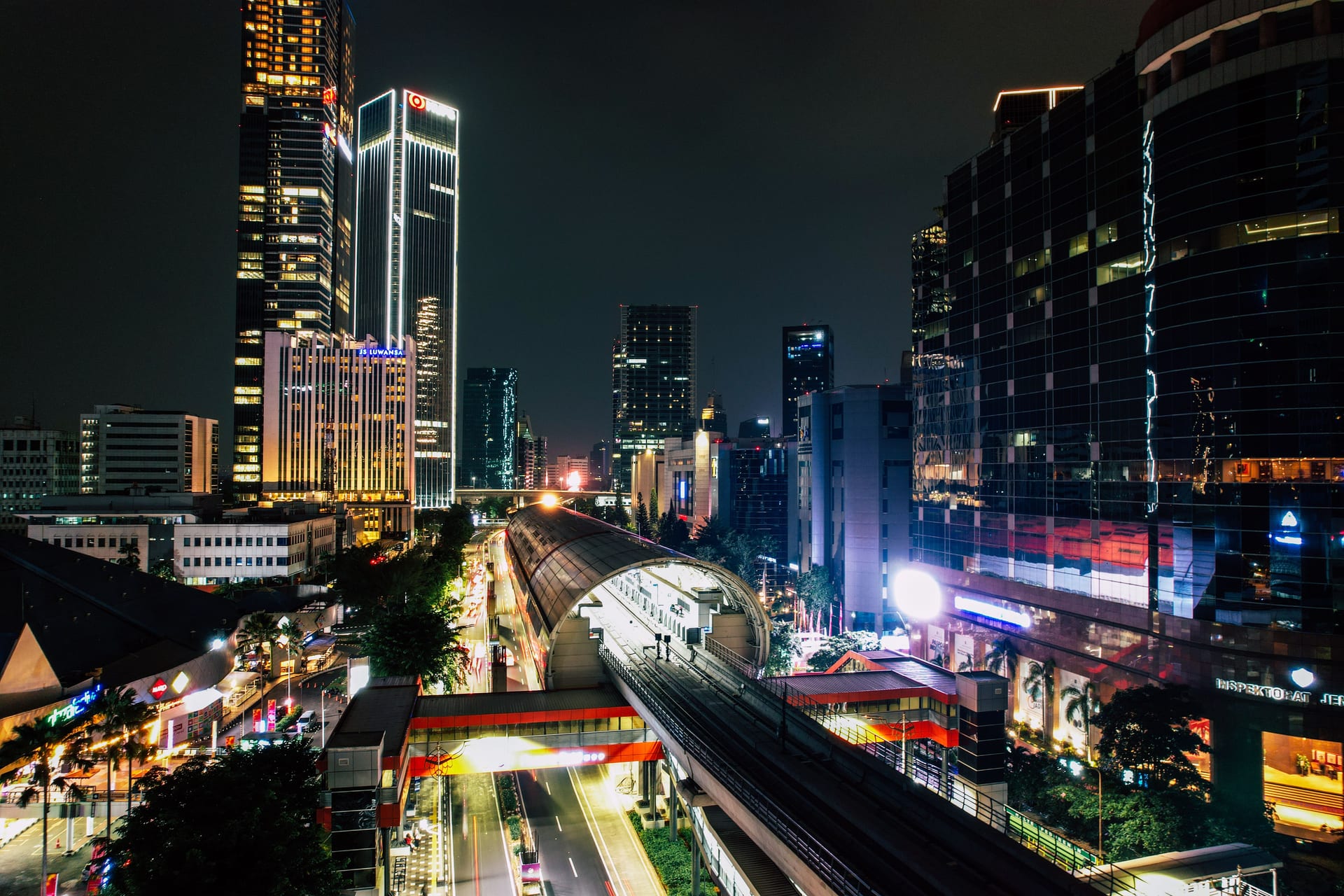
 Indonesia
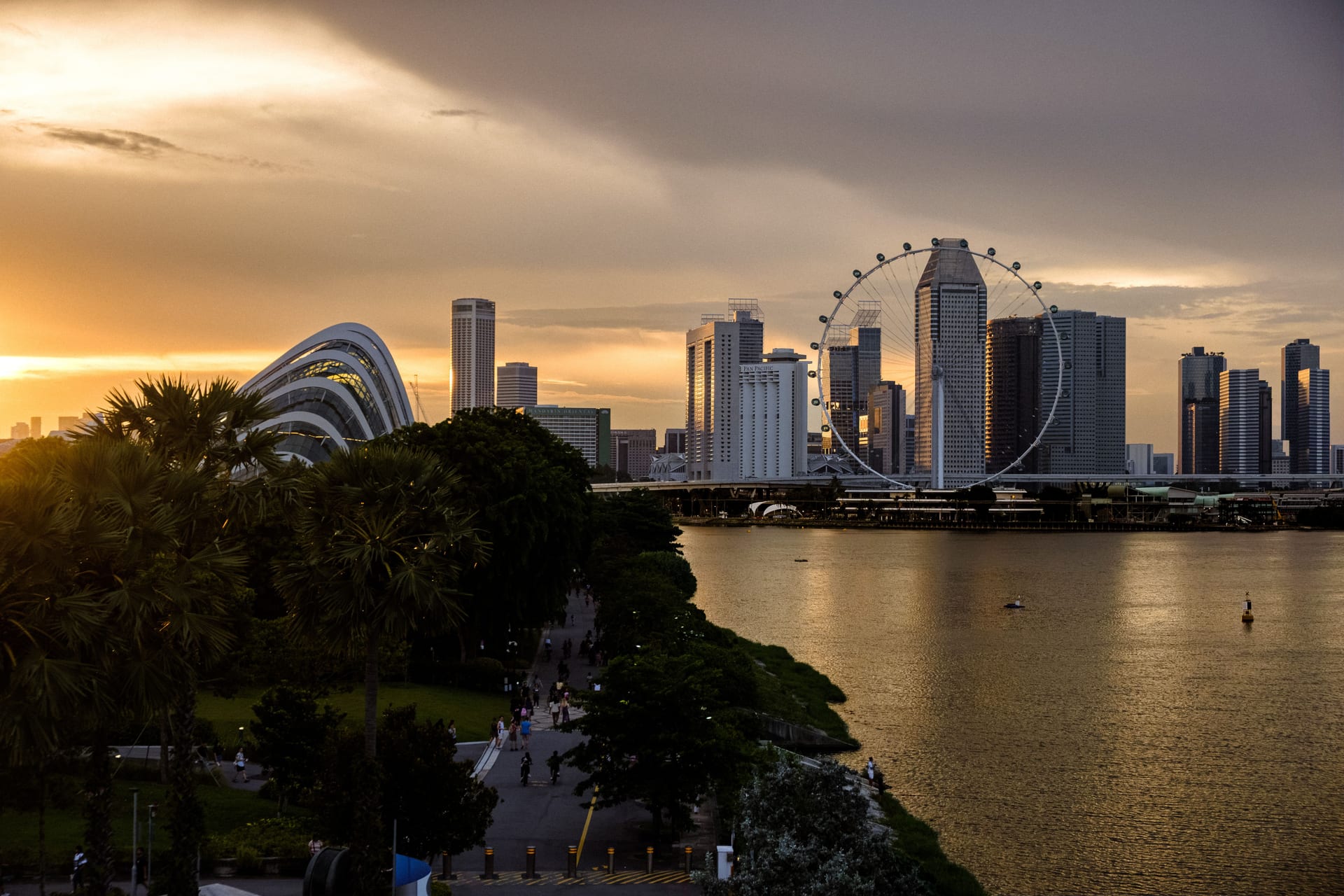
 Singapore
Jakarta makes sense if
- You want the easier housing and budget equation in this comparison.
- You want the deeper culture and food scene.
Jakarta is a vast, hot and traffic-choked megacity where food and daily routines are rooted in a broad local culture. Singapore is an English-speaking financial hub with reliable services, safe streets and an extraordinary food scene, but a high-cost and highly ordered life.
The grey shape is all 283 cities; each row says whether lower or higher is better. Ratings out of 10 are our reviewed estimates; the rest is published data. How we measure
Set how much each area counts. The ranking updates as you go. Climate and values are left out because there is no better or worse there, only your taste.
Leads on nature & outdoors, city life, safety & health, work & family and moving & settling in; stands out for clean, cared-for streets and political stability.
Leads on money; stands out for train connections and music & art scene.
Scores out of 100, averaged from the areas you weighted. For a ranking built around your own situation, take the quiz.
Rent on a new lease, everyday prices and tax.
The year month by month. Whether it suits you is yours to judge.
Solid line: average daytime high. Dashed: night-time low. Point at the chart for any month; point at a city name to shade its range.
How easily you get to water, mountains and green space.
Getting around on foot, food, culture and the feel of the streets.
Crime, how safe people feel, and the care you would get.
Jobs, working culture, schools and raising kids.
Visas, language, paperwork and staying connected.
Where each city sits. There is no right end of these scales.
Jakarta is a vast, low-rise sprawl rather than a compact walkable core, and getting around generally means a car or motorbike. Walkability is poor, neighbourhoods can feel cut off from one another, and the sheer metropolitan scale dominates daily life.
A dense, vertical, highly walkable city where almost everything is reachable without a car. Neighbourhoods are well-planned and mixed-use, the pace is brisk and corporate, and public order is total.
Serious violent crime is rare, and on that measure Jakarta is reassuringly safe for a city of its size. Everyday petty crime and pickpocketing are more of a concern, and require ordinary street sense.
Violent crime is rare, petty theft is minimal, and walking alone late at night is genuinely unremarkable. Political stability and traffic safety are both excellent.
Jakarta has a substantial local economy, with low unemployment and professional networks that support people building a career on the ground. Healthcare in Jakarta is functional rather than strong.
Singapore is a formidable professional hub, with a deep English-language market, very low unemployment, and strong networks across established and newer industries. World-class hospitals, reliable emergency care, and medical staff who speak English fluently.
Food is one of Jakarta's strongest draws, from street warungs to a deep café culture and a wide spread of restaurants, including a fair range of international and meat-free options. Jakarta is a mega-dense sprawl of traffic, flooding and pollution, where neglected streets give way to malls because almost no walkable square exists.
Food is the headline, one of the great eating cities anywhere, where hawker stalls and fine dining sit side by side. The catch is cost: much of daily life is paid-for and mall-mediated, with little genuinely free beyond the hawker centres and parks.
Singapore suits a move built around an English-speaking career hub and efficient everyday services. Jakarta offers a more locally textured and lower-cost routine, but its scale, heat, traffic and infrastructure require patience.
These numbers treat everyone the same. The quiz weighs them by your budget, climate taste, family and work, and ranks all 283 cities for you.