
Living in Jakarta
Indonesia's capital is one of Southeast Asia's great sprawling megacities, where rent and meals cost a fraction of what they do in Singapore or Bangkok. Life here runs hot, humid, and traffic-choked, and the trade-off for the low prices is a city that asks newcomers to be patient with its scale and its infrastructure.
Jakarta at a glance
Vital stats
Shown in USD: the local currency (IDR) moves too fast for stable monthly figures.
Where Jakarta stands out
The metrics where Jakarta sits farthest from the middle worldwide, good and bad.
Cheap to arrive, expensive to stay?
A typical one-bedroom in Jakarta runs $365/mo. That is beyond the mean net pay of a typical local employee. This is a solo-newcomer stress test: sitting tenants, shared homes, subsidised housing and informal rents are deliberately outside the numerator.
The fastest way to test a shortlist is to go. A week on the ground tells you things no ranking can.
Partner link
Approved language-learning and international money resources for practical next steps.
Daily life in Jakarta
How Jakarta scores
Category by category
Affordability
70/100Jakarta's open-market one-bedroom rent on a new lease is about $365 per month. The rent-to-income measure reaches its 120% ceiling against one typical employee's mean net pay, so the underlying burden may be higher; the band is beyond local pay.
Climate
tropicalJakarta is warm and humid in every season, with muggy conditions effectively year-round. Bright days are scarce, around 80 a year, and roughly 210 days are rainy-grey, so daylight often comes with cloud or showers. Air quality is a real weakness, while seasonal darkness remains minimal.
Nature access
urbanThis is one of Jakarta's clearest weak spots. Green space inside the city is scarce, parks are few, and the coastline along the bay does little for swimming or weekend escapes. There are mountains and national parks reachable beyond the metro, but getting out past the traffic takes real effort, so nature is rarely close at hand.
Urban form
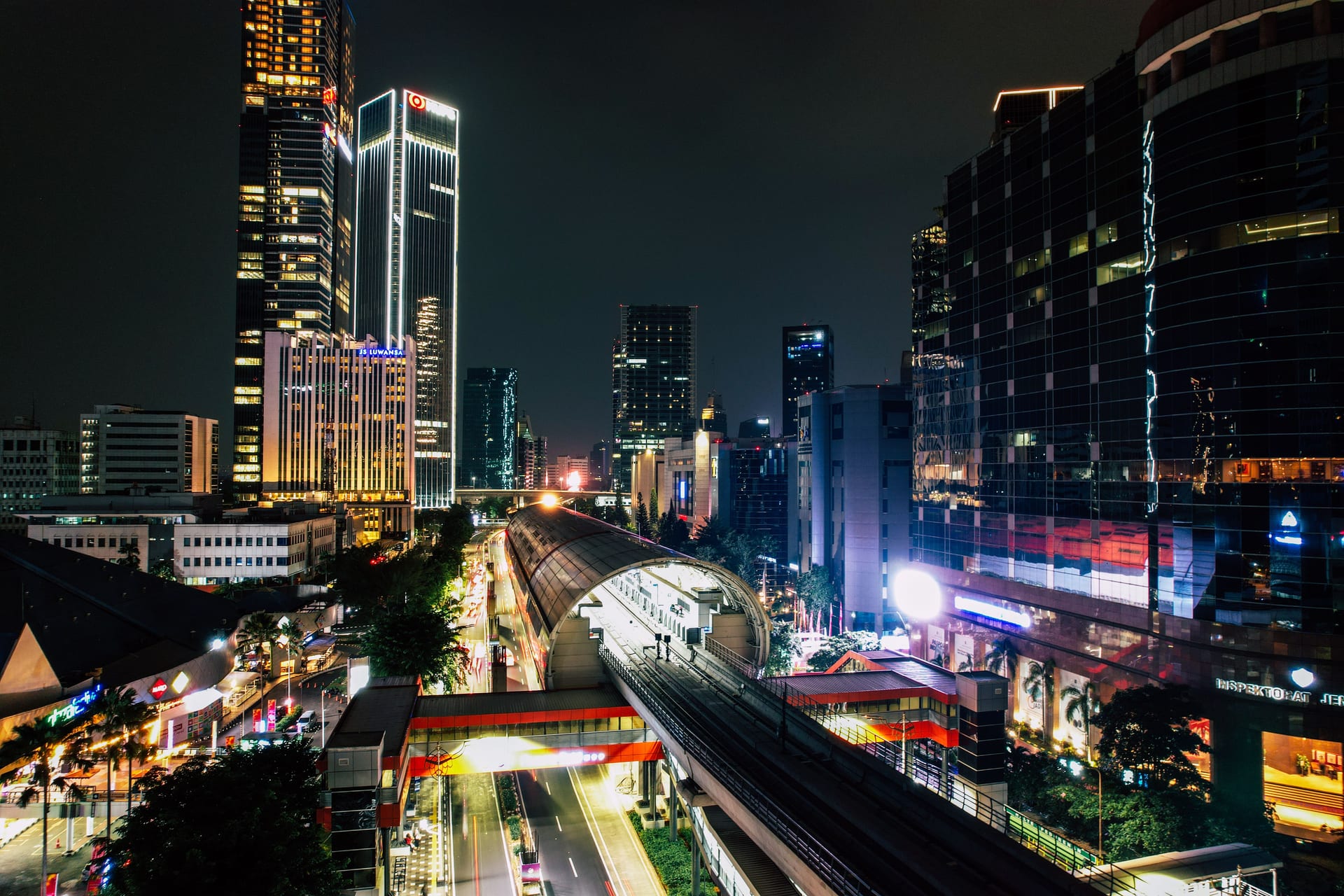
megacityJakarta is a vast, low-rise sprawl rather than a compact walkable core, and getting around generally means a car or motorbike. Walkability is poor, neighbourhoods can feel cut off from one another, and the sheer metropolitan scale dominates daily life. The pace is fast and the city never really slows, more so than most of its Indonesian peers.
Public life & spaces
22/100Jakarta is a mega-dense sprawl of traffic, flooding and pollution, where neglected streets give way to malls because almost no walkable square exists. Living is cheap, but daily enjoyment is largely pay-to-play and air-conditioned. There's vitality here, yet little that's genuinely free or any real cared-for shared space to enjoy it in.
Safety
53/100Serious violent crime is rare, and on that measure Jakarta is reassuringly safe for a city of its size. Everyday petty crime and pickpocketing are more of a concern, and require ordinary street sense. The bigger uncertainty is political stability, which sits lower here than residents might like, and occasional unrest can surface.
Healthcare
45/100Healthcare in Jakarta is functional rather than strong. Top private hospitals serve expats and the wealthy well, and English-speaking care is findable, but doctor availability across the system is thin and emergency reliability is uneven. Many foreigners carry private insurance and keep a regional medical hub in mind for anything serious.
Family life
33/100For families, Jakarta is a mixed picture. Childcare and domestic help are affordable, which eases the daily load, and international schools exist for those who can pay. Against that, playgrounds and green outdoor space for kids are limited, work-life culture leans long-hours, and family housing feasibility is only moderate.
Career
73/100Jakarta has a substantial local economy, with low unemployment and professional networks that support people building a career on the ground. English-language roles are less abundant, while the technology scene provides a useful pocket of opportunity. Local pay is low, so earning in the city is the material constraint.
Culture & food
76/100Food is one of Jakarta's strongest draws, from street warungs to a deep café culture and a wide spread of restaurants, including a fair range of international and meat-free options. Nightlife and the music and art scene hold their own for the region. A sizeable international community makes landing socially easier than the language barrier alone would suggest.
Ease of integration
67/100Indonesian is the working language of daily life, and while English is widely spoken in business and among the international set, getting by locally still rewards picking up the language. Indonesians are generally warm and open to foreigners, and Jakarta's diverse, international layer gives newcomers an easy entry point. Civic trust and everyday orderliness, though, run lower than in tidier regional cities.
Connectivity
43/100Infrastructure is where Jakarta strains hardest. Traffic congestion is notorious, public transport is still catching up despite a new metro line, and cycling is barely viable. Digital infrastructure and online bureaucracy lag, which can frustrate. The one bright spot is the airport, which connects well across Asia and beyond.
Social values
traditionalSocially, Jakarta is on the conservative side. Public life carries a strong religious character, secular norms are weaker, and LGBTQ acceptance is limited, which is worth weighing seriously for some. On the other hand, the city is notably open to foreigners and more internationally minded than much of the country, so outsiders are generally welcomed.
Relocation ease
45/100Settling in takes some grit. Visas and work authorization are navigable but slow, and bureaucracy and banking admin can be opaque and paper-heavy. The language barrier is moderate, eased by English in professional circles, and housing is reasonably easy to find. Budget extra patience for the administrative side of the move.
The trade-offs
A year in Jakarta
Aug peaks around 32°C, Jan days top out near 30°C, and the year brings roughly 80 bright days.
Can you actually move here?
The hard limits people most often bring to a move, scored against Jakarta's data.
Moving with a pet
Bringing a pet to Jakarta is moderately difficult. Indonesia has import rules, paperwork, and vaccination requirements to clear, and rabies-related restrictions can complicate the process, so expect to plan well ahead and likely lean on a relocation agent.
Who Jakarta works for
Answer the questionnaire and see where Jakarta lands for you.
Take the free questionnaireWhere else to look
Jakarta vs. comparable cities


Objective scores (0–100) for Jakarta and its 4 nearest comparable cities.
The cities people weigh against Jakarta
Unexpected siblings
Far from Jakarta on the map, close across all 14 categories of daily life.


