 Spain

Las Palmas de Gran Canaria makes sense if
- You want the easier housing and budget equation in this comparison.
- A calmer day-to-day safety profile matters most to you.
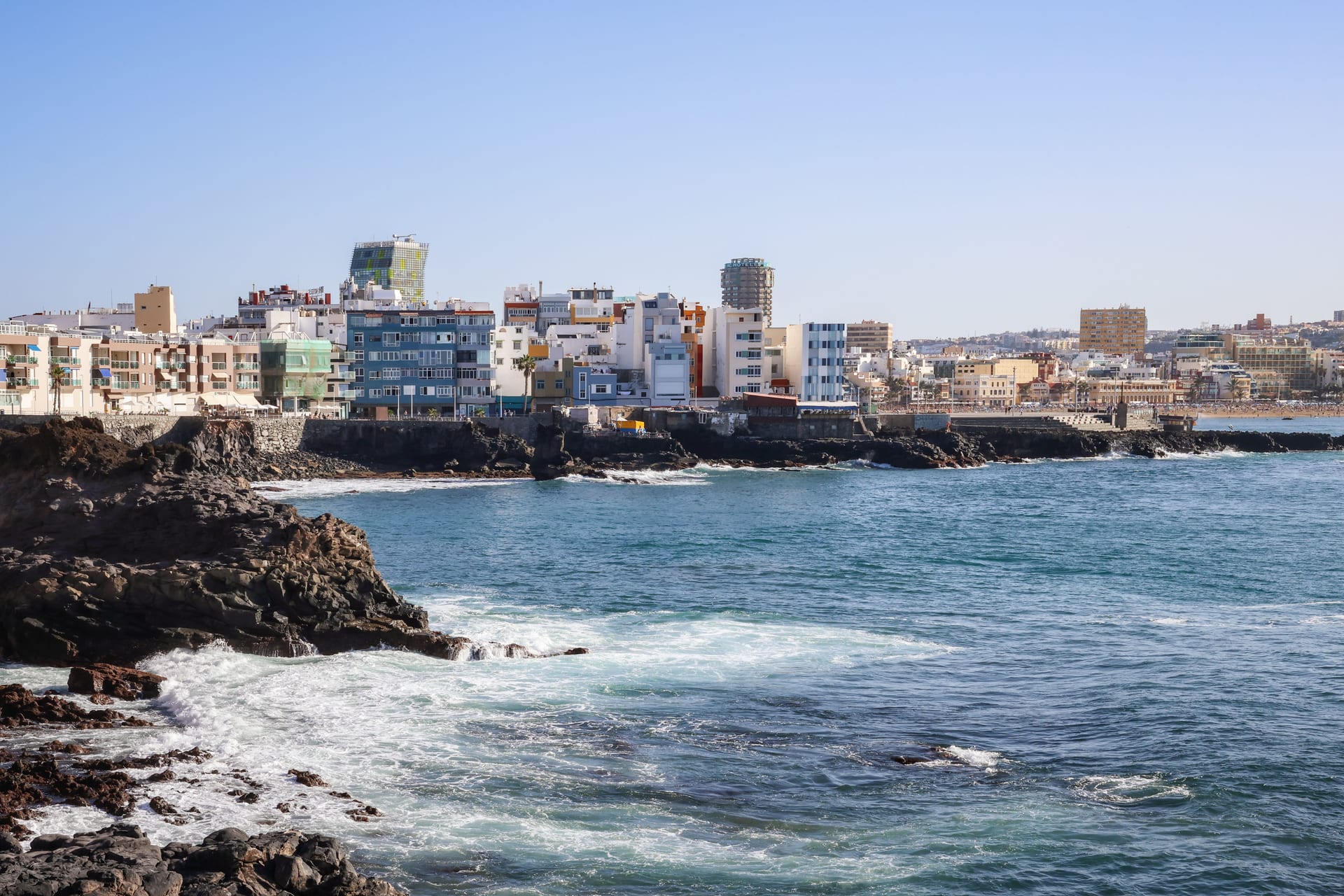
Las Palmas offers an ocean-led routine and mild, steady weather, but its local job market is thin. Seville has the scale of Andalusia's capital, a deep cultural calendar and long evenings outdoors, with summer heat and Spanish-first daily life shaping the adjustment.
The grey shape is all 283 cities; each row says whether lower or higher is better. Ratings out of 10 are our reviewed estimates; the rest is published data. How we measure
Set how much each area counts. The ranking updates as you go. Climate and values are left out because there is no better or worse there, only your taste.
Leads on nature & outdoors; stands out for beach & sea and milder summers.
Leads on city life; stands out for train connections and lakes & rivers.
Scores out of 100, averaged from the areas you weighted. For a ranking built around your own situation, take the quiz.
Rent on a new lease, everyday prices and tax.
The year month by month. Whether it suits you is yours to judge.
Solid line: average daytime high. Dashed: night-time low. Point at the chart for any month; point at a city name to shade its range.
How easily you get to water, mountains and green space.
Getting around on foot, food, culture and the feel of the streets.
Crime, how safe people feel, and the care you would get.
Jobs, working culture, schools and raising kids.
Visas, language, paperwork and staying connected.
Where each city sits. There is no right end of these scales.
A compact, low-rise city with an unhurried pace, calmer than busy Madrid and on a par with Málaga. The core is walkable and daily life rarely demands a car, though it spreads out rather than rising into a dense centre.
A walkable, human-scale city with a dense, mixed-use core where daily errands rarely need a car. The old town's tangle of narrow streets keeps things intimate, and most neighbourhoods blend homes, shops, and bars at street level.
Reassuringly safe. Violent crime is very low, the roads are among the safer in the region, and walking around at night feels comfortable, in line with other Spanish cities.
Walking home late feels fine in most areas. The usual southern-European caveat applies: tourist-heavy spots and crowds invite pickpockets, so ordinary city-centre vigilance is worth keeping.
Local employment is the clear limitation in Las Palmas. Solid, dependable public healthcare without quite the depth of the big mainland hospitals in Madrid.
Seville works better for people with work already secured than for a cold local search. Public healthcare is solid and broadly trusted, with good hospital coverage and emergency care that residents rely on.
A capable food and culture scene with a notably large international community, though a step down from the mainland heavyweights. Las Palmas keeps its beachfront and centre decently kept, with a few worn districts at the edges.
The local culture is deeply rooted and lived openly, from flamenco to Semana Santa to the rhythm of tapas in the evening, and the restaurant, cafe, and nightlife scenes are excellent for the city's size. The public realm more than compensates: the Plaza de España, cathedral squares and the riverside are genuinely magnificent and walkable.
Choose Seville for capital-city culture and a more substantial local setting. Las Palmas is the easier lifestyle fit if ocean access and stable weather matter more and your work can travel with you.
These numbers treat everyone the same. The quiz weighs them by your budget, climate taste, family and work, and ranks all 283 cities for you.