 Japan
Okinawa (Naha) makes sense if
- You want the easier housing and budget equation in this comparison.
- A calmer day-to-day safety profile matters most to you.
Okinawa (Naha) offers a slower island routine, lower rent, and distinctive Ryukyuan food and culture. Osaka brings the much deeper career market, hospitals, dining, and walkable public life.
The grey shape is all 283 cities; each row says whether lower or higher is better. Ratings out of 10 are our reviewed estimates; the rest is published data. How we measure
Set how much each area counts. The ranking updates as you go. Climate and values are left out because there is no better or worse there, only your taste.
Leads on city life, safety & health, work & family and moving & settling in; stands out for train connections and life without a car.
Narrowly best on money: 71 vs Osaka's 70; stands out for beach & sea and less petty crime.
Scores out of 100, averaged from the areas you weighted. For a ranking built around your own situation, take the quiz.
Rent on a new lease, everyday prices and tax.
The year month by month. Whether it suits you is yours to judge.
Solid line: average daytime high. Dashed: night-time low. Point at the chart for any month; point at a city name to shade its range.
How easily you get to water, mountains and green space.
Getting around on foot, food, culture and the feel of the streets.
Crime, how safe people feel, and the care you would get.
Jobs, working culture, schools and raising kids.
Visas, language, paperwork and staying connected.
Where each city sits. There is no right end of these scales.
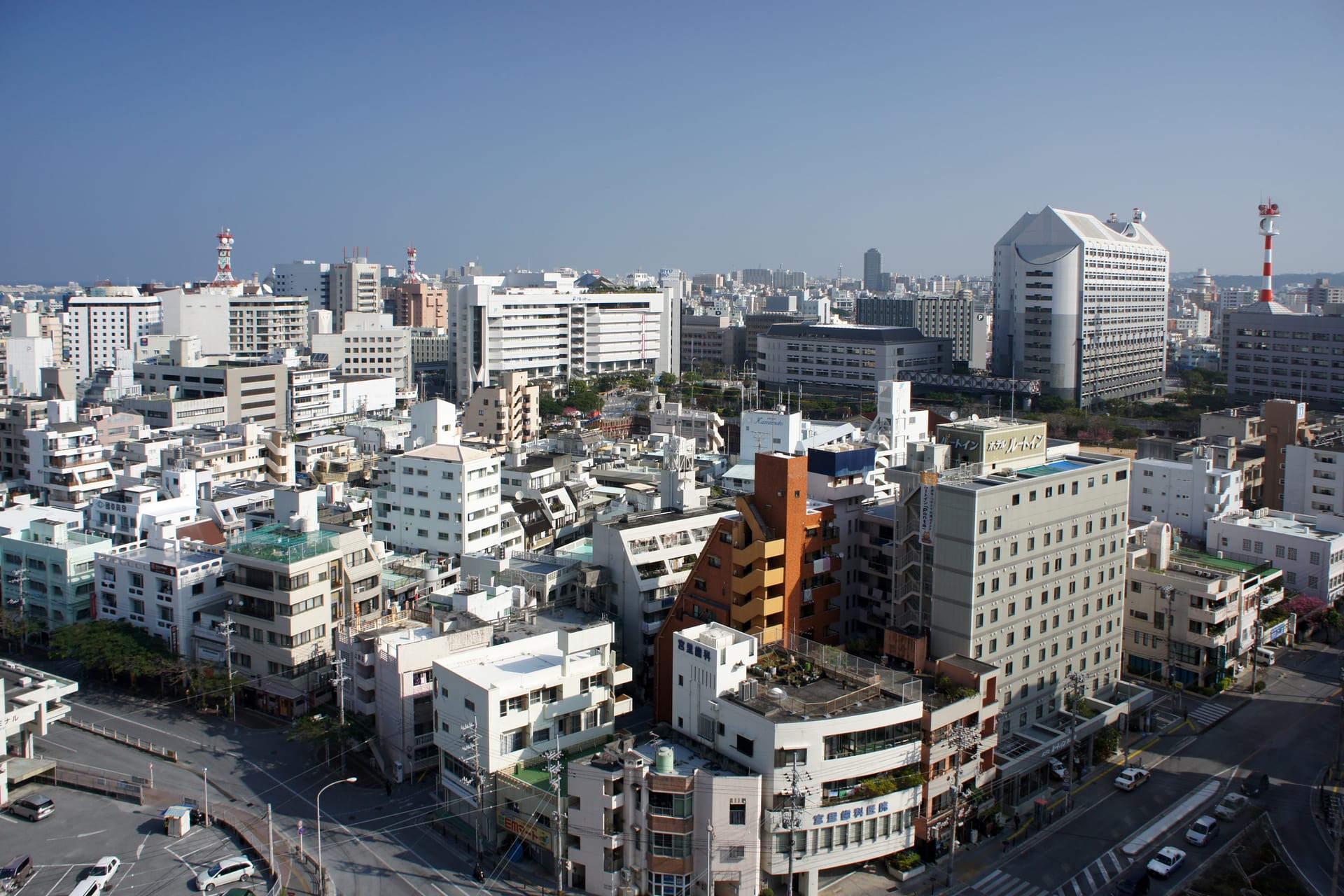
Naha is compact and low-rise, with walkable central pockets but heavy reliance on a car once you leave them. The pace is unhurried, far gentler than mainland hubs like Fukuoka or Osaka, which suits some and frustrates others.
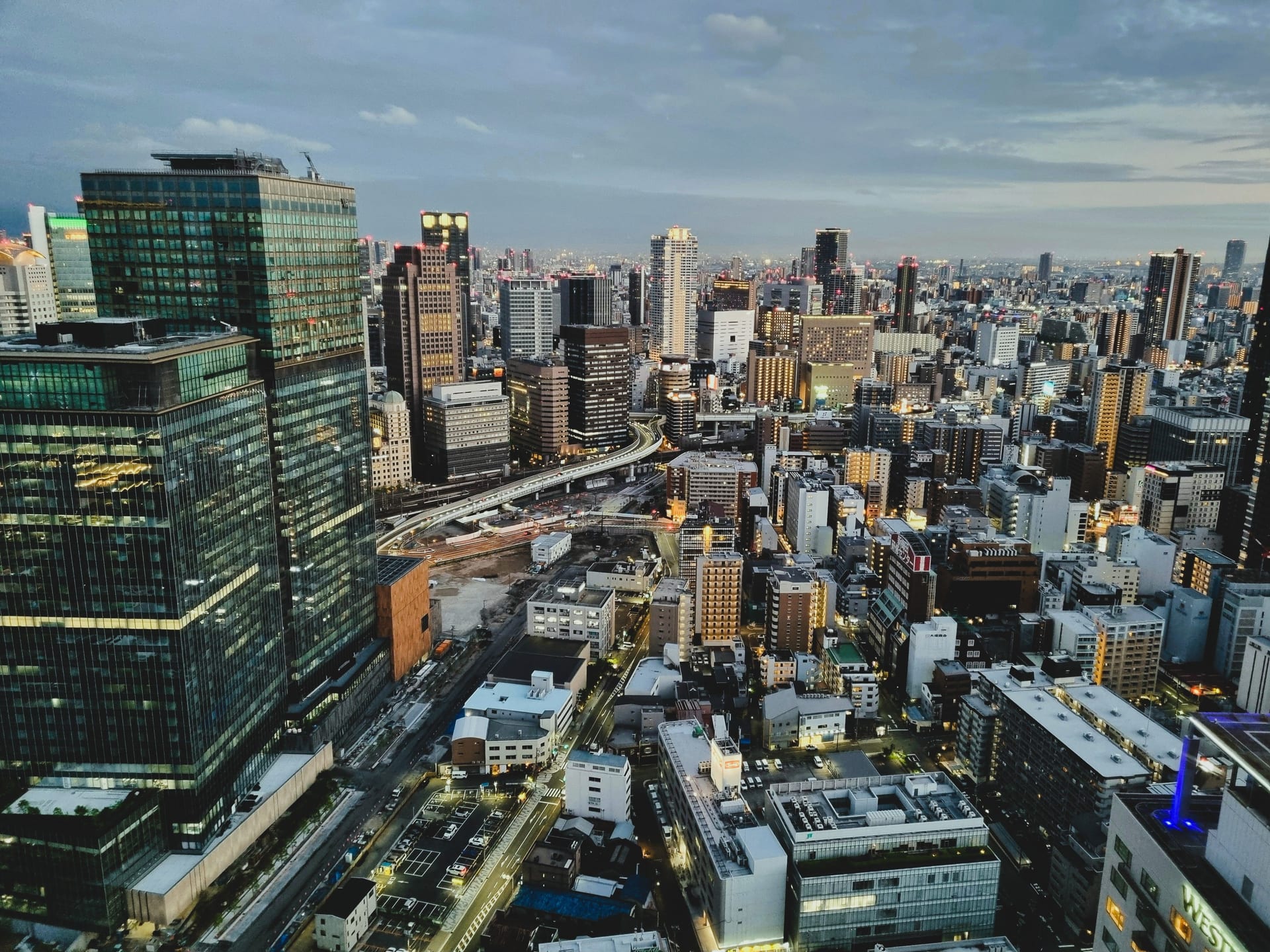
Compact, dense and made for walking, with shops, bars and homes layered together street by street. Owning a car is close to pointless given how the trains cover everything.
Naha feels secure after dark and traffic is orderly, with a stable political backdrop. It does record more violent crime per resident than Tokyo, Kyoto or Fukuoka, while theft sits close to Fukuoka's.
Osaka is safe by international standards, and serious violence is rare. Even so, it has the highest recorded crime of the Japanese cities we cover, with more than twice Tokyo's theft rate, so bikes and bags need a little more care than elsewhere in Japan.
Okinawa's local job market is narrow, with shallow professional networks and little startup depth. Care is solid and runs through Japan's national insurance system, so out-of-pocket exposure stays manageable.
Osaka has a deep, varied employment base, especially across manufacturing and established industries. Clinical quality is high and out-of-pocket costs stay low under the national insurance system, so care itself is reliable and affordable.
Okinawan culture stands apart from mainland Japan, with its own cuisine, music, and an islander identity that residents take real pride in. Okinawa is clean in the Japanese way, though it sprawls more than mainland cities, threaded with car roads and base areas.
It is arguably Japan's best eating city, from street stalls to serious kitchens, with a nightlife and local food culture that locals are loudly proud of. Osaka is clean if a touch grittier than Tokyo, and all the better for it.
Choose Okinawa (Naha) for remote income, beaches, and a quieter island pace. Osaka is the practical choice for local careers, specialist care, Japan's strongest everyday food culture, and a more connected city routine.
These numbers treat everyone the same. The quiz weighs them by your budget, climate taste, family and work, and ranks all 283 cities for you.