
Living in Osaka
Japan's second city runs cheaper and looser than Tokyo, with a famously direct, food-obsessed local character. Daily life is safe, walkable and well-served by trains, though the language wall and a work culture that still prizes long hours shape what settling in actually feels like.
Osaka at a glance
Vital stats
Where Osaka stands out
The metrics where Osaka sits farthest from the middle worldwide, good and bad.
Cheap to arrive, expensive to stay?
A typical one-bedroom in Osaka runs ¥74,222/mo. That is ~24% of one typical local employee’s mean net pay. This is a solo-newcomer stress test: sitting tenants, shared homes, subsidised housing and informal rents are deliberately outside the numerator.
The fastest way to test a shortlist is to go. A week on the ground tells you things no ranking can.
Partner link
Approved language-learning and international money resources for practical next steps.
Daily life in Osaka
How Osaka scores
Category by category
Affordability
73/100Osaka's open-market one-bedroom rent on a new lease is about ¥74,222 per month. That is roughly 24% of one typical employee's mean net pay, a rent burden labelled manageable solo.
Climate
subtropicalOsaka has mild winters, with January averaging 5.9°C, but summer is hot, humid, and tiring. About 203 bright days keep the year from feeling persistently grey, while the region's weather brings a meaningful storm-season caveat.
Nature access
lakes & riversGreen is thin on the ground inside the city itself, with little parkland per resident and a dense, built-up grid that leaves few open spaces. The payoff sits just outside: mountains, hiking trails and the Kansai countryside are within easy weekend reach, more so than from Tokyo, so escapes are about leaving town rather than stepping outdoors.
Urban form
large cityCompact, dense and made for walking, with shops, bars and homes layered together street by street. Owning a car is close to pointless given how the trains cover everything. The trade-off is space at home, where flats run small, but the streetscape is lively and the pace fast, a notch calmer than Tokyo yet a long way from sleepy.
Public life & spaces
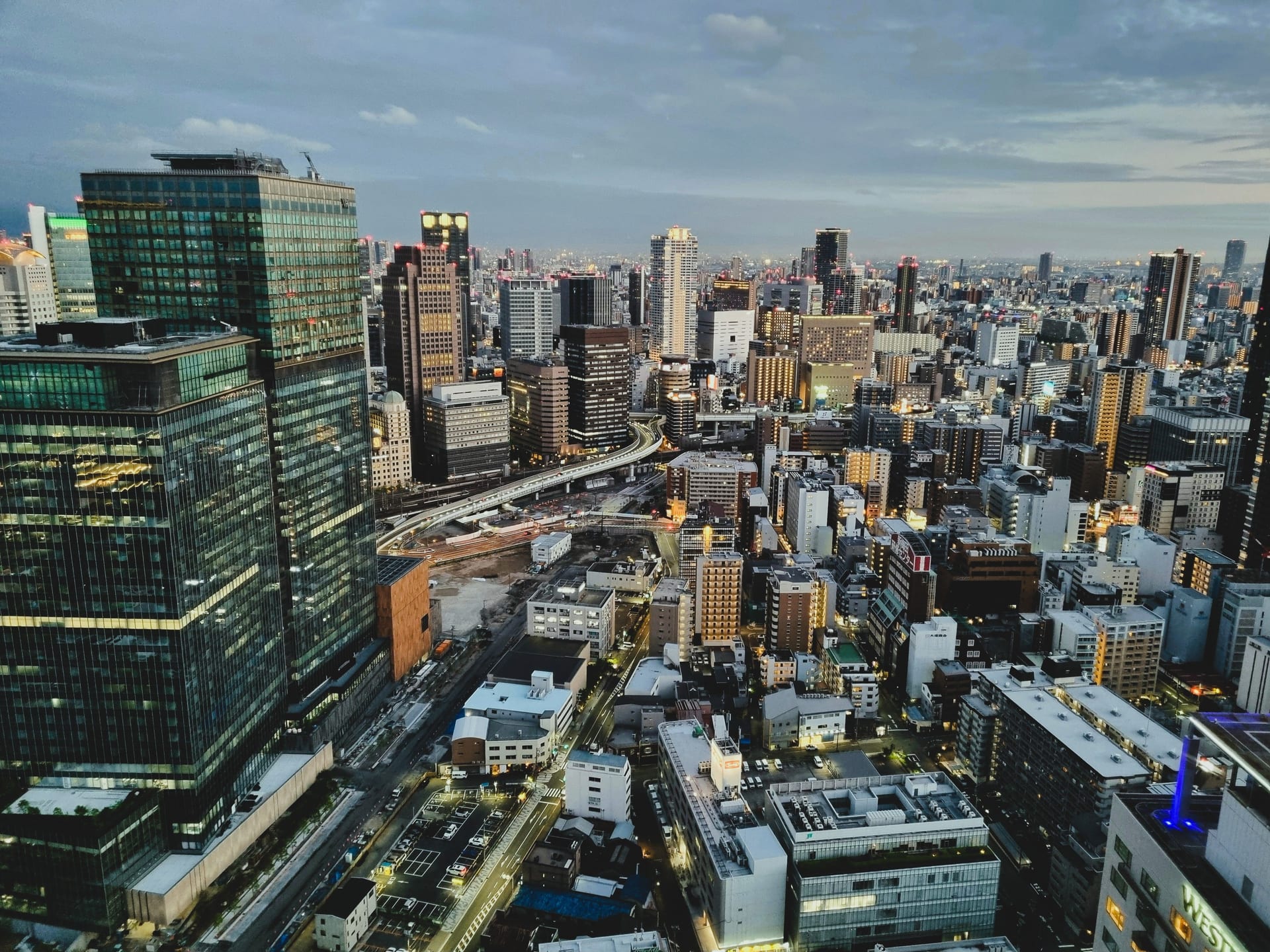
81/100Osaka is clean if a touch grittier than Tokyo, and all the better for it. Dotonbori's canal, the castle grounds and the lively streets give it a loud, walkable public life. It's cheaper than the capital, with vibrant street-food culture and free festivals running through the year.
Safety
92/100About as safe as cities get. Violent crime is rare, walking home late feels routine rather than risky, and the roads are well managed and orderly. It sits in the same elite tier as Tokyo, the kind of place where lost wallets have a habit of finding their way back.
Healthcare
73/100Clinical quality is high and out-of-pocket costs stay low under the national insurance system, so care itself is reliable and affordable. The friction is language and access: doctors per resident are on the thin side, and finding English-speaking practitioners takes effort, which can make routine appointments more stressful than they should be for a newcomer.
Family life
63/100Strong on the fundamentals parents worry about most, with streets children can roam safely and solid, well-regarded schools. Childcare and family flats are workable. The weak spot is the work culture, where long hours and rigid offices leave less room for family time than parents from northern Europe would expect.
Career
71/100Osaka has a deep, varied employment base, especially across manufacturing and established industries. English-language roles are limited, while startup and remote-work options are narrower. Local pay is broadly mid-range, though slightly below the comparison's midpoint.
Culture & food
81/100This is where Osaka shines. It is arguably Japan's best eating city, from street stalls to serious kitchens, with a nightlife and local food culture that locals are loudly proud of. Museums and the arts hold their own. What thins out is the international and English-friendly layer, which is smaller than Tokyo's, so the texture is deeply, unapologetically local.
Ease of integration
48/100Osakans have a reputation for being warmer and more talkative than the Tokyo norm, which helps. But the language barrier is steep, English only goes so far, and society stays fairly closed to outsiders, so real integration leans heavily on learning Japanese. Newcomers who put in that work tend to find the door opens; those who do not can stay on the surface a long time.
Connectivity
74/100World-class on the rails. Local transit is dense and punctual, and the bullet-train links to the rest of the country are about as good as they come, leaving cities like Sydney far behind on intercity connectivity. Utilities and internet are dependable. The drags are patchy cycling provision and paperwork that still leans on fax and counters rather than screens.
Social values
mixedOrderly and high-trust, with a secular public life and a strong sense of shared civic rules. On the liberal axis it is more reserved: gender equality lags, and attitudes on LGBTQ life and social change are cautious rather than progressive, broadly in step with the rest of Japan. Newcomers from more openly liberal societies will notice the gap.
Relocation ease
45/100One of the harder Japanese cities to land in smoothly, mostly down to language. Day-to-day life, banking, housing searches and official paperwork all assume Japanese and run on old-school bureaucracy, and the cultural adjustment is steep. Visas and work authorization are manageable rather than easy. Patience and some language groundwork go a long way.
The trade-offs
A year in Osaka
Aug peaks around 33°C, Jan days top out near 10°C, and the year brings roughly 203 bright days.
Can you actually move here?
The hard limits people most often bring to a move, scored against Osaka's data.
Moving with a pet
Bringing a pet to Japan is a slow, paperwork-heavy process, with strict vaccination, microchip and quarantine-prep rules that can stretch over months if not started well ahead. It is harder than moving a pet within Europe, so early planning matters.
Who Osaka works for
Answer the questionnaire and see where Osaka lands for you.
Take the free questionnaireWhere else to look
Osaka vs. comparable cities
Objective scores (0–100) for Osaka and its 4 nearest comparable cities.
The cities people weigh against Osaka
Unexpected siblings
Far from Osaka on the map, close across all 14 categories of daily life.

