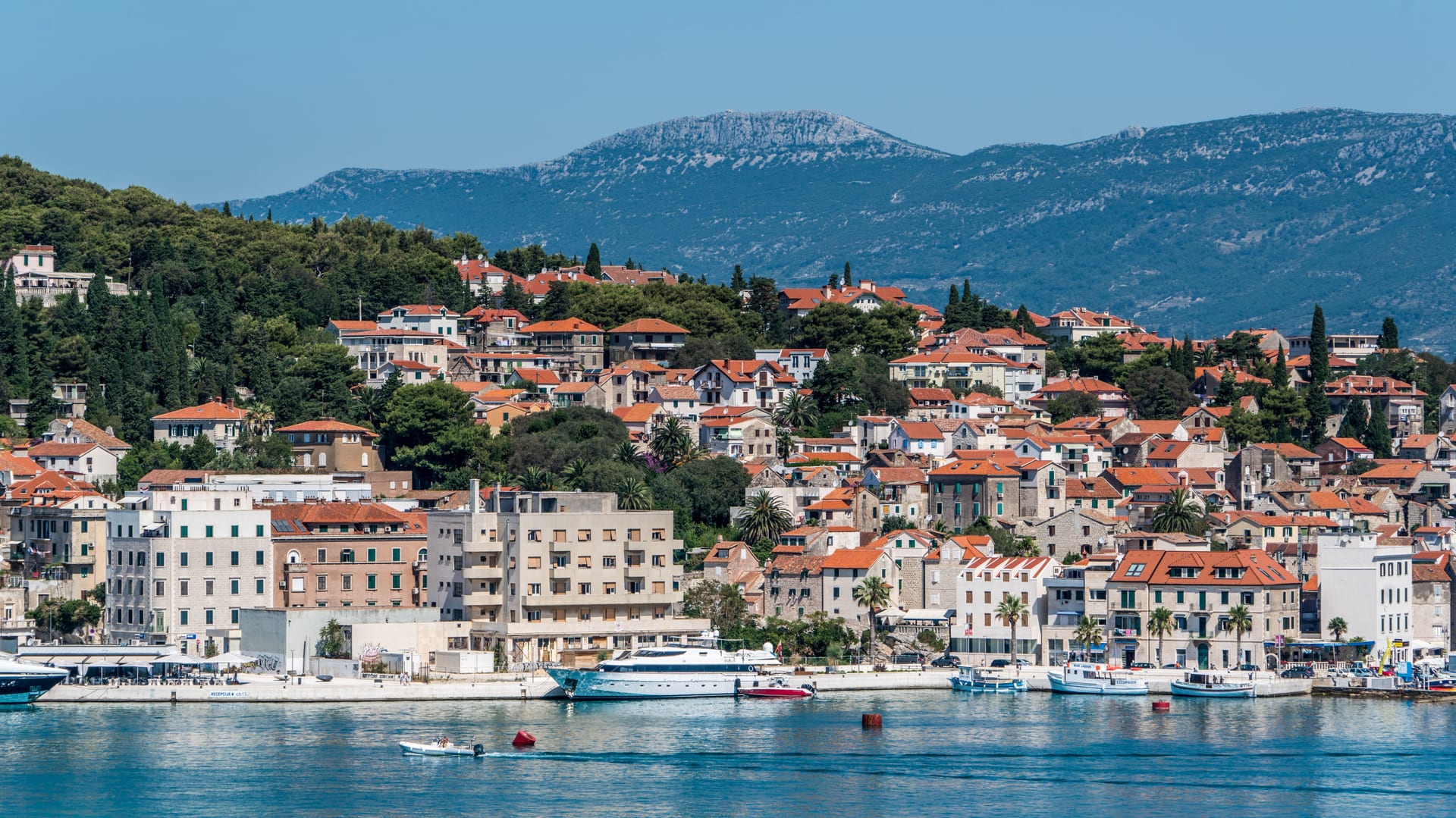
 Croatia
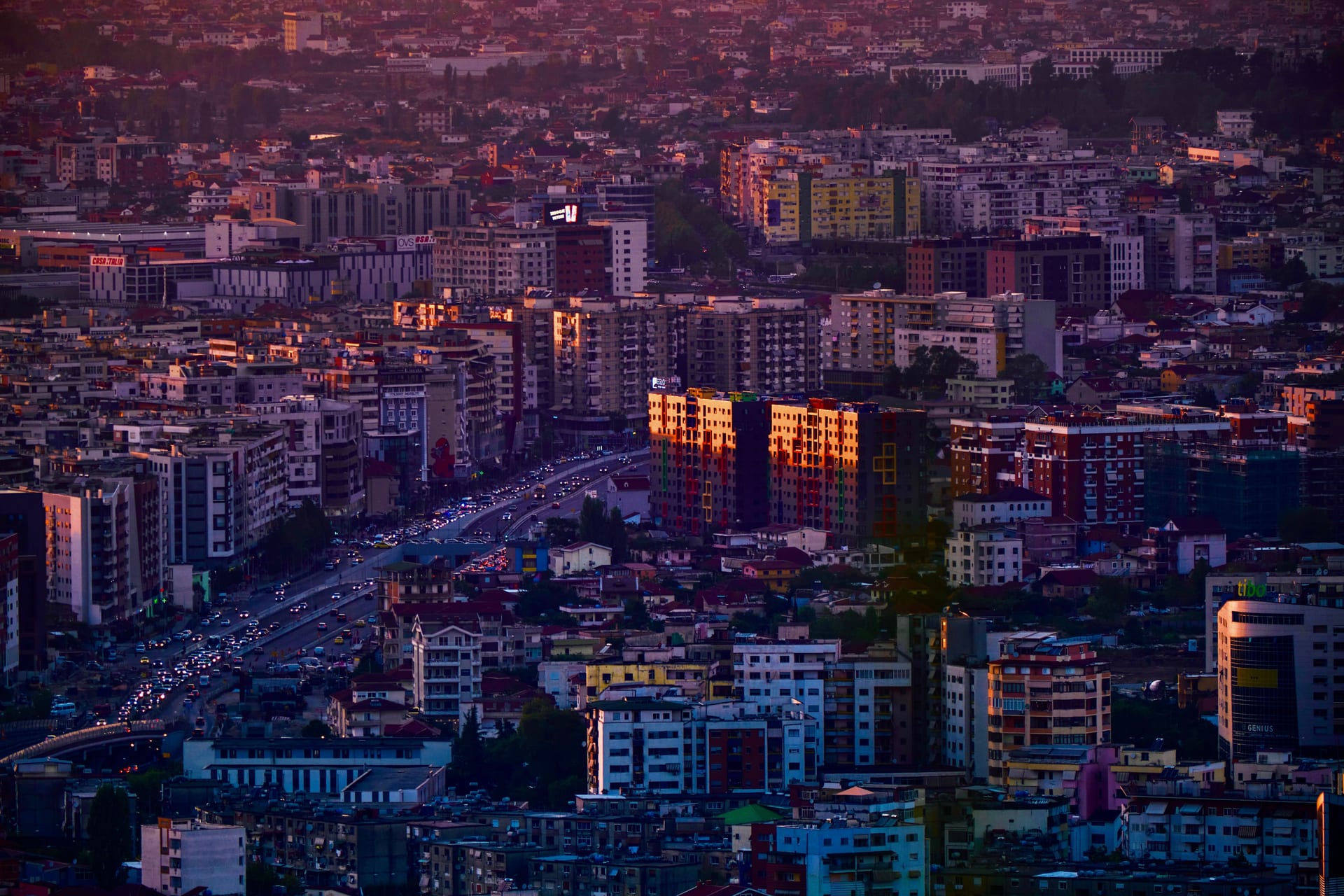
 Albania
Split makes sense if
- A calmer day-to-day safety profile matters most to you.
- Access to stronger healthcare matters most to you.
- You want the broader career options in this comparison.
Split makes the Adriatic part of ordinary life, with mild winters and bright weather, but its local work options are limited. Tirana offers a busier inland capital routine; its local career market is also narrow, so remote income can matter in either place.
The grey shape is all 283 cities; each row says whether lower or higher is better. Ratings out of 10 are our reviewed estimates; the rest is published data. How we measure
Set how much each area counts. The ranking updates as you go. Climate and values are left out because there is no better or worse there, only your taste.
Leads on nature & outdoors, city life, safety & health and work & family; stands out for beach & sea and clean, cared-for streets.
Tied best on money with Split, both 71; stands out for easier house-hunting and openness to newcomers.
Scores out of 100, averaged from the areas you weighted. For a ranking built around your own situation, take the quiz.
Rent on a new lease, everyday prices and tax.
The year month by month. Whether it suits you is yours to judge.
Solid line: average daytime high. Dashed: night-time low. Point at the chart for any month; point at a city name to shade its range.
How easily you get to water, mountains and green space.
Getting around on foot, food, culture and the feel of the streets.
Crime, how safe people feel, and the care you would get.
Jobs, working culture, schools and raising kids.
Visas, language, paperwork and staying connected.
Where each city sits. There is no right end of these scales.
It is a genuinely small city, quiet and unhurried, closer to a large coastal town than a metropolis. Apartments tend to run small, and the calm tempo will feel sleepy to anyone used to a big-city buzz.
Tirana is a compact, dense city, small enough to cross on foot in a way the bigger capitals to the north are not. The core is walkable and mixed-use, with shops, homes and cafés stacked together.
Violent crime is rare, the streets feel relaxed after dark, and residents report a strong sense of everyday security. Petty theft exists around the tourist core in high season, as it does in any Mediterranean port, but by any honest measure this is a safe place to live.
Violent crime is low and the homicide rate is reassuringly small, so everyday and after-dark safety hold up well. It feels a notch less buttoned-down than Budapest or Warsaw, with more petty opportunism to watch for.
Split's local labour market is small and concentrated, with limited industry breadth and professional-network depth. Healthcare is solid but middle-of-the-road, on par with the rest of Croatia rather than a draw in its own right.
Local employment is the main compromise. Healthcare is one of Tirana's real weak spots.
Strong, distinctly local Dalmatian food and a deep cafe culture where afternoons stretch out over coffee. The built realm is a genuine draw.
Café culture is the city's signature, denser and more central to daily life than in almost any comparable capital, and the restaurant and nightlife scene is livelier than its size implies. Tirana is chaotic and dusty, litter and messy construction everywhere, upkeep an afterthought.
Choose Split if seaside access is central to your week and your work is already portable. Tirana is the more urban alternative if you want a capital's street life without needing a coastal setting. Check housing and healthcare access by neighborhood before committing.
These numbers treat everyone the same. The quiz weighs them by your budget, climate taste, family and work, and ranks all 283 cities for you.