
Living in Tirana
Tirana is a warm, often bright capital whose lifestyle appeal is stronger than its local career base. Local pay is low and the job market is narrow, so remote work is the more reliable route for newcomers bringing income from elsewhere. The city suits residents who arrive with work already arranged rather than those relying on local hiring.
Tirana at a glance
Vital stats
Shown in USD: the local currency (ALL) moves too fast for stable monthly figures.
Where Tirana stands out
The metrics where Tirana sits farthest from the middle worldwide, good and bad.
Cheap to arrive, expensive to stay?
A typical one-bedroom in Tirana runs $489/mo. That is ~85% of one typical local employee’s mean net pay. That is 26 points above Belgrade, its closest rival among nearby cities. This is a solo-newcomer stress test: sitting tenants, shared homes, subsidised housing and informal rents are deliberately outside the numerator.
The fastest way to test a shortlist is to go. A week on the ground tells you things no ranking can.
Partner link
Approved language-learning and international money resources for practical next steps.
Daily life in Tirana
How Tirana scores
Category by category
Affordability
70/100Tirana's open-market one-bedroom rent on a new lease is about $489 per month. That is roughly 85% of one typical employee's mean net pay, a rent burden labelled solo unlikely.
Climate
temperateTirana has mild winters and hot summers, with about 228 bright days a year. Humidity brings a sticky edge through part of the warm season, while roughly 98 rainy-grey days and middling air quality keep the climate from feeling effortless.
Nature access
alpineThis is the strongest case for Tirana. Mount Dajti rises straight behind the city, the Adriatic beaches are a short drive west, and the Albanian Alps open up to the north, giving genuinely good weekend hiking and national-park access that puts most Central European capitals to shame. Inside the city itself, though, green space per resident is thin and dedicated cycling routes are scarce.
Urban form
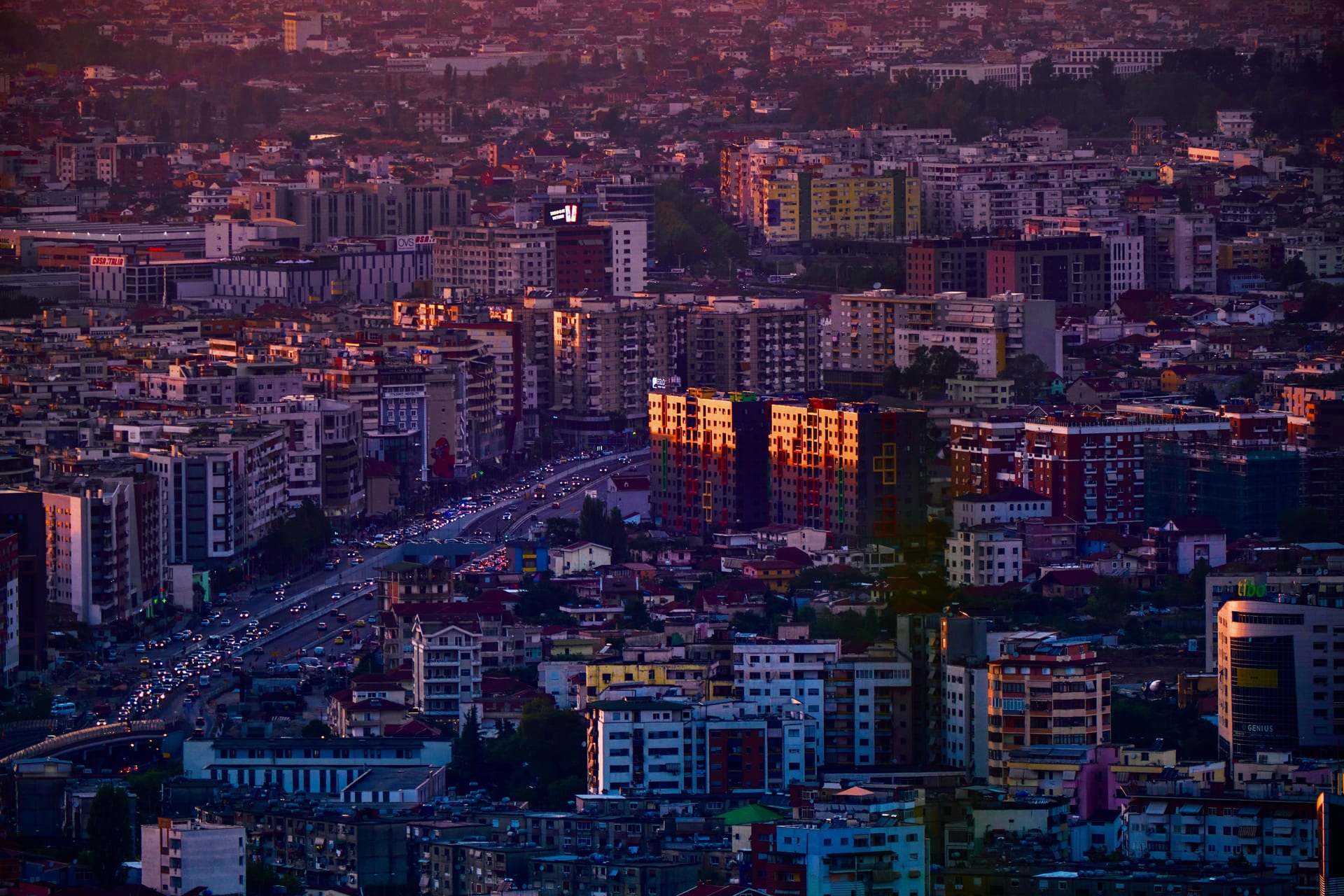
mid-sizedTirana is a compact, dense city, small enough to cross on foot in a way the bigger capitals to the north are not. The core is walkable and mixed-use, with shops, homes and cafés stacked together. Build quality and neighbourhood polish lag behind, suburbs are underdeveloped, and apartments tend to run tight on space.
Public life & spaces
41/100Tirana is chaotic and dusty, litter and messy construction everywhere, upkeep an afterthought. Yet the revamped Skanderbeg Square and colourful pedestrian blocks give the centre real life. The appeal is cost: the city is very cheap, its cafe culture endless and its public square events free.
Safety
72/100Violent crime is low and the homicide rate is reassuringly small, so everyday and after-dark safety hold up well. It feels a notch less buttoned-down than Budapest or Warsaw, with more petty opportunism to watch for. The bigger asterisk is political stability, which is shakier than in the established EU capitals.
Healthcare
43/100Healthcare is one of Tirana's real weak spots. Doctor availability is low, public hospital quality and emergency reliability trail behind regional peers, and many residents who can afford it go private or travel abroad for serious care. English-speaking clinicians exist but are not the norm, and navigating coverage takes effort.
Family life
51/100For families the picture is mixed. Kids get plenty of outdoor time and the city is reasonably safe for them, and childcare is affordable. But schools rate poorly, playground provision is limited, and family-sized housing is a stretch on local terms, which pushes many international families toward private options.
Career
44/100Local employment is the main compromise. Local pay is low, the market is shallow, and English-only opportunities and startup activity are limited. Remote work gives the city a more workable angle, especially for people whose income does not depend on local hiring.
Culture & food
57/100Café culture is the city's signature, denser and more central to daily life than in almost any comparable capital, and the restaurant and nightlife scene is livelier than its size implies. Albanian food and a strong sense of local identity give it real character. Formal culture is thinner, with fewer museums, galleries and a smaller arts scene than Budapest or Warsaw.
Ease of integration
44/100Albanians are notably welcoming to outsiders, and that openness makes first connections easier than the numbers on a smaller international scene might suggest. English and Italian are both widely understood, which softens the everyday gap, but Albanian is essential for deeper integration and the language barrier is real. The expat circle is small, so newcomers lean on local friendships sooner.
Connectivity
31/100Infrastructure is where the gap with wealthier capitals shows most. There is no usable intercity rail, public transport within the city is basic, cycling provision is minimal, and digital connectivity lags. The airport handles a decent spread of European routes, traffic is manageable for a dense city, but utilities and e-government services remain patchy.
Social values
traditionalPublic life is strikingly secular, a legacy of Albania's unusual history, and the welcome for foreigners runs warm. On other measures it is more conservative: social liberalism, gender equality and especially LGBTQ acceptance sit lower than in Lisbon or Western Europe, and the city is not very ethnically diverse. Civic trust and institutional orderliness are still works in progress.
Relocation ease
63/100Getting in is relatively painless. Visa and residence rules are forgiving in practice even for non-EU arrivals, and finding an apartment is easier and less competitive than in the bigger capitals. Counterweighting that, day-to-day bureaucracy is heavy, banking and admin take patience, and learning Albanian is a genuine demand over time.
The trade-offs
A year in Tirana
Jul peaks around 31°C, Jan days top out near 11°C, and the year brings roughly 228 bright days.
Can you actually move here?
The hard limits people most often bring to a move, scored against Tirana's data.
Moving with a pet
Bringing a pet into Albania is comparatively straightforward, easier than into many EU capitals, with standard vaccination and paperwork rather than long quarantine. Confirm current rabies and microchip rules before travelling, since requirements shift.
Who Tirana works for
Answer the questionnaire and see where Tirana lands for you.
Take the free questionnaireWhere else to look
Tirana vs. comparable cities


Objective scores (0–100) for Tirana and its 4 nearest comparable cities.
The cities people weigh against Tirana
Unexpected siblings
Far from Tirana on the map, close across all 14 categories of daily life.

