
Living in Split
Split has a mild winter and a bright year. Local pay is modest and work options are narrow, so remote income matters greatly. The trade-off is clear: pleasant weather comes with limited local career depth for residents relying on local hiring.
Split at a glance
Vital stats
Where Split stands out
The metrics where Split sits farthest from the middle worldwide, good and bad.
Cheap to arrive, expensive to stay?
A typical one-bedroom in Split runs €494/mo. That is ~39% of one typical local employee’s mean net pay. This is a solo-newcomer stress test: sitting tenants, shared homes, subsidised housing and informal rents are deliberately outside the numerator.
The fastest way to test a shortlist is to go. A week on the ground tells you things no ranking can.
Partner link
Approved language-learning and international money resources for practical next steps.
Daily life in Split
How Split scores
Category by category
Affordability
72/100Split's open-market one-bedroom rent on a new lease is about €494 per month. That is roughly 39% of one typical employee's mean net pay, a rent burden labelled tight alone.
Climate
temperateSplit has mild winters and warm, bright summers, with January averaging 7.5°C and about 240 bright days across the year. Rainy-grey days are relatively few, but muggy conditions are common enough in summer to shape the peak season. Air quality is clean and severe-weather risk is low.
Nature access
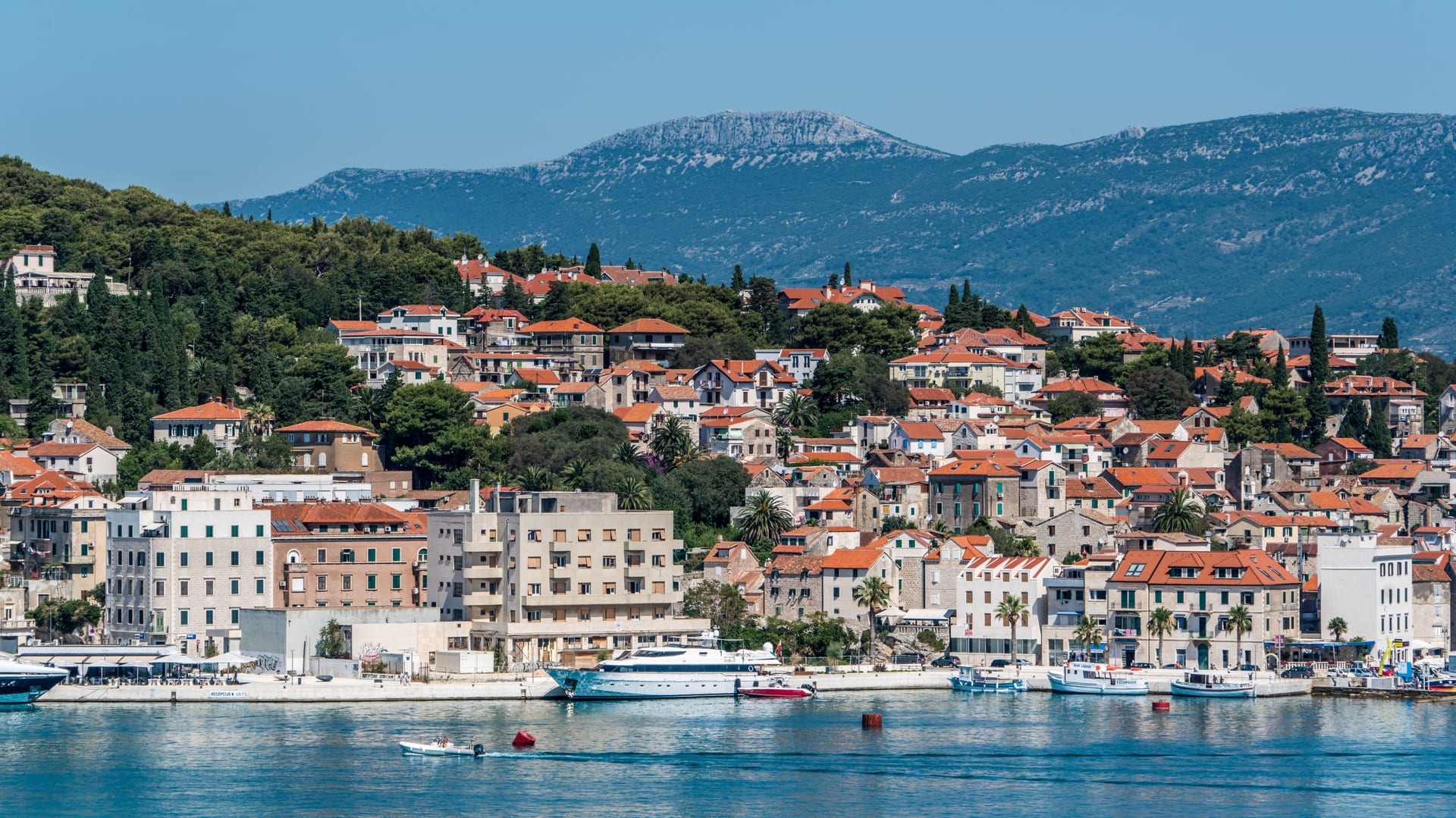
coastalThis is Split's strongest card. The sea is right there for swimming, sailing, and island-hopping, and weekend trips reach mountains and several of Croatia's national parks within a manageable drive. Inside the city itself green space is scarce, with few proper parks, so the outdoors here means getting out of town rather than strolling a leafy block.
Urban form
small cityCompact and very walkable, anchored by the old town inside Diocletian's Palace where daily life happens on foot. It is a genuinely small city, quiet and unhurried, closer to a large coastal town than a metropolis. Apartments tend to run small, and the calm tempo will feel sleepy to anyone used to a big-city buzz.
Public life & spaces
70/100Split's old town is tidy and remarkable — Diocletian's Palace, the Riva promenade, seafront squares woven into living streets — though tourist season brings wear and grime. The built realm is a genuine draw. Coastal tourism pushes prices up, but the seafront and summer festivals stay free.
Safety
78/100One of Split's clear strengths. Violent crime is rare, the streets feel relaxed after dark, and residents report a strong sense of everyday security. Petty theft exists around the tourist core in high season, as it does in any Mediterranean port, but by any honest measure this is a safe place to live.
Healthcare
59/100Healthcare is solid but middle-of-the-road, on par with the rest of Croatia rather than a draw in its own right. Public hospitals and emergency care cover the basics, and out-of-pocket costs stay reasonable. As a smaller city, the deepest specialist care sometimes means a trip to Zagreb, and English-speaking doctors are available but not a given.
Family life
61/100Kids grow up outdoors here, with the sea, mild weather, and a safe, low-crime setting all working in a family's favour. The weaker side is the institutional one: schools and childcare are average and stretched, and finding suitable, affordable family housing takes patience. Day-to-day childhood is lovely; the logistics around it need work.
Career
46/100Split's local labour market is small and concentrated, with limited industry breadth and professional-network depth. English-language roles exist, and remote work is a strong option, but unemployment is 5%. Local pay is modest, so the city makes more sense for income earned elsewhere than for building a broad local career.
Culture & food
67/100Strong, distinctly local Dalmatian food and a deep cafe culture where afternoons stretch out over coffee. Restaurants are good, leaning toward seafood and Mediterranean cooking. The trade-offs show in the thinner edges: vegan and vegetarian options are limited, and the music, arts, and nightlife scene is modest next to bigger Croatian and Central European cities.
Ease of integration
44/100Croatian is the language of daily life, though English is widely spoken in the centre and Italian turns up often given the Adriatic ties. Locals are reasonably welcoming to newcomers, and a small international community has taken root. Croatian society leans traditional, so building deep local friendships rewards effort and some grasp of the language over time.
Connectivity
47/100A mixed bag, and one of the things newcomers notice fastest. Utilities are reliable and road traffic is light, but public transport is bus-only and limited, cycling provision is thin, intercity rail is poor, and internet speeds lag the regional norm. The airport gives decent seasonal reach, yet getting around without a car can be a daily friction.
Social values
mixedSplit sits on the more traditional, conservative side of European city life. Public culture is fairly religious, social attitudes are less liberal than in Zagreb or much of Western Europe, and LGBTQ acceptance, while present, is more reserved. Openness to foreigners is reasonable, but anyone expecting big-city progressive norms should set expectations accordingly.
Relocation ease
57/100As an EU city, residence and work paperwork is relatively straightforward for Europeans, and the cultural adjustment for most Westerners is gentle. The real grind is administrative: Croatian bureaucracy is slow and paper-heavy, and the rental market can be a frustrating search, especially since summer demand competes with tourist lets.
The trade-offs
A year in Split
Aug peaks around 27°C, Jan days top out near 10°C, and the year brings roughly 240 bright days.
Can you actually move here?
The hard limits people most often bring to a move, scored against Split's data.
Moving with a pet
Bringing a pet to Split is straightforward, particularly from within the EU, where the standard pet passport, microchip, and rabies vaccination cover the basics with little extra fuss. Owners from further afield should confirm current entry rules before travelling.
Who Split works for
Answer the questionnaire and see where Split lands for you.
Take the free questionnaireWhere else to look
Split vs. comparable cities


The cities people weigh against Split
Unexpected siblings
Far from Split on the map, close across all 14 categories of daily life.

