Affordability
64/100Antwerp's open-market one-bedroom rent on a new lease is about €990 per month. That is roughly 34% of one typical employee's mean net pay, a rent burden labelled manageable solo.
Climate
wet & greyAntwerp is grey and damp rather than hot and sticky. It has 149 bright days and 122 rainy-grey days, with winters especially short on usable light. Summers stay mild, muggy weather is uncommon, and air quality is clean. The climate's cost is persistent overcast, not oppressive heat.
Nature access
leafyAntwerp is flat, built-up coastal lowland, so the dramatic stuff is missing: no mountains, limited forest, and modest green space per resident. What it does have is a flat, cycle-friendly hinterland and parks scattered through the centre. The North Sea coast and the Dutch countryside are an easy day trip, which softens the lack of wilderness nearby.
Urban form
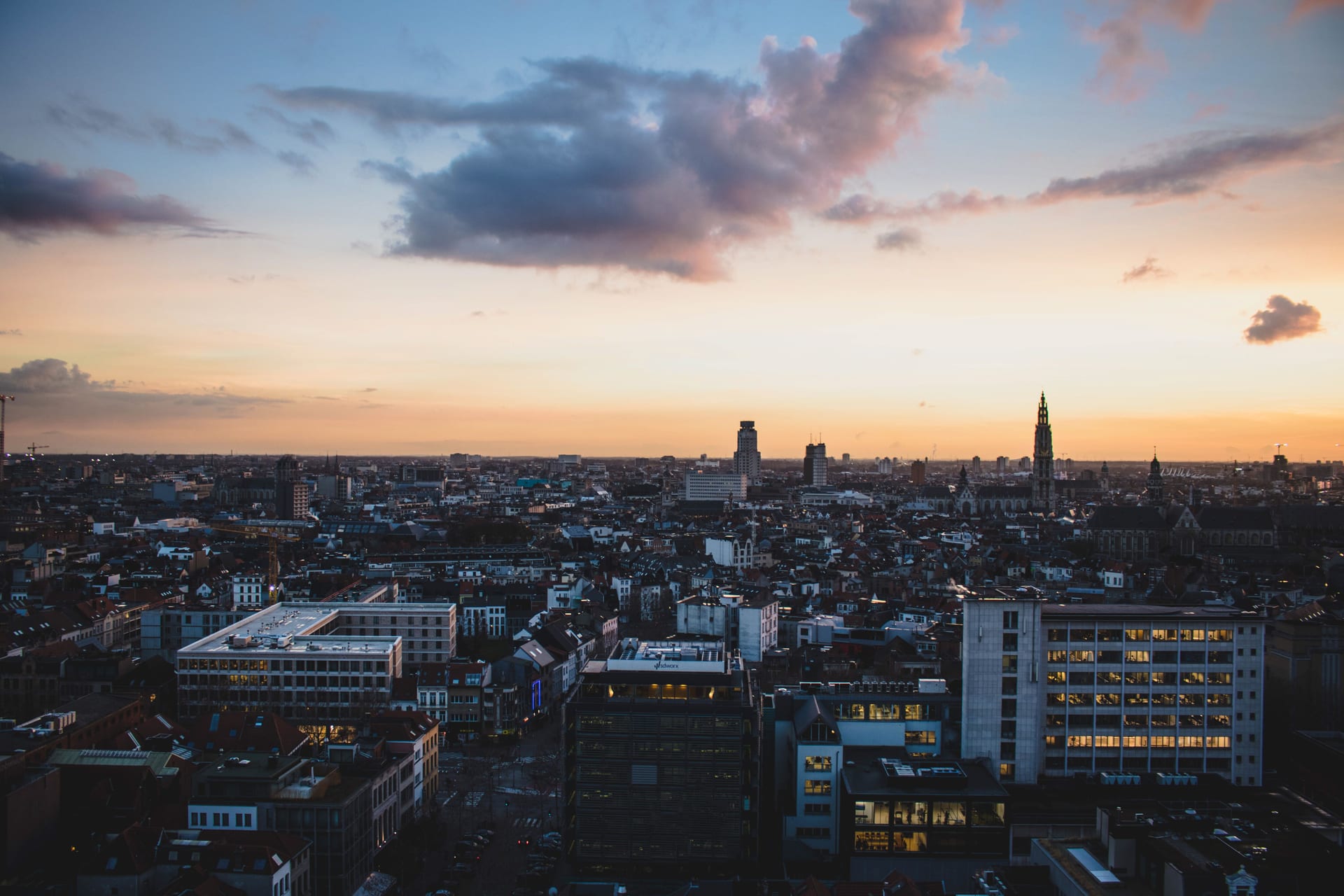
mid-sizedCompact and eminently walkable, with handsome, mixed-use districts where shops, homes, and cafes share the same streets. Neighbourhood quality rates high and daily errands rarely need a car. It is a notably smaller place than Brussels, so the pace is calmer and the streetscape more human-scaled than big-capital living.
Public life & spaces
70/100Antwerp keeps itself tidy in the practical Flemish way, well-kept if never sterile, with a little port grit at the edges. The built fabric is the draw: the Grote Markt, the fashion district and the Scheldt riverfront make handsome squares to gather in. Festivals and markets abound, though Belgian prices keep free days rare.
Safety
71/100Serious violent crime is rare and the homicide rate is very low, in line with the rest of Belgium. Road safety is solid by international measure. Where Antwerp is more middling is the everyday texture, with pickpocketing and a so-so sense of ease after dark in certain pockets, roughly on par with Brussels.
Healthcare
68/100Belgian healthcare is strong and Antwerp shares in it, with good hospital access, reliable emergency care, and English widely spoken in clinical settings. Costs to patients stay manageable under the national insurance system. The one soft spot is doctor availability, where finding a GP taking new patients can take patience.
Family life
70/100A sensible place to raise children. Flemish schools perform well, the work-life culture leaves room for family time, and parental leave and childcare sit within Belgium's supportive norms. Family-sized housing is more attainable here than in Brussels, though still not cheap. Parks and playgrounds are adequate rather than abundant.
Career
66/100Antwerp has a solid job market, with unemployment at 5.9% and English-language roles available without being abundant. Pay for typical local employees is comparatively strong. The trade-off is specialization: the startup and tech scene is modest, so it suits a steady sector fit better than a high-churn tech search.
Culture & food
74/100For its size, Antwerp punches well above its weight. It is a genuine fashion and design capital with a deep art history, a serious museum and gallery scene, and nightlife that outdoes Brussels. The cafe and restaurant culture is strong, vegetarian options are easy to find, and the local creative identity is unusually distinct.
Ease of integration
70/100Dutch is the working language, but English goes a long way and the city is used to internationals, so the cultural adjustment is gentle by European standards. Making local friends is helped by a relatively low language barrier and an easy social rhythm. That said, openness to outsiders is warm rather than effusive, and the Flemish can take time to let newcomers fully in.
Connectivity
63/100Cycling infrastructure is a real strength, and intercity trains connect quickly to Brussels and onward across Europe. Utilities are dependable and public transport within the city works well, if a notch below the capital's network. Bureaucracy is slow to digitize and road congestion around the port can bite.
Social values
progressiveSocially liberal and secular in public life, with strong LGBTQ acceptance and solid gender equality, broadly matching the Belgian mainstream. The city is diverse and outward-looking. Day-to-day openness to foreigners is welcoming but a touch more reserved than cosmopolitan Brussels, and a conservative undercurrent exists alongside the progressive majority.
Relocation ease
55/100Compared with Brussels, the language barrier is lower, since Dutch alone gets a newcomer further than the capital's bilingual mix, and finding housing is genuinely easier. Cultural adjustment is mild for most Western movers. The drag is Belgian administration: bureaucracy is heavy, tax filing is fiddly, and patience is required for the paperwork.