
Living in Amsterdam
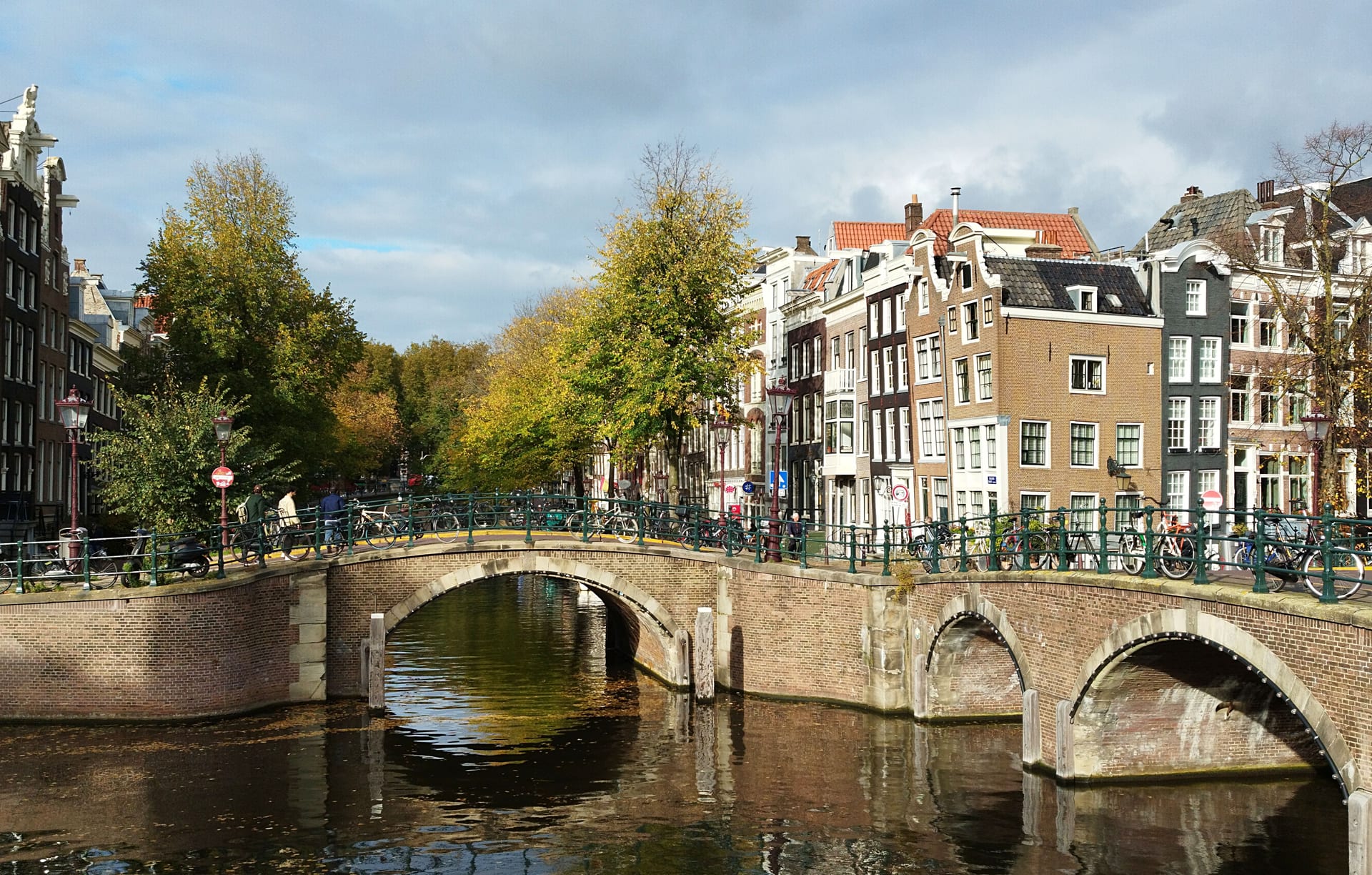
Amsterdam is a compact, walkable canal city where the bike is the default way to move and English carries through daily life. It runs costlier and more international than most Dutch cities, with Rotterdam and Utrecht offering a calmer, cheaper alternative. The catch is housing: finding a place is genuinely brutal.
Amsterdam at a glance
Vital stats
Where Amsterdam stands out
The metrics where Amsterdam sits farthest from the middle worldwide, good and bad.
Cheap to arrive, expensive to stay?
A typical one-bedroom in Amsterdam runs €1,413/mo. That is ~50% of one typical local employee’s mean net pay. That is 13 points above Utrecht, its closest rival among nearby cities. This is a solo-newcomer stress test: sitting tenants, shared homes, subsidised housing and informal rents are deliberately outside the numerator.
The fastest way to test a shortlist is to go. A week on the ground tells you things no ranking can.
Partner link
Approved language-learning and international money resources for practical next steps.
Daily life in Amsterdam
How Amsterdam scores
Category by category
Affordability
61/100Amsterdam's open-market one-bedroom rent on a new lease is about €1,413 per month. That is roughly 50% of one typical employee's mean net pay, a rent burden labelled tight alone.
Climate
wet & greyAmsterdam's summers are mild, with July around 18°C, but the year is often grey, including 125 rainy-grey days and few bright winter days. Muggy weather is uncommon, and air quality is comparatively good. The drawback is daylight and dampness, not tropical heat or dangerous weather.
Nature access
leafyNature here means flat, watery and cyclable. The cycling and running routes that thread out of the city are superb, and lakes, rivers and the nearby coast are easy to reach for a weekend. What's missing is elevation and wilderness: no mountains, almost no real hiking, and limited forest, so anyone craving rugged terrain will feel hemmed in.
Urban form
mid-sizedThis is one of Europe's best-organised cities to live in without a car. Dense, mixed-use and intensely walkable, with strong neighbourhood character and shops, cafes and homes layered together. Daily life rarely needs a vehicle. The trade-off is space: homes tend to be small, so room to spread out is the thing in shortest supply.
Public life & spaces
78/100Amsterdam keeps its canals and brick streets generally tidy, fraying only where the crowds thicken. The public realm is the draw: Vondelpark, the gabled waterways, markets like Albert Cuyp, all built to human scale. Parks and street life cost nothing, but this is an expensive, touristed city where most else is paid.
Safety
78/100Amsterdam is a reassuringly safe city, with a homicide rate of about 0.7 per 100,000, low violent crime, and streets that remain comfortable after dark. The everyday nuisance is petty theft, especially in busy areas, while cycling brings its own traffic awareness. Serious danger rarely shapes daily routines.
Healthcare
75/100Care quality is high and hospitals are well within reach, with emergency services that residents can rely on. A real practical advantage for foreigners is how widely doctors and staff work in English. The friction points are finding a regular GP, which can take patience, and an insurance system that takes some getting used to.
Family life
75/100Families do well here. Children are safe, schools are strong, and there's a deep culture of letting kids be outdoors and independent, with playgrounds and green corners woven through neighbourhoods. The work-life balance Dutch employers offer is among the most generous anywhere. The strain, as for everyone, is finding a family-sized home that fits the budget.
Career
80/100Amsterdam combines a strong, broad job market with plenty of English-language roles and a deep professional network. Startup opportunities are also substantial. Typical local employee pay is high relative to the wider comparison, supporting a comparatively strong earning base.
Culture & food
81/100For its size, Amsterdam punches well above its weight on culture. World-class museums, a serious music and art scene, and a dining spread that ranges from canal-side cafes to strong vegetarian and global options. The international community is large and easy to plug into. Local Dutch traditions run a little quieter than the cosmopolitan surface.
Ease of integration
78/100With Dutch widely spoken alongside near-universal English, newcomers can function from day one without the language. The culture is liberal, secular and open, and the large international population makes finding a footing straightforward. Integrating deeply into Dutch social circles takes more effort, as locals can be warm but slow to fully open up.
Connectivity
83/100Infrastructure is a genuine strength. Cycling provision is the best in the world, public transport is reliable, and Schiphol puts most of the planet within easy reach. Trains connect smoothly across the country and beyond. Utilities are dependable and admin is largely digitised; the main grumbles are road congestion and patchier connectivity than the polish suggests.
Social values
progressiveAmsterdam is among the most socially liberal cities in Europe, secular in public life and genuinely welcoming to LGBTQ residents. Gender equality is taken seriously and the population is diverse and international in outlook. Traditional or conservative norms hold little sway here, which suits some and unsettles others.
Relocation ease
59/100Moving here is smoothed by the language: English goes a long way, and cultural adjustment for Western newcomers is gentle. Visas, work permits and banking are manageable rather than trivial. The one genuinely hard part is housing. The search is fiercely competitive and slow, and it is the single biggest obstacle most arrivals face.
The trade-offs
A year in Amsterdam
Aug peaks around 23°C, Jan days top out near 7°C, and the year brings roughly 152 bright days.
Can you actually move here?
The hard limits people most often bring to a move, scored against Amsterdam's data.
Moving with a pet
Bringing a pet to the Netherlands is straightforward, with clear, predictable import rules and standard EU vaccination and microchip requirements. For arrivals from most countries it is one of the easier parts of the move.
Who Amsterdam works for
Answer the questionnaire and see where Amsterdam lands for you.
Take the free questionnaireWhere else to look
Amsterdam vs. comparable cities
The cities people weigh against Amsterdam
Unexpected siblings
Far from Amsterdam on the map, close across all 14 categories of daily life.

