
Living in The Hague
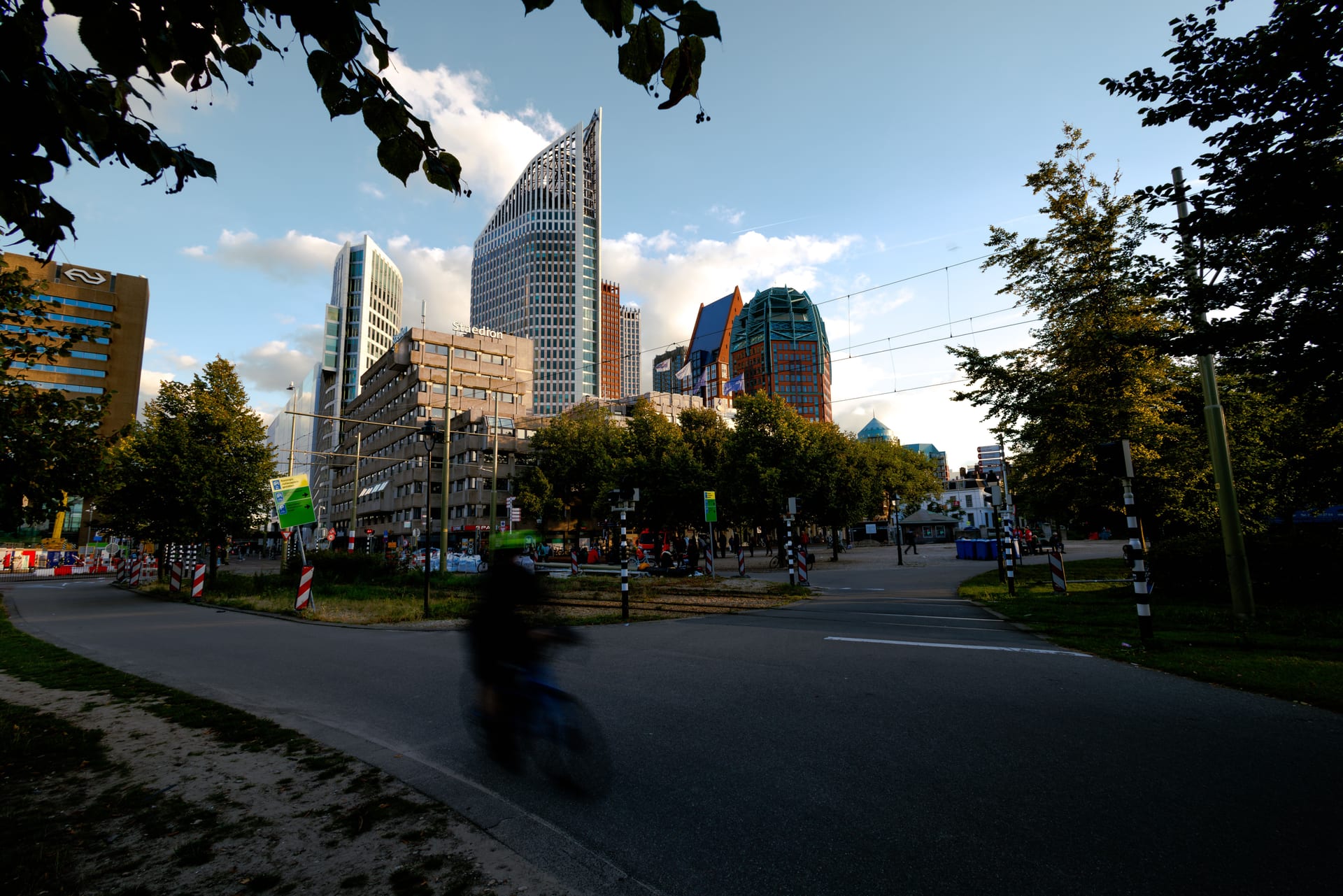
The Netherlands' seat of government and a hub for international law, The Hague trades Amsterdam's tourist crush for a calmer, more buttoned-up rhythm by the North Sea. It runs on bicycles and trams, leans heavily international, and sits a short train ride from Rotterdam. Life here is orderly, easy to navigate in English, and noticeably less frantic than the capital.
The Hague at a glance
Vital stats
Where The Hague stands out
The metrics where The Hague sits farthest from the middle worldwide, good and bad.
Cheap to arrive, expensive to stay?
A typical one-bedroom in The Hague runs €1,065/mo. That is ~37% of one typical local employee’s mean net pay. This is a solo-newcomer stress test: sitting tenants, shared homes, subsidised housing and informal rents are deliberately outside the numerator.
The fastest way to test a shortlist is to go. A week on the ground tells you things no ranking can.
Partner link
Approved language-learning and international money resources for practical next steps.
Daily life in The Hague
How The Hague scores
Category by category
Affordability
65/100The Hague's open-market one-bedroom rent on a new lease is about €1,065 per month. That is roughly 37% of one typical employee's mean net pay, a rent burden labelled tight alone.
Climate
wet & greyThe Hague has mild summers and very little severe weather, but the light is the catch. Bright days are limited, grey rainy stretches are common, and winter darkness is pronounced. Humidity is high, while muggy heat is unusual, so the climate feels damp and maritime rather than hot or oppressive.
Nature access
coastalThe coast is the headline, with broad North Sea beaches and dune reserves right at the city edge, plus excellent cycling and running routes threading through it. Parks and green space are decent for a Dutch city. What is missing is elevation: no mountains, thin forest cover and little serious hiking, so anyone craving rugged terrain looks elsewhere.
Urban form
mid-sizedThe Hague sits within a metropolitan area of about 2.2 million, but the city remains easy to navigate. Streets are dense and mixed-use, with exceptionally low car dependence, strong suburbs, and average space at home. The trade-off is urban intensity rather than a small-town feel.
Public life & spaces
81/100The Hague is polished and very well kept, a government city that shows it. The grand squares and the long beach at Scheveningen give it real public generosity, all walkable. The beach is free and the sea air costs nothing, but this is an expensive Dutch city where daily spending adds up fast.
Safety
78/100One of the safer places a newcomer could land. Violent crime is rare, the streets feel secure after dark, and traffic is managed with the care you would expect from a cycling nation. Pickpocketing exists, as in any city with tourists and crowds, but it stays in the background rather than shaping daily caution.
Healthcare
72/100Care quality is high and hospitals are easy to reach, with reliable emergency services and clinicians who switch into English without friction. The main caveats are systemic: getting a GP and navigating the mandatory private insurance setup takes patience, and doctor availability is merely adequate rather than abundant.
Family life
73/100A strong place to raise children. Streets are safe, schools are well regarded, work-life culture genuinely protects family time, and an outdoor, cycle-everywhere childhood is the norm here rather than the exception. Childcare and parental leave are workable. The one strain is housing: securing enough space for a family is competitive and costly.
Career
67/100The Hague has a strong job market around international institutions, government, and law, with excellent access to English-language work. Local pay is comparatively high, and remote work is well supported. Startup depth is respectable rather than exceptional, so the city suits established professional work better than someone seeking a deep tech scene.
Culture & food
67/100Culturally it punches above its size without matching Amsterdam's breadth. Museums and the dining scene are strong, cafes and the arts hold their own, and the international crowd keeps the food varied. Nightlife is the soft spot, quieter and more restrained, so anyone chasing a late, loud scene will feel the limits.
Ease of integration
78/100Dutch is the local language, but English goes a long way here and integration is unusually smooth for newcomers. The diplomatic and expat presence is large, the culture is open to foreigners, and civic trust runs high. Making international friends is easy; breaking into Dutch social circles, as anywhere in the country, takes more effort and a bit of the language.
Connectivity
74/100Close to flawless on the practical front. Trams and buses are frequent, cycling infrastructure is world-class, intercity trains connect the country quickly and Schiphol is a short hop away. Utilities are dependable, internet is fast, and dealing with officialdom is largely digital, which spares newcomers a lot of the usual paperwork pain.
Social values
progressiveAmong the more liberal, secular societies anywhere. Public life is non-religious, LGBTQ acceptance is high, gender equality is taken seriously and openness to outsiders is part of the civic fabric. Traditional or conservative norms carry little weight. Newcomers from more conventional cultures should expect a frank, progressive environment.
Relocation ease
60/100Among the gentler European moves for a skilled migrant. The language barrier is low, bureaucracy is light and digitised, cultural adjustment is mild and banking is straightforward. The glaring exception is housing: the rental market is tight and finding a place can be the single hardest part of settling in, much as it is across the Randstad.
The trade-offs
A year in The Hague
Aug peaks around 22°C, Jan days top out near 7°C, and the year brings roughly 152 bright days.
Can you actually move here?
The hard limits people most often bring to a move, scored against The Hague's data.
Moving with a pet
Bringing a pet into the Netherlands is straightforward, with clear EU import rules and standard requirements for microchipping, vaccination and paperwork. The Hague itself is an easy place for animals once they arrive.
Who The Hague works for
Answer the questionnaire and see where The Hague lands for you.
Take the free questionnaireWhere else to look
The Hague vs. comparable cities
The cities people weigh against The Hague
Unexpected siblings
Far from The Hague on the map, close across all 14 categories of daily life.

