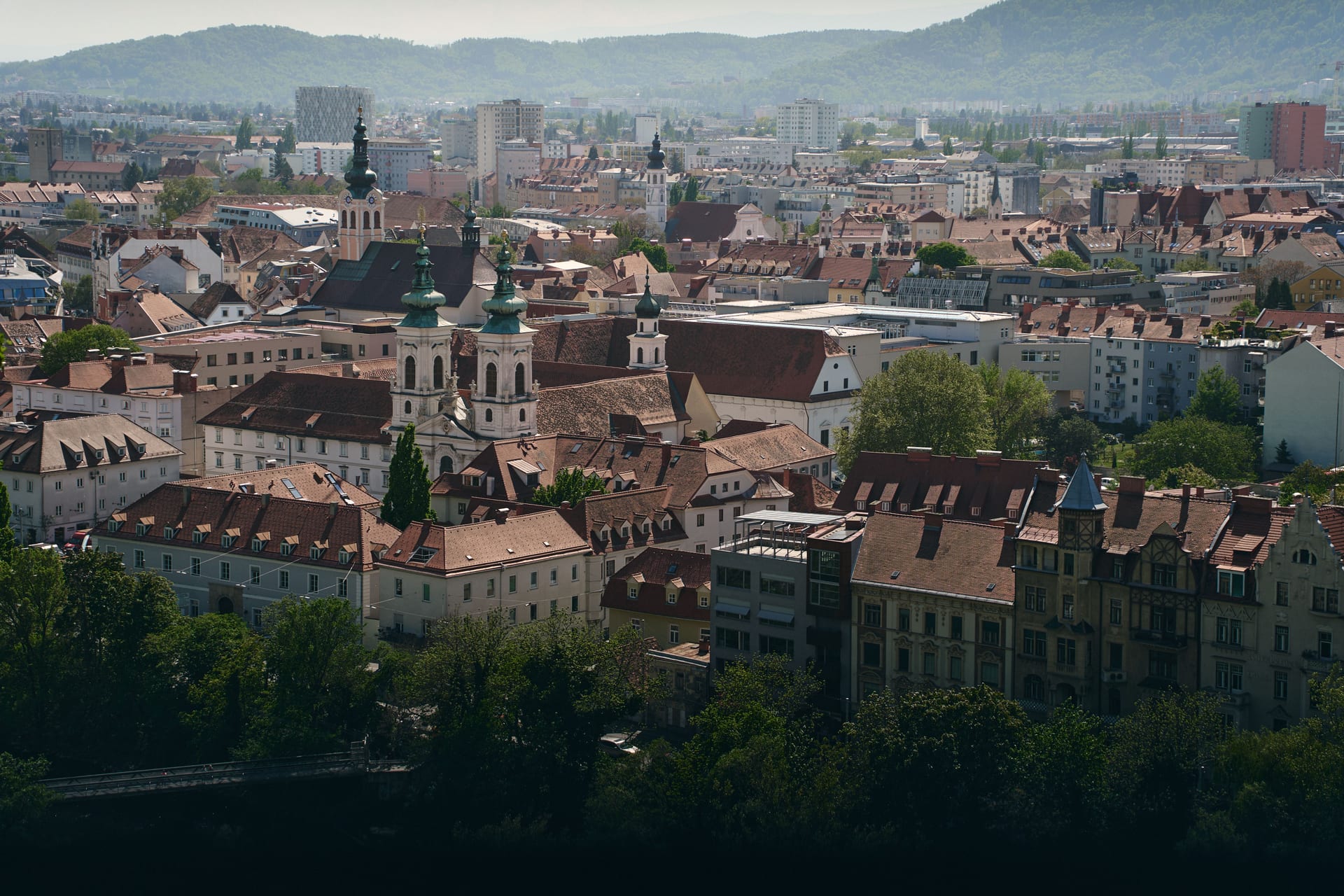
 Austria
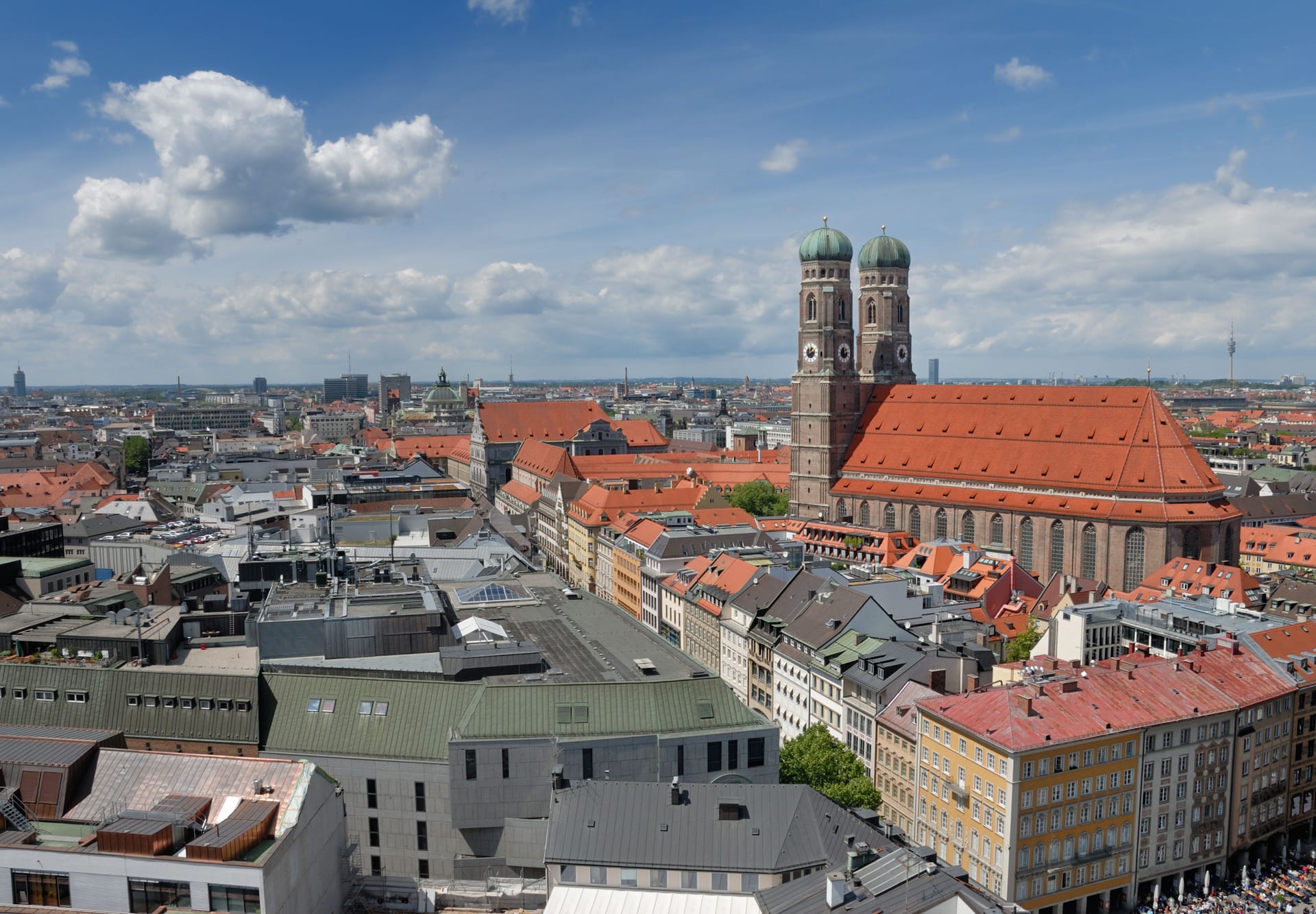
 Germany
Graz makes sense if
- You want the easier housing and budget equation in this comparison.
Munich offers a prosperous, orderly city with green space and dependable services, but high living costs shape daily choices. Graz is slower and student-flecked, with a smaller employment market and a lighter cost burden.
The grey shape is all 283 cities; each row says whether lower or higher is better. Ratings out of 10 are our reviewed estimates; the rest is published data. How we measure
Set how much each area counts. The ranking updates as you go. Climate and values are left out because there is no better or worse there, only your taste.
Leads on nature & outdoors, city life and work & family; stands out for professional network and startup & tech scene.
Leads on money; stands out for easier house-hunting and space for the money.
Scores out of 100, averaged from the areas you weighted. For a ranking built around your own situation, take the quiz.
Rent on a new lease, everyday prices and tax.
The year month by month. Whether it suits you is yours to judge.
Solid line: average daytime high. Dashed: night-time low. Point at the chart for any month; point at a city name to shade its range.
How easily you get to water, mountains and green space.
Getting around on foot, food, culture and the feel of the streets.
Crime, how safe people feel, and the care you would get.
Jobs, working culture, schools and raising kids.
Visas, language, paperwork and staying connected.
Where each city sits. There is no right end of these scales.
Graz has a small-city footprint with a walkable, mixed-use core and low car dependence. Everyday errands are easy, while the quieter tempo and limited metropolitan scale will not suit someone chasing constant intensity.
Public space is well kept and the feel is more measured than frenetic, calmer than Berlin's restless sprawl. The main constraint is space at home: apartments tend to run small and tight for the price, so square metres are the trade-off for living centrally.
Violent crime is rare, petty crime is low, and walking home late registers as a non-issue for most residents. Traffic is comparatively orderly and the wider political backdrop is stable.
Among the safest major cities in Europe. Violent crime is rare, petty crime is low by big-city standards, and walking home late feels unremarkable rather than risky.
Graz offers a workable local market, though it is not deep in English-language roles or startup work. Healthcare is a strong, dependable part of life here, plugged into Austria's well-funded system with good hospital access and low out-of-pocket exposure.
For work, Munich offers an unusually strong local market, broad industry coverage, and low unemployment. Care here is excellent, with top-tier hospitals and strong overall quality backed by Germany's well-funded insurance system, so out-of-pocket costs stay low.
There is more going on than the size suggests, helped by a large student population and the strong local food culture of the surrounding Styrian farmland. Graz is clean and tidy in the unfussy Austrian way, a provincial capital kept in good order.
A well-rounded cultural city with serious museums, strong restaurants, plenty of cafes, and a deep-rooted local tradition that runs from beer halls to opera. Munich is wealthy and immaculately kept, Bavarian order showing in spotless streets.
Munich is a strong match if you want a polished urban base and can absorb its housing and living costs. Graz suits a calmer, walkable university setting, especially when your work does not depend on a large local market.
These numbers treat everyone the same. The quiz weighs them by your budget, climate taste, family and work, and ranks all 283 cities for you.