
Living in Munich
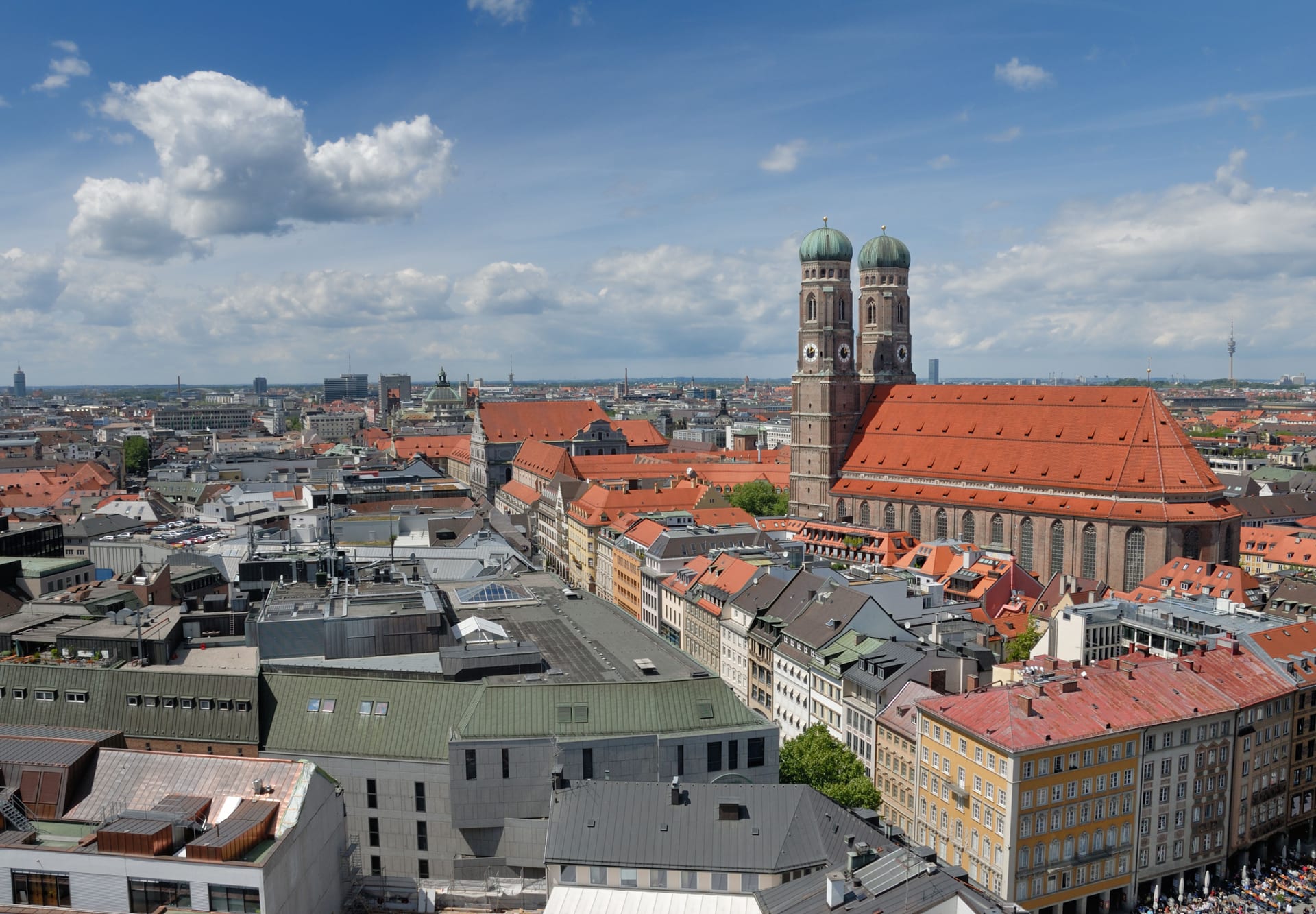
Munich is the prosperous, orderly counterweight to Berlin: where the capital trades on grit and cheap rent, Bavaria's capital runs on money, mountains, and a kind of polished calm. Life here is safe, green, and well-run, with the Alps an hour south. It is also Germany's most expensive city, and that shapes everything.
Munich at a glance
Vital stats
Where Munich stands out
The metrics where Munich sits farthest from the middle worldwide, good and bad.
Cheap to arrive, expensive to stay?
A typical one-bedroom in Munich runs €1,410/mo. That is ~53% of one typical local employee’s mean net pay. That is 6 points above Berlin, its closest rival among nearby cities. This is a solo-newcomer stress test: sitting tenants, shared homes, subsidised housing and informal rents are deliberately outside the numerator.
The fastest way to test a shortlist is to go. A week on the ground tells you things no ranking can.
Partner link
Approved language-learning and international money resources for practical next steps.
Daily life in Munich
How Munich scores
Category by category
Affordability
61/100Munich's open-market one-bedroom rent on a new lease is about €1,410 per month. That is roughly 53% of one typical employee's mean net pay, a rent burden labelled sharing likely.
Climate
wet & greyMunich has cool summers, with July averaging about 20°C, and winters that hover just above freezing in January. The harder adjustment is light: only 163 bright days a year and long, dim stretches through winter. Air quality is good and muggy weather is uncommon, so the climate's weakness is gloom rather than heat.
Nature access
lakes & riversThis is one of the best-placed cities in Germany for the outdoors. The Bavarian Alps sit within easy reach for hiking and skiing, the lakes and rivers of the surrounding region are excellent, and weekend escapes into real wilderness are genuinely close. Berlin can offer nothing comparable. The one gap is the sea, which is a long way off.
Urban form
large cityCompact and highly walkable, with strong neighbourhoods and little need for a car. Public space is well kept and the feel is more measured than frenetic, calmer than Berlin's restless sprawl. The main constraint is space at home: apartments tend to run small and tight for the price, so square metres are the trade-off for living centrally.
Public life & spaces
85/100Munich is wealthy and immaculately kept, Bavarian order showing in spotless streets. The public realm is generous — Marienplatz, the beer gardens, the Isar's wild swimming-friendly banks. The honest catch is cost: this is an expensive city, and while Oktoberfest charges no entry, little of daily life comes cheap.
Safety
81/100Among the safest major cities in Europe. Violent crime is rare, petty crime is low by big-city standards, and walking home late feels unremarkable rather than risky. Roads are well managed and the general sense of order is high. For anyone moving with safety front of mind, Munich is about as reassuring as a large German city gets.
Healthcare
78/100Care here is excellent, with top-tier hospitals and strong overall quality backed by Germany's well-funded insurance system, so out-of-pocket costs stay low. Getting an appointment with a specialist can take patience, and navigating the public and private insurance split is its own learning curve. English-speaking doctors are findable, especially in larger practices.
Family life
72/100A strong choice for raising children. The city is exceptionally safe for kids, schools are good, parental leave and childcare provision are generous, and the outdoor, open-air childhood that Bavaria does well is easy to come by. The catch is housing: finding an affordable family-sized home is genuinely hard, harder here than in most other German cities.
Career
78/100For work, Munich offers an unusually strong local market, broad industry coverage, and low unemployment. Typical pay for local employees is comparatively high, and professional and startup networks are well established. English-only roles are less common, so German expands the field.
Culture & food
74/100A well-rounded cultural city with serious museums, strong restaurants, plenty of cafes, and a deep-rooted local tradition that runs from beer halls to opera. Where it falls short is after dark: nightlife is tame and far quieter than Berlin's, which is in a league of its own across Europe. The texture here is refined rather than edgy.
Ease of integration
67/100German is the working language and genuinely useful for everyday life, with English widely understood but not enough on its own to integrate. Munich has a reputation for being warm but slow to let outsiders in, more reserved and traditional than Berlin. Newcomers report it takes real effort and patience to build a local circle, though the international and professional scenes help.
Connectivity
71/100Getting around is a strength: the public transport network is excellent, cycling is well provided for, and intercity train links across Germany and the Alps are first-rate. The weak spots are digital, with internet speeds lagging behind much of Europe and public administration still heavily paper-bound. Utilities, by contrast, are reliable and the city simply works.
Social values
progressiveBavaria is the more conservative, more Catholic corner of Germany, and Munich reflects that: socially liberal by global standards but visibly more traditional than Berlin or Hamburg. Gender equality and LGBTQ acceptance are solid, civic trust and orderliness are very high, and public life is less openly secular than in the north. Expect rules to be followed.
Relocation ease
55/100The hard part is housing. The rental market is fiercely competitive and finding a place is among the most stressful steps of any move here, more so than in most German cities. German bureaucracy is slow and largely offline, banking and tax setup take effort, and limited German makes it all heavier. The visa and work-authorization path is workable for skilled arrivals.
The trade-offs
A year in Munich
Jul peaks around 25°C, Jan days top out near 4°C, and the year brings roughly 163 bright days.
Can you actually move here?
The hard limits people most often bring to a move, scored against Munich's data.
Moving with a pet
Bringing a pet to Munich is straightforward. Germany follows the standard EU import rules, so a microchip, rabies vaccination, and the right paperwork cover most cats and dogs, and the city itself is very pet-friendly day to day.
Who Munich works for
Answer the questionnaire and see where Munich lands for you.
Take the free questionnaireWhere else to look
Munich vs. comparable cities
Objective scores (0–100) for Munich and its 4 nearest comparable cities.
The cities people weigh against Munich
Unexpected siblings
Far from Munich on the map, close across all 14 categories of daily life.
