 Austria
Graz makes sense if
- You want the easier housing and budget equation in this comparison.
Graz is safer, cheaper, and pleasantly student-sized, with a compact food and culture scene. Vienna brings the deeper hospital network, careers, coffeehouse tradition, museums, and grand public spaces.
The grey shape is all 283 cities; each row says whether lower or higher is better. Ratings out of 10 are our reviewed estimates; the rest is published data. How we measure
Set how much each area counts. The ranking updates as you go. Climate and values are left out because there is no better or worse there, only your taste.
Leads on city life, safety & health, work & family and moving & settling in; stands out for music & art scene and professional network.
Narrowly best on money: 69 vs Vienna's 67.
Scores out of 100, averaged from the areas you weighted. For a ranking built around your own situation, take the quiz.
Rent on a new lease, everyday prices and tax.
The year month by month. Whether it suits you is yours to judge.
Solid line: average daytime high. Dashed: night-time low. Point at the chart for any month; point at a city name to shade its range.
How easily you get to water, mountains and green space.
Getting around on foot, food, culture and the feel of the streets.
Crime, how safe people feel, and the care you would get.
Jobs, working culture, schools and raising kids.
Visas, language, paperwork and staying connected.
Where each city sits. There is no right end of these scales.
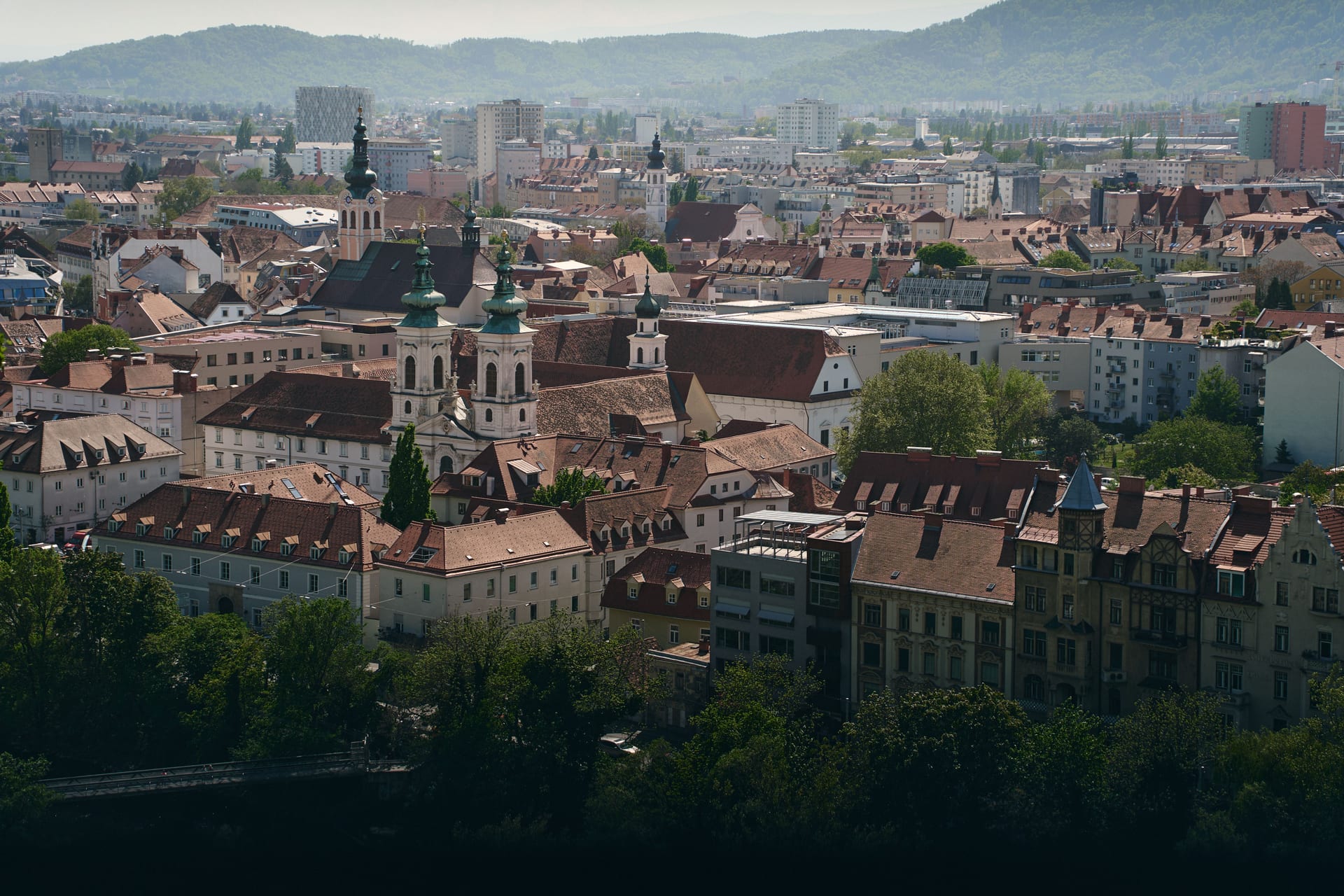
Graz has a small-city footprint with a walkable, mixed-use core and low car dependence. Everyday errands are easy, while the quieter tempo and limited metropolitan scale will not suit someone chasing constant intensity.
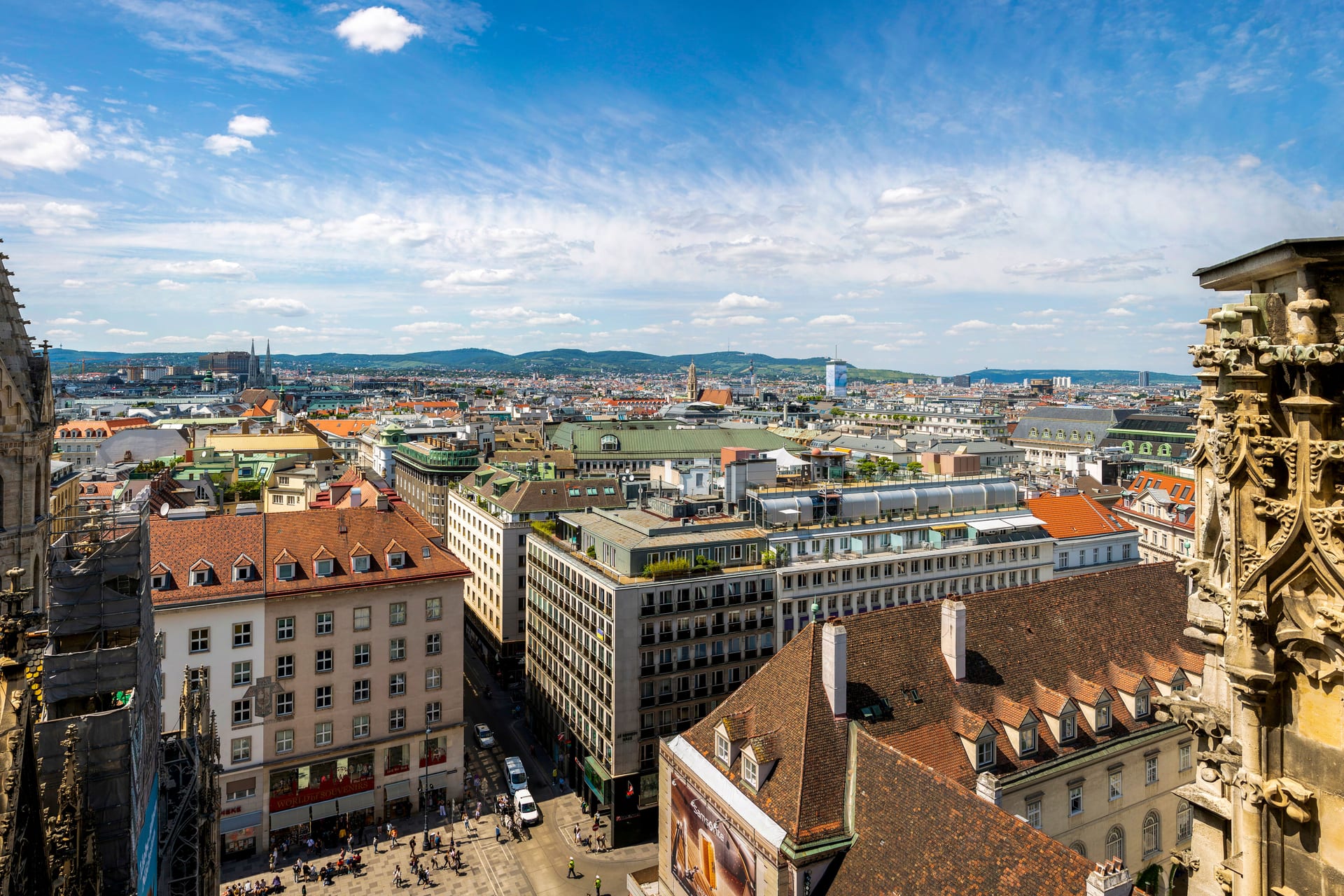
Dense, walkable, and built for living without a car. Neighbourhoods are well-defined and mixed-use, with shops, cafes, and transit woven into daily routines.
Violent crime is rare, petty crime is low, and walking home late registers as a non-issue for most residents. Traffic is comparatively orderly and the wider political backdrop is stable.
Violent crime is rare, the streets feel secure after dark, and traffic is managed with care. Petty theft exists in tourist-heavy spots but stays modest.
Graz offers a workable local market, though it is not deep in English-language roles or startup work. Healthcare is a strong, dependable part of life here, plugged into Austria's well-funded system with good hospital access and low out-of-pocket exposure.
Across several industries, Vienna offers a solid and established job market. A strong public system with excellent hospitals and good access to doctors.
There is more going on than the size suggests, helped by a large student population and the strong local food culture of the surrounding Styrian farmland. Graz is clean and tidy in the unfussy Austrian way, a provincial capital kept in good order.
The coffeehouse tradition is unmatched, the museum and classical-music offering rivals any European capital, and the dining range keeps widening, vegetarian options included. Vienna is pristine and orderly, its public spaces beautifully maintained.
Graz suits a lower-cost, smaller-city routine without giving up Austrian services or cultural substance. Vienna is the clear choice for professional depth, specialist care, and a larger cultural and public-life canvas.
These numbers treat everyone the same. The quiz weighs them by your budget, climate taste, family and work, and ranks all 283 cities for you.