
 China
Hangzhou makes sense if
- Access to stronger healthcare matters most to you.
- You want the broader career options in this comparison.
- You want the deeper culture and food scene.
Hangzhou is a greener lakeside tech capital; Suzhou's industrial base supports manufacturing and electronics jobs. Suzhou is the more focused fit for people entering that local economy, though English-language and remote roles are limited.
The grey shape is all 283 cities; each row says whether lower or higher is better. Ratings out of 10 are our reviewed estimates; the rest is published data. How we measure
Set how much each area counts. The ranking updates as you go. Climate and values are left out because there is no better or worse there, only your taste.
Leads on nature & outdoors, city life and work & family; stands out for hiking and mountains.
Tied best on money with Hangzhou, both 70; stands out for easier house-hunting.
Scores out of 100, averaged from the areas you weighted. For a ranking built around your own situation, take the quiz.
Rent on a new lease, everyday prices and tax.
The year month by month. Whether it suits you is yours to judge.
Solid line: average daytime high. Dashed: night-time low. Point at the chart for any month; point at a city name to shade its range.
How easily you get to water, mountains and green space.
Getting around on foot, food, culture and the feel of the streets.
Crime, how safe people feel, and the care you would get.
Jobs, working culture, schools and raising kids.
Visas, language, paperwork and staying connected.
Where each city sits. There is no right end of these scales.
A walkable, mixed-use core with solid metro coverage means a car is rarely necessary. Neighbourhoods are pleasant and reasonably well kept, the pace is fast and work-driven though a notch calmer than Shanghai.
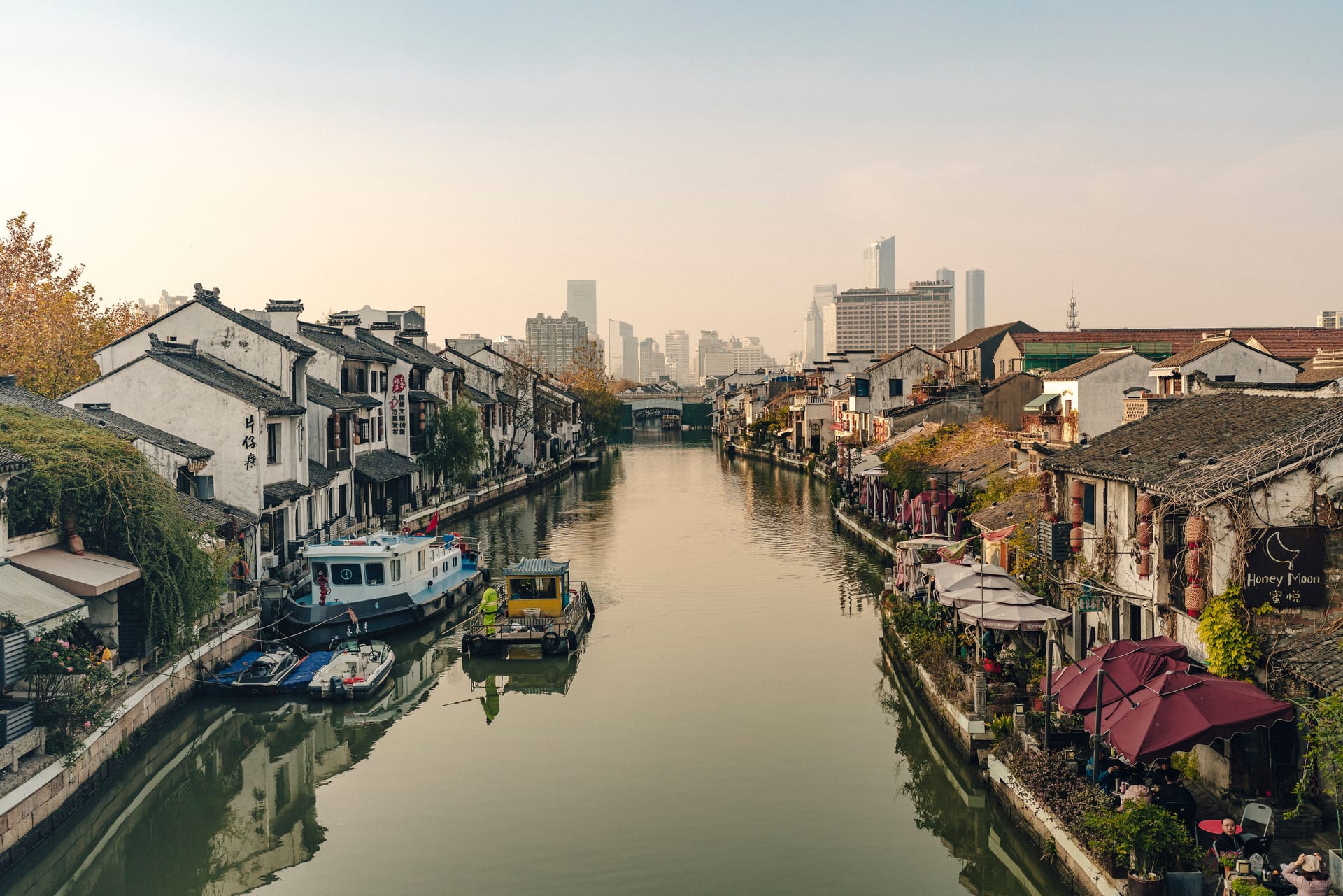
For a Chinese city Suzhou is mid-sized rather than sprawling, which keeps the pace gentler than the megacity rush of Shanghai. The historic core is walkable and dotted with gardens and waterways, while the surrounding districts and the Suzhou Industrial Park are more spread out and car-friendly.
Among the safest cities anywhere to walk around. Violent crime is close to nonexistent, petty theft is rare, and people move freely after dark without much thought.
Safety is a clear strength. Violent crime is extremely rare, streets feel secure well into the night, and petty theft is uncommon by most international measures.
Hangzhou's local market is strong, supported by a substantial technology ecosystem. Healthcare is competent and improving, with decent hospitals and emergency care for a city this size, roughly on par with Shanghai.
Suzhou's industrial base supports a strong local job market, especially around manufacturing and electronics. Healthcare is adequate but uneven for a newcomer.
The local culture runs deep, with a distinct regional cuisine, serious tea traditions, and a cafe and restaurant scene that holds its own against bigger Chinese cities. Hangzhou is affluent and tidy, with the West Lake district especially well kept.
Local culture is the deep, genuine draw here, from the UNESCO-listed classical gardens to a refined regional cuisine and a long literary and silk-making heritage. Suzhou is tidy and affluent, its canal-laced old town kept with real care.
Choose Suzhou if your experience matches manufacturing or electronics employers and you want to work within the local economy. Hangzhou is the more rounded city setting, with West Lake nearby and a demanding work culture to weigh.
These numbers treat everyone the same. The quiz weighs them by your budget, climate taste, family and work, and ranks all 283 cities for you.