Affordability
70/100Hangzhou's open-market one-bedroom rent on a new lease is about $532 per month. That is roughly 75% of one typical employee's mean net pay, a rent burden labelled sharing likely.
Climate
subtropicalHot, humid summers give way to cool, damp winters. Light is uneven, with about 173 bright days and 115 rainy-grey days a year, while muggy conditions persist through much of the warmer season. Air pollution is a clear weak spot.
Nature access
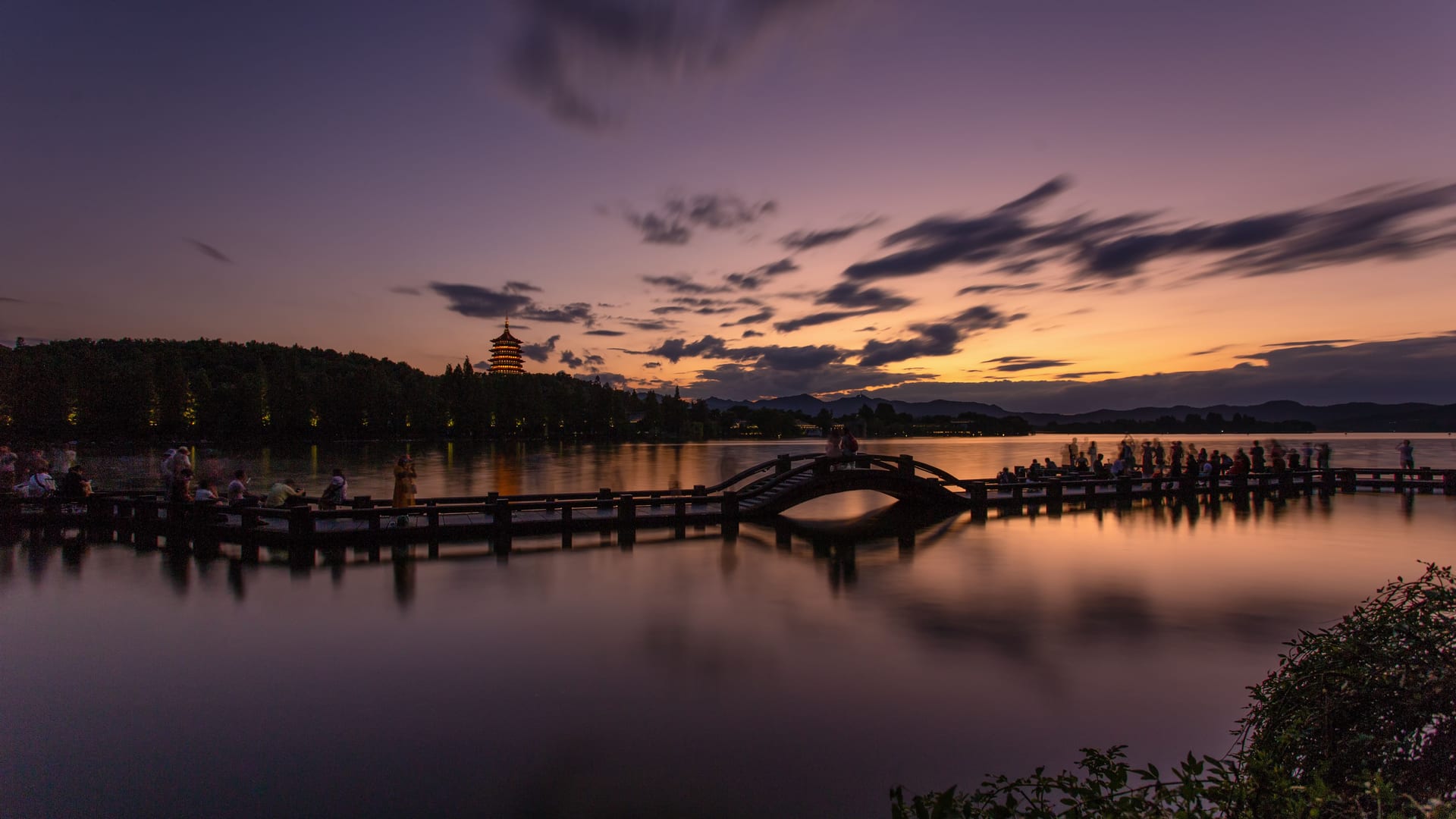
lakes & riversWater defines the place. The West Lake and the surrounding rivers and canals give Hangzhou more natural waterfront than Shanghai or Tokyo, with good cycling and running routes and tea-covered hills nearby. The trade-offs are no real coastline and tight per-person green space once you leave the marquee parks.
Urban form
megacityA walkable, mixed-use core with solid metro coverage means a car is rarely necessary. Neighbourhoods are pleasant and reasonably well kept, the pace is fast and work-driven though a notch calmer than Shanghai. Apartments run small, so generous living space is the main thing the city does not offer.
Public life & spaces
85/100Hangzhou is affluent and tidy, with the West Lake district especially well kept. The lake's promenades, gardens and scenic built waterfront make it one of China's loveliest public spaces. Much of it is free — strolling the lake, cheap food, lively crowds — though the formal gardens charge entry.
Safety
79/100Among the safest cities anywhere to walk around. Violent crime is close to nonexistent, petty theft is rare, and people move freely after dark without much thought. The asterisk is political: this is a tightly governed one-party state, and the stability comes with limited civil liberties and pervasive surveillance.
Healthcare
61/100Healthcare is competent and improving, with decent hospitals and emergency care for a city this size, roughly on par with Shanghai. Doctor availability is stretched, navigating insurance takes effort, and English-speaking care is genuinely scarce, so newcomers without Mandarin usually lean on international clinics or a translator.
Family life
55/100For families the basics are strong: very safe streets, well-regarded schools, and plenty of playgrounds and parks. The strain is the work culture, which leaves parents short on time, and family-sized housing is hard to afford. Childcare and parental leave are middling rather than generous.
Career
71/100Hangzhou's local market is strong, supported by a substantial technology ecosystem. Typical local pay trails the wider city median, so the opportunity is better than the paycheck suggests. English-first and remote roles are limited, making a specific local offer more useful than relying on a broad international search.
Culture & food
65/100The local culture runs deep, with a distinct regional cuisine, serious tea traditions, and a cafe and restaurant scene that holds its own against bigger Chinese cities. Nightlife, museums, and the arts are solid if not standout. The international community is thin and English menus are scarce, so the city rewards Mandarin.
Ease of integration
44/100Hangzhou runs in Mandarin, and English will only get a newcomer so far. The expat circle is small compared with Shanghai or Hong Kong, and locals, while orderly and friendly, are not especially used to foreigners. Building a genuine social life here takes language effort and patience, but the payoff is integration into a place few outsiders reach.
Connectivity
68/100This is where the city shines. The metro is excellent, intercity high-speed rail is world-class and puts Shanghai minutes away, utilities are reliable, and cycling infrastructure beats most Asian peers. Mobile and admin systems are highly digitized. The one real drag is the internet: fast on paper, but censorship makes much of the global web unusable without a workaround.
Social values
traditionalPublic life is largely secular and orderly, but socially conservative. Social liberalism is low, LGBTQ acceptance is limited and unsupported by law, and gender norms remain fairly traditional. The city is somewhat less open to outsiders than Shanghai, so newcomers should expect a culture that values conformity over individual expression.
Relocation ease
34/100Relocating here is demanding. Visas and work authorization are tougher than in Tokyo or Hong Kong, bureaucracy is heavy, and the language barrier is steep. Banking, housing, and everyday admin all take patience and usually some Mandarin. The cultural adjustment is real, even if the city itself is safe and well run once settled.