
Living in Suzhou
Suzhou's industrial base provides a strong local job market, especially in manufacturing and electronics, but English-language and remote roles are limited. Summers are hot and humid, winters are damp and chilly, and roughly 187 days are bright. Typical local pay sits below the wider city median, so the fit is strongest for people working inside the local economy.
Suzhou at a glance
Vital stats
Shown in USD: the local currency (CNY) moves too fast for stable monthly figures.
Where Suzhou stands out
The metrics where Suzhou sits farthest from the middle worldwide, good and bad.
Cheap to arrive, expensive to stay?
A typical one-bedroom in Suzhou runs $459/mo. That is ~68% of one typical local employee’s mean net pay. This is a solo-newcomer stress test: sitting tenants, shared homes, subsidised housing and informal rents are deliberately outside the numerator.
The fastest way to test a shortlist is to go. A week on the ground tells you things no ranking can.
Partner link
Approved language-learning and international money resources for practical next steps.
Daily life in Suzhou
How Suzhou scores
Category by category
Affordability
71/100Suzhou's open-market one-bedroom rent on a new lease is about $459 per month. That is roughly 68% of one typical employee's mean net pay, a rent burden labelled sharing likely.
Climate
subtropicalSuzhou's four seasons come with a real indoor trade-off: January averages about 5.5°C and winters are damp, while summer is hot and muggy. The city sees roughly 187 bright days, but cloud, rain, and high humidity shape much of the year.
Nature access
lakes & riversSuzhou's nature is defined by water rather than wilderness. Canals, lakes, and the broad expanse of Lake Tai give the city a soft, watery character, and there are pleasant parks and cycling routes along the shorelines. Real mountains, beaches, and proper hiking are scarce, so weekends in genuine open country mean travelling further afield.
Urban form
megacityFor a Chinese city Suzhou is mid-sized rather than sprawling, which keeps the pace gentler than the megacity rush of Shanghai. The historic core is walkable and dotted with gardens and waterways, while the surrounding districts and the Suzhou Industrial Park are more spread out and car-friendly. Neighbourhoods feel well-kept and livable, if homes themselves can be on the compact side.
Public life & spaces
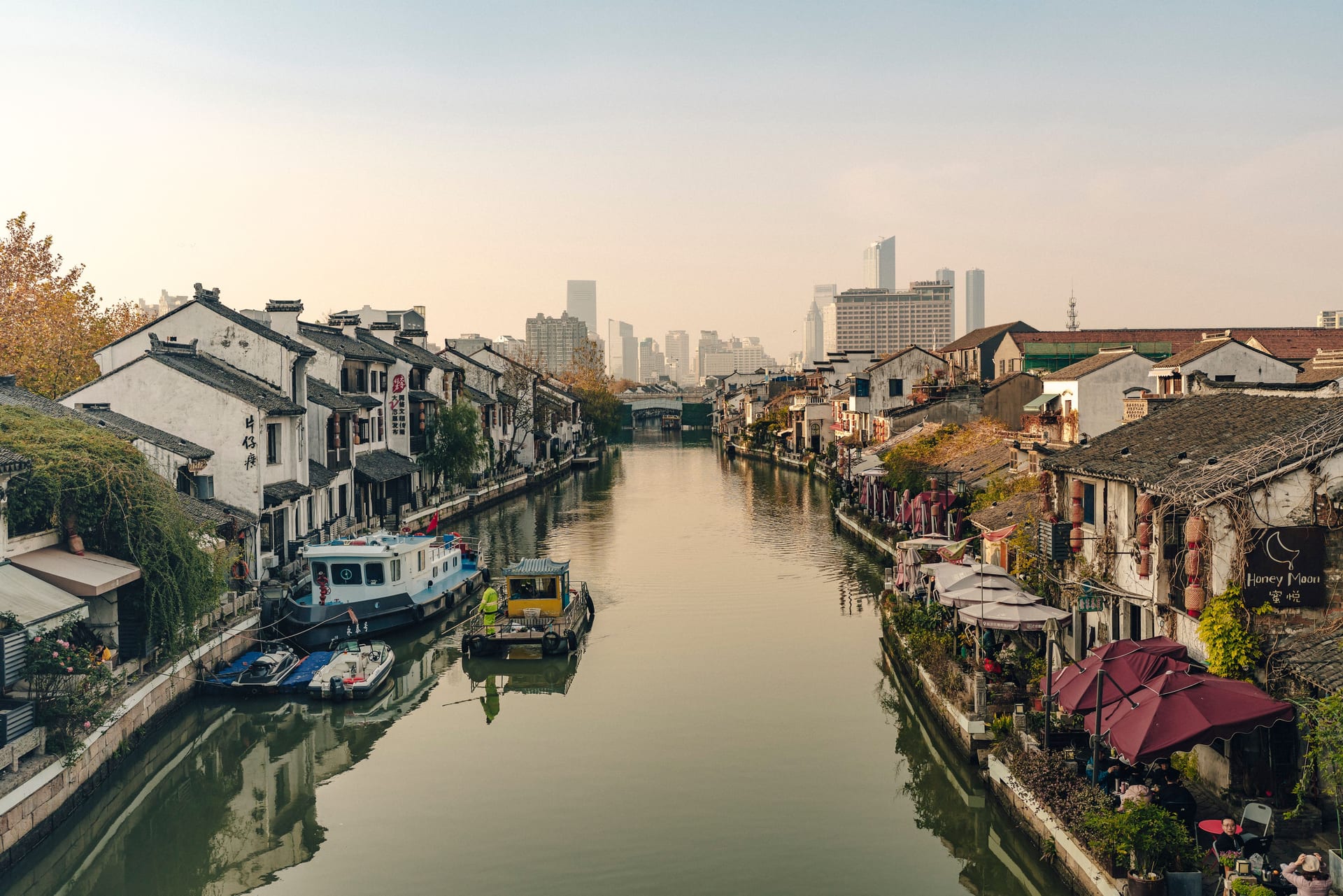
81/100Suzhou is tidy and affluent, its canal-laced old town kept with real care. The classical gardens, waterways and walkable historic waterfronts make it one of China's prettiest cities. Living here is cheap and the canals are free to wander, though the famous gardens charge admission.
Safety
79/100Safety is a clear strength. Violent crime is extremely rare, streets feel secure well into the night, and petty theft is uncommon by most international measures. The one structural caveat is at the national level, where political stability scores low given the wider Chinese governance context rather than anything specific to daily life on the ground.
Healthcare
58/100Healthcare is adequate but uneven for a newcomer. Major hospitals offer solid emergency and general care, yet doctors can be stretched, insurance arrangements get complicated, and English-speaking medical staff are limited outside a handful of international clinics. Expats often lean on private or international facilities, which adds cost but eases the language hurdle.
Family life
55/100Suzhou is a reassuring place to raise children, with low crime, strong schools, and a generally protective environment. Playgrounds and parks are within easy reach, and the city has a steady, settled feel. The harder parts are the long working culture that eats into family time and the difficulty of finding spacious, affordable family housing.
Career
63/100Suzhou's industrial base supports a strong local job market, especially around manufacturing and electronics. English-language and remote-friendly roles are limited, professional networks run locally, and typical local pay sits below the wider city median. The fit is strongest for people prepared to work inside that economy.
Culture & food
60/100Local culture is the deep, genuine draw here, from the UNESCO-listed classical gardens to a refined regional cuisine and a long literary and silk-making heritage. Restaurants, cafes, and museums keep daily life interesting, and there is a modest international community. The serious friction is language: very little runs in English, so the cultural richness opens up slowly for outsiders.
Ease of integration
41/100Building a local circle takes real effort. Mandarin is essential for everyday connection and English is far from widely spoken, so newcomers without the language lean heavily on the expat scene, which is present but small. Residents are generally orderly and civic-minded, yet openness to foreigners is moderate and integration is a patient, long-game project.
Connectivity
65/100Infrastructure is a standout. The high-speed rail links are excellent, putting Shanghai and much of eastern China within an easy ride, and the metro, buses, and cycling network make getting around straightforward. Utilities are reliable and roads flow reasonably well. The main soft spot is the digital layer, where the wider internet environment can frustrate foreign users.
Social values
traditionalPublic life is secular and orderly, but socially this is a traditional, conservative environment by international standards. Progressive social attitudes, LGBTQ acceptance, and visible diversity are limited, and openness to foreigners is moderate rather than warm. People are trusting and rule-abiding in everyday dealings, which makes the city feel calm and predictable.
Relocation ease
35/100Relocating here is genuinely demanding. Visas and work authorization are tough to navigate, bureaucracy is heavy, and banking and housing admin can be slow for a newcomer. The biggest barrier is language, since so little operates in English, and the cultural adjustment is steep. Patience and ideally a local helper or employer support go a long way.
The trade-offs
A year in Suzhou
Aug peaks around 32°C, Jan days top out near 8°C, and the year brings roughly 187 bright days.
Can you actually move here?
The hard limits people most often bring to a move, scored against Suzhou's data.
Moving with a pet
Bringing a pet into China is one of the harder moves, with strict import rules, vaccination and paperwork requirements, and the chance of quarantine on arrival. Expect a slow, documentation-heavy process and budget plenty of lead time.
Who Suzhou works for
Answer the questionnaire and see where Suzhou lands for you.
Take the free questionnaireWhere else to look
Suzhou vs. comparable cities
The cities people weigh against Suzhou
Unexpected siblings
Far from Suzhou on the map, close across all 14 categories of daily life.