
Living in Frankfurt
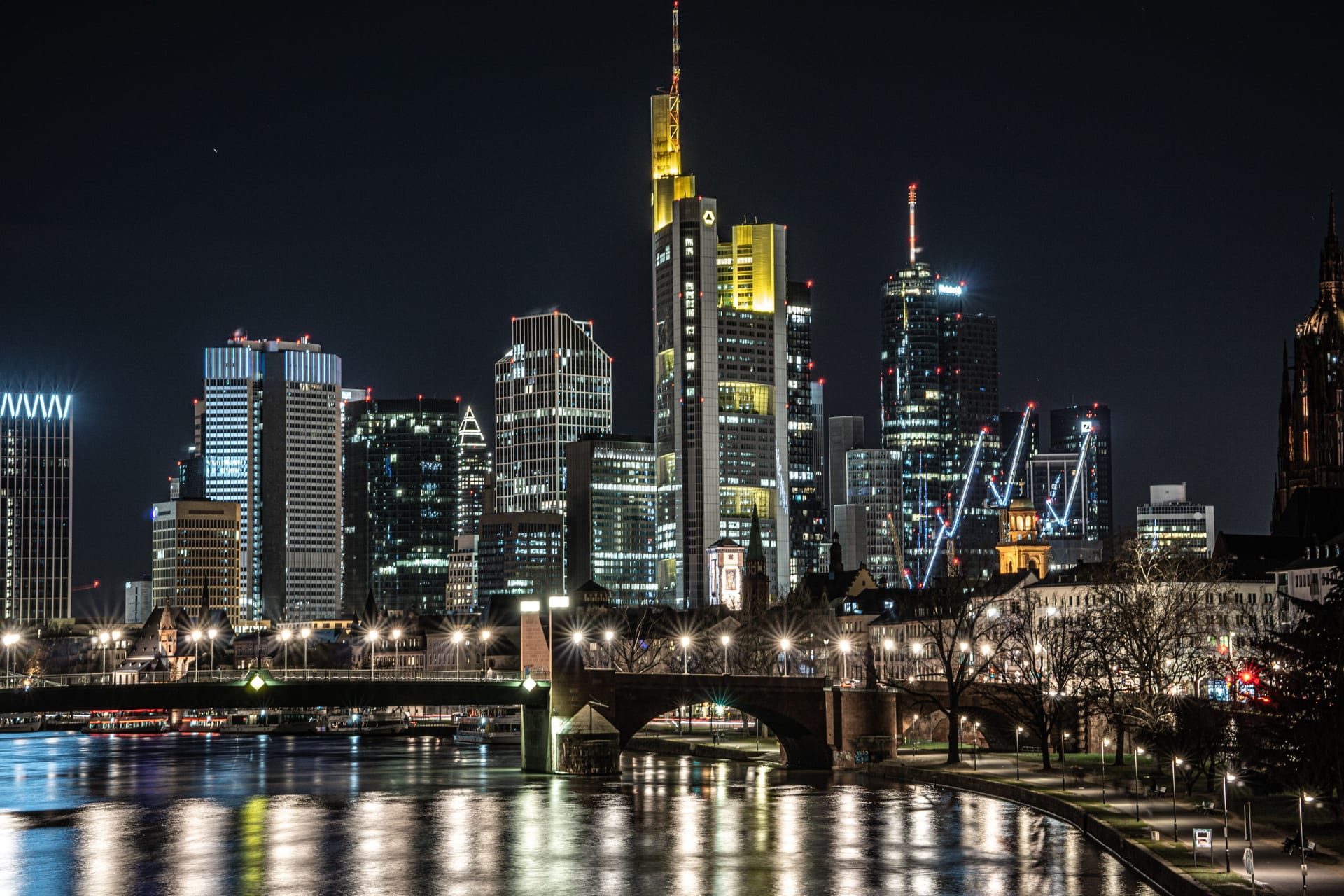
Germany's banking capital is compact, efficient, and unusually international for its size. The skyline reads like a small Manhattan dropped onto the Main, but daily life stays walkable and well-connected. It sits cheaper than Munich and pricier than Berlin, and most people come for the work, then find the city quieter than they expected.
Frankfurt at a glance
Vital stats
Where Frankfurt stands out
The metrics where Frankfurt sits farthest from the middle worldwide, good and bad.
Cheap to arrive, expensive to stay?
A typical one-bedroom in Frankfurt runs €1,031/mo. That is ~38% of one typical local employee’s mean net pay. This is a solo-newcomer stress test: sitting tenants, shared homes, subsidised housing and informal rents are deliberately outside the numerator.
The fastest way to test a shortlist is to go. A week on the ground tells you things no ranking can.
Partner link
Approved language-learning and international money resources for practical next steps.
Daily life in Frankfurt
How Frankfurt scores
Category by category
Affordability
65/100Frankfurt's open-market one-bedroom rent on a new lease is about €1,031 per month. That is roughly 38% of one typical employee's mean net pay, a rent burden labelled tight alone.
Climate
temperateFrankfurt has cool summers and cold winters, with limited bright weather and long, dark winter stretches. Grey, damp conditions are a recurring part of the year, though muggy heat is rare and the air is clean. Extreme weather is unlikely, so the climate's cost is mostly a lack of winter light.
Nature access
leafyFrankfurt sits inside a surprising amount of forest, with the Taunus hills and good cycling and running routes close at hand. Weekend escapes into woodland are genuinely easy. What it lacks is water and altitude: no coast within reach, and the high mountains are a long drive south. River walks along the Main fill some of the gap.
Urban form
mid-sizedFrankfurt feels compact and easy to navigate without a car. Mixed-use neighbourhoods and strong walking access keep daily errands close, while the wider urban area remains under a million residents. The trade-off is small housing: flats often offer limited space, even as the suburbs are well equipped.
Public life & spaces
70/100Frankfurt holds itself in orderly banking-city fashion, clean overall if a touch rough around the station. The Römerberg, the Main riverbanks and the museum embankment give it pleasant shared space. Free riverbank days and the museum nights are real perks, but this is an expensive finance city, and much of daily life is paid-for.
Safety
68/100Frankfurt is safe in the ways that matter most, with very low serious crime and well-managed roads. Pickpocketing and street hassle around the main station drag the everyday feel down a notch, and it ranks below squeaky-clean Munich on perceived safety. Most residents move around comfortably day and night.
Healthcare
78/100Care here is excellent and well-resourced, with strong hospitals and reliable emergency services. English-speaking doctors are easier to find than in most German cities, which smooths things for newcomers. The insurance system takes some decoding at first, and getting a specialist appointment can mean a wait, but the underlying quality is high.
Family life
72/100A practical place to raise children, with safe streets, good childcare, generous parental leave norms, and plenty of playgrounds and parks. Schools are solid if not the country's very best. The real squeeze is family-sized housing, which is hard to find and harder to afford, so space-hungry households often look to the suburbs.
Career
75/100Frankfurt offers a deep local job market, strong professional networks, and low unemployment. Typical local pay sits above the wider corpus. English-language work is available but not universal, so German still widens the range of options.
Culture & food
64/100For a finance town, the food and culture scene punches above expectations, with strong restaurants, world-class museums along the river, and a notably international crowd. Vegetarian and vegan options are easy to find. Nightlife is the soft spot, modest next to Berlin, so anyone chasing a wild after-dark scene will feel it.
Ease of integration
74/100German is the working language of local life, but English goes a long way thanks to one of the most international populations in the country. The banking and expat presence means newcomers find ready-made circles fast. Making genuinely local German friends takes more time and some language effort, and the early bureaucracy can feel cold.
Connectivity
71/100Connectivity is a real strength. The public transport is dense, intercity trains run everywhere, and the airport is among the best-linked in Europe, putting most of the continent within easy reach. The drag is administrative and digital: government processes lean heavily on paper, and home internet speeds lag behind the best in the region.
Social values
progressiveFrankfurt is liberal, diverse, and open by German standards, with strong support for gender equality and LGBTQ life and little appetite for tradition-bound conservatism. Its international makeup makes it one of the more cosmopolitan corners of the country. Public culture is secular and matter-of-fact, though Berlin still sets the pace on edge.
Relocation ease
58/100Settling in takes patience. Visa and work-authorization paths are standard German fare, neither easy nor brutal, but the housing search is fiercely competitive and the paperwork for registration, banking, and taxes is slow and form-heavy. Cultural adjustment is moderate, and a working knowledge of German smooths nearly every step.
The trade-offs
A year in Frankfurt
Jun peaks around 26°C, Jan days top out near 5°C, and the year brings roughly 169 bright days.
Can you actually move here?
The hard limits people most often bring to a move, scored against Frankfurt's data.
Moving with a pet
Bringing a pet is straightforward. As an EU destination, Frankfurt asks mainly for a microchip, rabies vaccination, and an EU pet passport or health certificate, with no quarantine for cats and dogs arriving from most countries.
Who Frankfurt works for
Answer the questionnaire and see where Frankfurt lands for you.
Take the free questionnaireWhere else to look
Frankfurt vs. comparable cities
Objective scores (0–100) for Frankfurt and its 4 nearest comparable cities.
The cities people weigh against Frankfurt
Unexpected siblings
Far from Frankfurt on the map, close across all 14 categories of daily life.

