
Living in Porto
Porto offers mild summers and enough bright weather to keep outdoor life appealing, though humidity and grey winter spells shape the year. It fits remote workers better than people arriving to build a local career, with typical local employee pay on the modest side. Local hiring is the main constraint.
Porto at a glance
Vital stats
Where Porto stands out
The metrics where Porto sits farthest from the middle worldwide, good and bad.
Cheap to arrive, expensive to stay?
A typical one-bedroom in Porto runs €1,048/mo. That is ~65% of one typical local employee’s mean net pay. This is a solo-newcomer stress test: sitting tenants, shared homes, subsidised housing and informal rents are deliberately outside the numerator.
The fastest way to test a shortlist is to go. A week on the ground tells you things no ranking can.
Partner link
Approved language-learning and international money resources for practical next steps.
Daily life in Porto
How Porto scores
Category by category
Affordability
66/100Porto's open-market one-bedroom rent on a new lease is about €1,048 per month. That is roughly 65% of one typical employee's mean net pay, a rent burden labelled sharing likely.
Climate
temperatePorto stays mild through summer and gets about 210 bright days a year. Atlantic humidity and a long run of rainy-grey weather make winter light less reliable. Air quality is broadly good, and severe weather is rarely a serious concern.
Nature access
coastalThe ocean is the headline, with beaches and the Douro both within reach and easy weekend escapes into the wider region. Green space inside the city is modest, and there is little in the way of mountains nearby. Good for coast and river, thinner for anyone who wants peaks on the doorstep.
Urban form
small cityCompact, walkable and built for getting around on foot, with low reliance on a car. The tempo is calm, slower than Lisbon and far removed from a big-capital rush. Density is real and homes tend to run small, so space is the thing residents trade away for a central, human-scaled city.
Public life & spaces
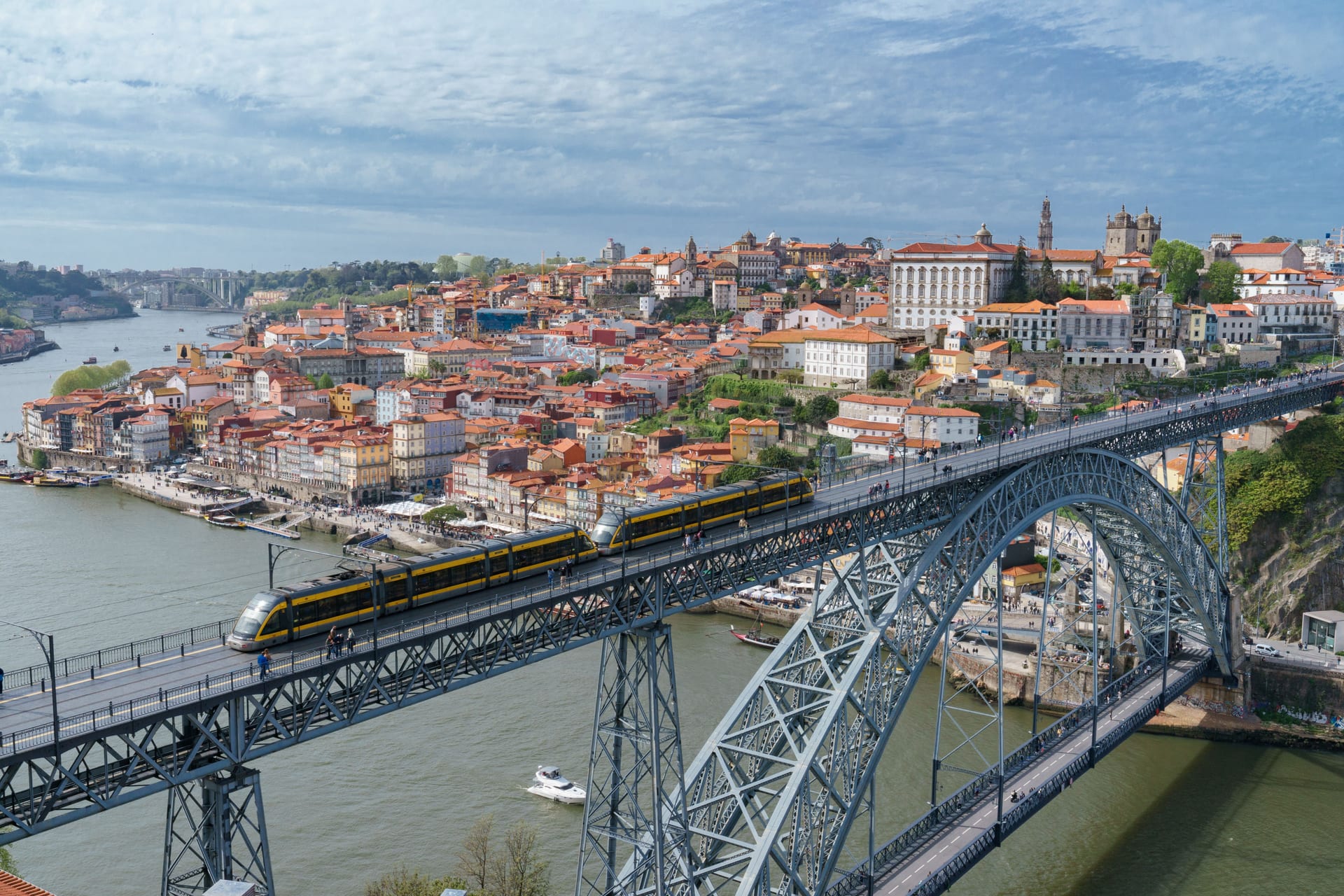
70/100Porto is charming and visibly worn — faded azulejos, peeling facades and neglect run through the older streets. What redeems it is the Ribeira waterfront and the riverside terraces, generous public space that costs nothing to enjoy. Living here stays cheap, with festivals and free riverside culture year-round.
Safety
76/100One of the safer cities a newcomer could pick. Violent crime is rare, the streets feel relaxed after dark, and roads are reasonably orderly. Pickpocketing exists around the tourist core as anywhere, but it stays low overall. Portugal's broad political stability adds to the steady feel.
Healthcare
74/100Solid public healthcare with good doctor availability and dependable emergency care, broadly on par with Lisbon. Out-of-pocket exposure stays moderate. The weaker point is finding English in clinics and with specialists, where some Portuguese, or a translator, smooths the way considerably.
Family life
65/100A grounded place to raise kids: streets feel safe, the outdoor, coastal childhood is a genuine draw, and the work-life rhythm leaves room for family time. Schools and childcare are decent without standing out. Family-sized housing is the pinch point, since larger flats cost more than local salaries comfortably stretch to.
Career
60/100Local hiring is the weak spot. The market is narrow, unemployment is somewhat elevated, and typical local employee pay is on the modest side. Remote work is a stronger proposition, while English-only roles and professional networks are less developed.
Culture & food
74/100Cafe culture runs deep and the local food and wine traditions are a real part of daily life, port and the riverside tascas included. Restaurants are good and unpretentious. Where it lags is breadth: nightlife is lower-key than Lisbon's, the museum and live-music scene is smaller, and vegan options remain limited.
Ease of integration
67/100Portuguese is the everyday language, with English widely spoken among younger people and in the international set. Locals are notably warm toward newcomers, which eases the first months. The expat scene is real but smaller than Lisbon's, so picking up some Portuguese goes a long way toward genuine local friendships.
Connectivity
59/100Public transport covers the city well and traffic stays light by big-city standards, with reliable utilities and strong internet. Two gaps stand out: cycling infrastructure is sparse, and intercity rail and the airport, while serviceable, trail the connectivity of larger European hubs.
Social values
progressiveSocially moderate and welcoming, with high openness to foreigners and solid ground on gender equality and LGBTQ acceptance. The texture is a touch more traditional and less diverse than Lisbon or the big northern European cities, reflecting a smaller, more rooted city rather than any hostility.
Relocation ease
58/100Portugal is among the more approachable European countries to move to, with manageable visa routes and an easy cultural landing. The friction comes after arrival: bureaucracy is slow and paperwork-heavy, and the housing search is competitive and frustrating, more so than the day-to-day prices would suggest.
The trade-offs
A year in Porto
Jul peaks around 26°C, Jan days top out near 13°C, and the year brings roughly 210 bright days.
Can you actually move here?
The hard limits people most often bring to a move, scored against Porto's data.
Moving with a pet
Bringing a pet into Portugal is straightforward, on par with the easiest European moves: an EU pet passport or health certificate, microchip and rabies vaccination cover most cats and dogs, with no quarantine for arrivals from typical origins.
Who Porto works for
Answer the questionnaire and see where Porto lands for you.
Take the free questionnaireWhere else to look
Porto vs. comparable cities

The cities people weigh against Porto
Unexpected siblings
Far from Porto on the map, close across all 14 categories of daily life.