
Living in Lisbon
Portugal's capital offers mild weather, plenty of bright days, and an unusually strong base for remote work. The local market is thinner and typical local employee pay is middling, so the city's appeal depends heavily on where income comes from. Its main weather caveat is Atlantic humidity, not severe summer heat for newcomers.
Lisbon at a glance
Vital stats
Where Lisbon stands out
The metrics where Lisbon sits farthest from the middle worldwide, good and bad.
Cheap to arrive, expensive to stay?
A typical one-bedroom in Lisbon runs €1,285/mo. That is ~74% of one typical local employee’s mean net pay. That is 9 points above Porto, its closest rival among nearby cities. This is a solo-newcomer stress test: sitting tenants, shared homes, subsidised housing and informal rents are deliberately outside the numerator.
The fastest way to test a shortlist is to go. A week on the ground tells you things no ranking can.
Partner link
Approved language-learning and international money resources for practical next steps.
Daily life in Lisbon
How Lisbon scores
Category by category
Affordability
63/100Lisbon's open-market one-bedroom rent on a new lease is about €1,285 per month. That is roughly 74% of one typical employee's mean net pay, a rent burden labelled sharing likely.
Climate
temperateLisbon has a bright, mild climate, with about 256 bright days and only 52 rainy-grey days a year. Winters are gentle and summers moderate, but Atlantic humidity remains noticeable. Air quality is generally good, though wildfire-smoke risk is a real caveat.
Nature access
coastalThe ocean is the headline here. The coast and its beaches are close and genuinely good, and weekend escapes into the countryside are within reach. Inside the city, though, green space is thin on the ground, with relatively few large parks per resident. Real mountains, forests and lakes are modest, so this is a sea-and-coast city more than a wilderness one.
Urban form
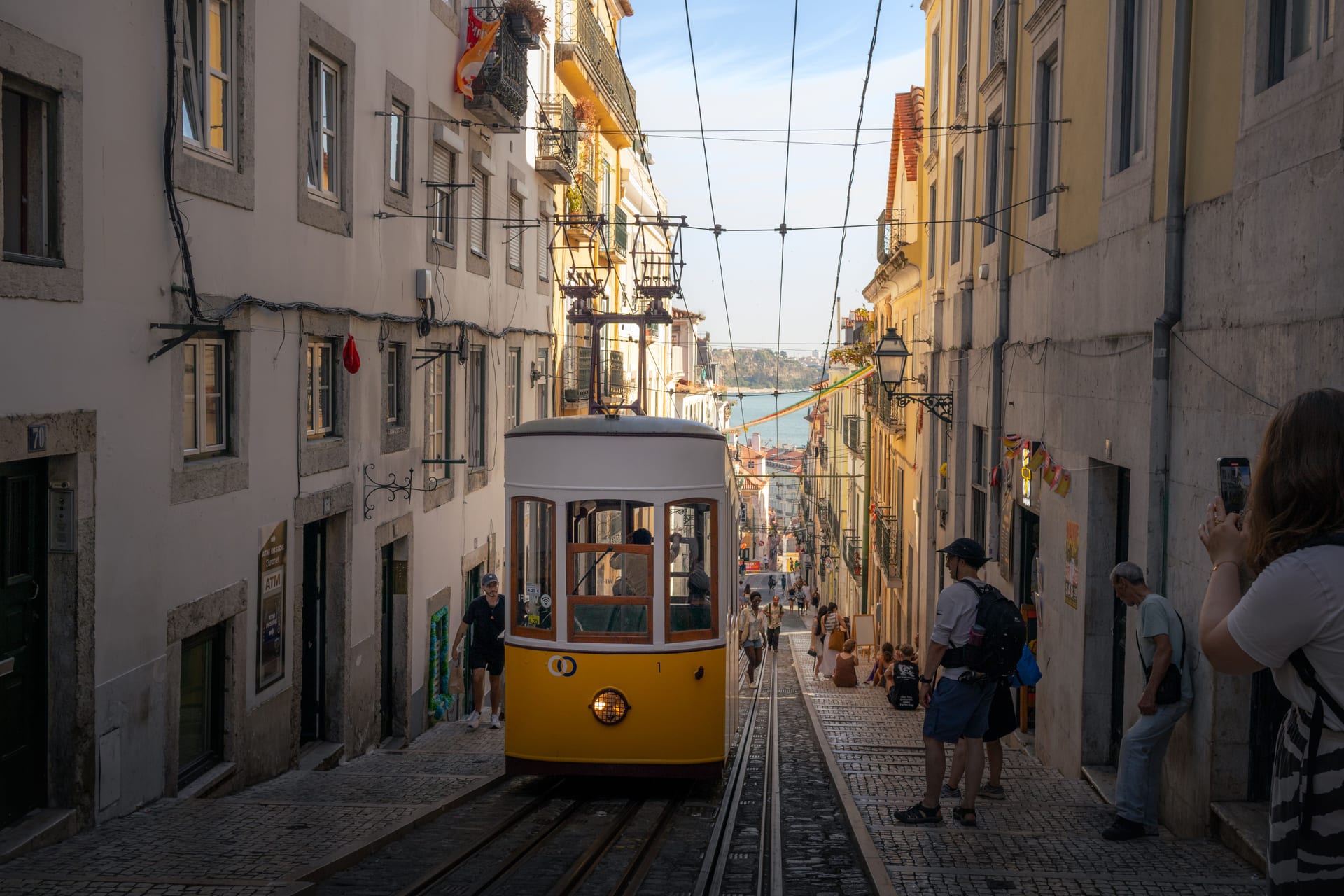
mid-sizedLisbon is a walkable, low-rise capital where daily life happens on foot and a car is rarely essential. Neighbourhoods have a distinct character and street life mixes homes, shops and cafes at close quarters. Two honest caveats: the famous hills make walking a workout, and homes tend to run small. The overall tempo is relaxed rather than frantic, slower than Madrid.
Public life & spaces
74/100Lisbon is charming but worn — some litter and decay creep through the older fabric. The reward is a rich walkable realm: miradouros over the rooftops, the riverfront, praças tucked into the hills. It stays cheap for Western Europe, with free viewpoints and riverside life, though the shabbiness is real where the tourists thin out.
Safety
76/100Safety is among the city's strongest cards. Serious and violent crime are rare, and walking around after dark feels comfortable in most areas, on a par with the safest large European capitals. The one thing to stay alert to is petty crime, with pickpocketing on busy trams and tourist routes being the usual nuisance rather than anything more sinister.
Healthcare
74/100Healthcare is solid and good value. Doctors are reasonably available, out-of-pocket costs stay low, and the public system covers the essentials competently. It does not match the depth of Germany's hospital network, and access can mean waits, so many newcomers pair the public system with private cover. English is spoken often enough in clinics to manage.
Family life
66/100Lisbon works well for families in the ways that matter day to day. It feels safe for children, the outdoor, sun-and-sea lifestyle suits a childhood spent outside, and the work-life rhythm leaves room for family time. The weak spot is housing: finding a larger family home at a price a local salary can carry is genuinely difficult. Schools and childcare are adequate without being a standout.
Career
69/100Local employment is the weak point: the market is modest and unemployment is relatively high, while typical local employee pay is middling. Lisbon works better for remote and international workers, with strong remote-work conditions and enough English-language roles to make an arrival manageable.
Culture & food
81/100For its size, Lisbon punches well above its weight on everyday culture. Cafe life is woven into the day, the food scene is strong and unusually friendly to vegetarians and vegans, and there is a deep, distinctly Portuguese local identity to the place. Nightlife and the music and arts scene are lively, if not on the encyclopedic scale of a Berlin. An international crowd is easy to find.
Ease of integration
74/100Portuguese is the working language, but English goes a long way and locals are notably welcoming to foreigners, more so than in many European cities. A large international and expat community makes a soft landing easy, and cultural adjustment tends to be gentle. The trade-off is the usual one: leaning on the expat bubble is simple, while genuine integration rewards picking up some Portuguese.
Connectivity
63/100The basics are reliable. Public transport, the metro, trams and buses, covers the city well, utilities are dependable, and internet speeds are excellent. Two gaps stand out: cycling infrastructure is poor, partly a hilly-terrain problem, and intercity rail is limited compared with the dense networks of central Europe. The airport is well connected for a city this size.
Social values
progressiveSocially, Lisbon is open and liberal in the everyday sense. Public culture is fairly secular, the city is welcoming and comfortable for LGBTQ residents, and attitudes toward foreigners run warm. It is progressive without being as militantly so as Berlin, and a softer Catholic traditionalism still threads through family and holiday life, more so than in the most secular northern capitals.
Relocation ease
58/100Moving here is, on balance, one of the easier landings in Europe. Visa and residence routes are relatively accessible, and the cultural adjustment is gentle. The friction is administrative and practical: bureaucracy can be slow and frustrating, banking takes patience, and the housing search is genuinely hard, with a tight, competitive rental market that newcomers often find the toughest part of settling in.
The trade-offs
A year in Lisbon
Jul peaks around 24°C, Jan days top out near 14°C, and the year brings roughly 256 bright days.
Can you actually move here?
The hard limits people most often bring to a move, scored against Lisbon's data.
Moving with a pet
Bringing a pet to Lisbon is straightforward. As an EU destination, it follows the standard microchip, rabies vaccination and pet-passport route, so for most arrivals it is one of the simpler parts of the move.
Who Lisbon works for
Answer the questionnaire and see where Lisbon lands for you.
Take the free questionnaireWhere else to look
Lisbon vs. comparable cities

The cities people weigh against Lisbon
Unexpected siblings
Far from Lisbon on the map, close across all 14 categories of daily life.