
Living in Jerusalem
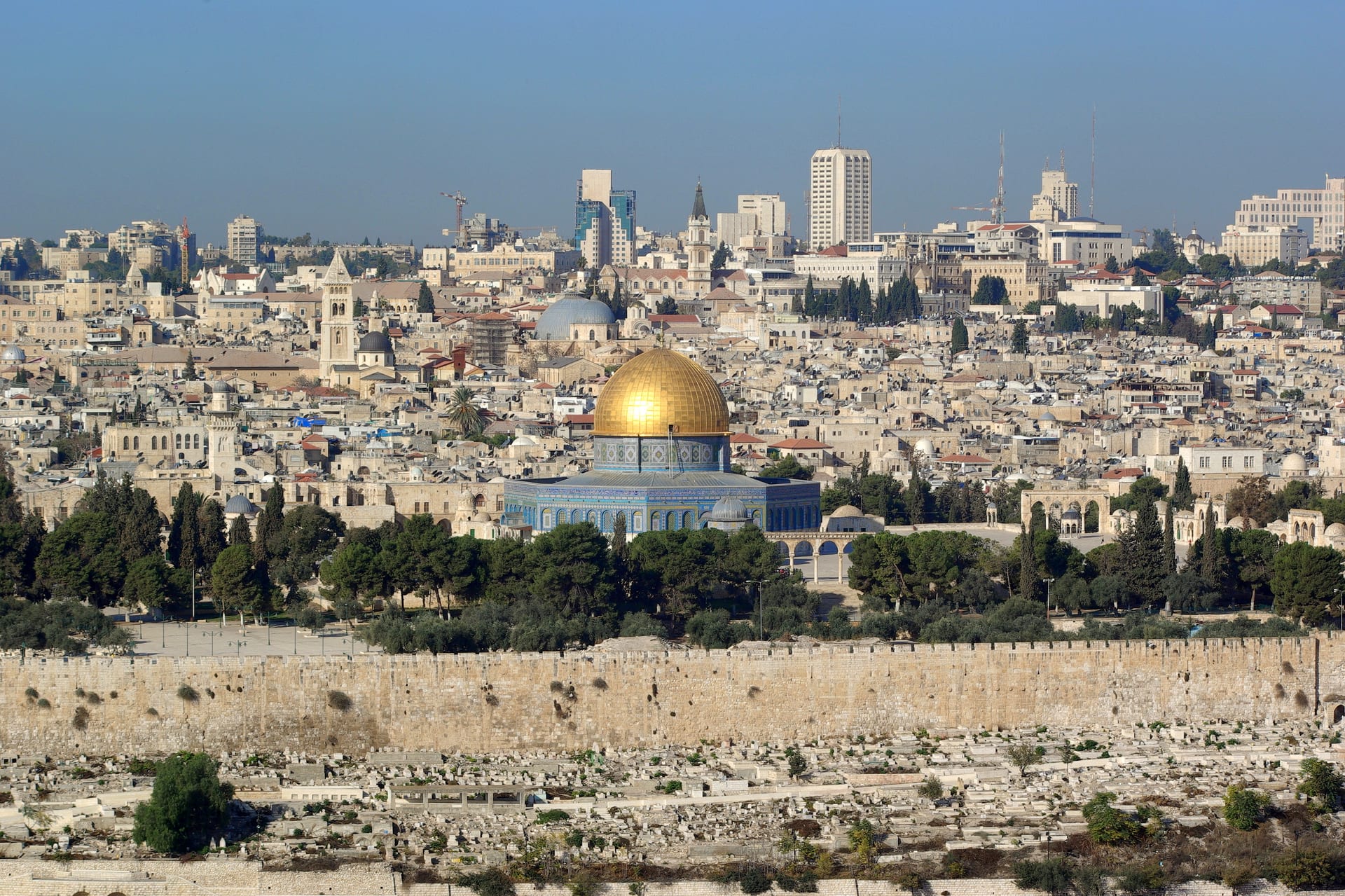
An ancient hilltop city that wears its history and faith openly, far more traditional and observant than secular Tel Aviv an hour west. Rents sit well below the coast, the food and cultural life run deep, but the surrounding political instability and a religiously charged public sphere shape daily life in ways that suit some and unsettle others.
Jerusalem at a glance
Vital stats
Shown in USD: the local currency (ILS) moves too fast for stable monthly figures.
Where Jerusalem stands out
The metrics where Jerusalem sits farthest from the middle worldwide, good and bad.
Cheap to arrive, expensive to stay?
A typical one-bedroom in Jerusalem runs $1,247/mo. That is ~55% of one typical local employee’s mean net pay. This is a solo-newcomer stress test: sitting tenants, shared homes, subsidised housing and informal rents are deliberately outside the numerator.
The fastest way to test a shortlist is to go. A week on the ground tells you things no ranking can.
Partner link
Approved language-learning and international money resources for practical next steps.
Daily life in Jerusalem
How Jerusalem scores
Category by category
Affordability
58/100Jerusalem's open-market one-bedroom rent on a new lease is about $1,247 per month. That is roughly 55% of one typical employee's mean net pay, a rent burden labelled sharing likely.
Climate
mediterraneanJerusalem has a bright, dry summer pattern, with about 301 bright days a year and relatively few grey, rainy days. July averages about 26°C, but winter is colder and damper, and muggy conditions do crop up. Air quality is another trade-off.
Nature access
great hikingThere is no coast here, which is the obvious trade against Tel Aviv and its beaches. What the city offers instead is hill country: hiking trails, pine forests, and the strange pull of the Judean desert all within easy reach for a weekend. In-town green space is thin, though, and lakes or rivers are essentially absent.
Urban form
mid-sizedA mid-size city built across stone hills, dense in its older quarters but more spread out and car-reliant than walkable Tel Aviv. Neighbourhoods have strong distinct character and a workable mix of homes, shops, and life on the street. Steep terrain and uneven transit make getting around on foot less smooth than the flat coast.
Public life & spaces
67/100Jerusalem is mixed — the new city orderly, the old quarters denser and worn. Its public life lives in the Old City lanes, plazas and markets rather than any modern built realm. The holy sites and souks cost nothing to wander, but the city itself is not a cheap place to live.
Safety
63/100Everyday crime is low, with little violent or street crime and safe traffic by regional measures. The serious caveat is political stability, which scores at the floor: the city sits at the centre of long-running conflict, and periods of tension or security alerts are part of the backdrop. How much that weighs depends heavily on temperament and timing.
Healthcare
73/100Care is strong and reliable, anchored by well-regarded hospitals and dependable emergency services on par with the coast. English is widely spoken in clinical settings, which eases things for newcomers, and out-of-pocket costs stay modest under the national system. Doctor availability is adequate rather than generous.
Family life
52/100A family-oriented city where children are visible everywhere and the work-life rhythm is gentler than Tel Aviv's. Schools and childcare are serviceable, and the outdoor-childhood culture is solid given the hills nearby. The hard part is housing: finding affordable family-sized space is a real squeeze, even if marginally less brutal than on the coast.
Career
64/100Jerusalem has low unemployment and a reasonably steady local market, with a startup scene that adds some opportunities. Industry breadth and professional networks are limited, English-only roles are not plentiful, and local pay is comparatively high. The best fit is a specialized path that matches the city's narrower economy.
Culture & food
78/100This is where the city stands apart. Its local culture and concentration of museums, sites, and events rank among the deepest anywhere, layering millennia of history with living religious tradition. The food scene is genuinely good, with strong vegetarian options. Nightlife is quieter and more subdued than Tel Aviv's, partly shaped by the observant rhythm of the week.
Ease of integration
63/100Hebrew is the working language, with Arabic and widely spoken English alongside it, so getting by as a newcomer is manageable. The social fabric is layered and at times insular, sorted along religious and communal lines, which can make breaking into local circles slower than in more secular, cosmopolitan cities. Established immigrant and faith communities offer ready footholds for some.
Connectivity
56/100A light rail line and intercity trains connect the city, with a fast link to the coast and decent airport access, plus solid digital connectivity. Public transport overall is patchy, cycling infrastructure is poor given the hills, and traffic congestion bites. Utilities are dependable. Functional but not seamless.
Social values
mixedAmong the more traditional and religiously observant places a newcomer might consider, with a public culture far less secular and liberal than Tel Aviv or most European capitals. Social conservatism runs high, and the climate for LGBTQ residents and visible secular life is notably tighter than on the coast. International diversity exists, but openness to outsiders is moderate.
Relocation ease
44/100Language is less of a wall than expected, with English going a long way and a clear path for those eligible to immigrate. The friction shows up elsewhere: housing searches are tough, banking and bureaucracy demand patience, and cultural adjustment takes effort given the traditional public sphere. Work authorization is middling for those without an immigration route.
The trade-offs
A year in Jerusalem
Jul peaks around 35°C, Jan days top out near 15°C, and the year brings roughly 301 bright days.
Can you actually move here?
The hard limits people most often bring to a move, scored against Jerusalem's data.
Moving with a pet
Bringing a pet here is relatively straightforward, with manageable import requirements roughly in line with Tel Aviv. Plan the paperwork and vaccinations ahead, and expect a process that is bureaucratic but well-trodden rather than punishing.
Who Jerusalem works for
Answer the questionnaire and see where Jerusalem lands for you.
Take the free questionnaireWhere else to look
Jerusalem vs. comparable cities


Objective scores (0–100) for Jerusalem and its 4 nearest comparable cities.
The cities people weigh against Jerusalem
Unexpected siblings
Far from Jerusalem on the map, close across all 14 categories of daily life.

