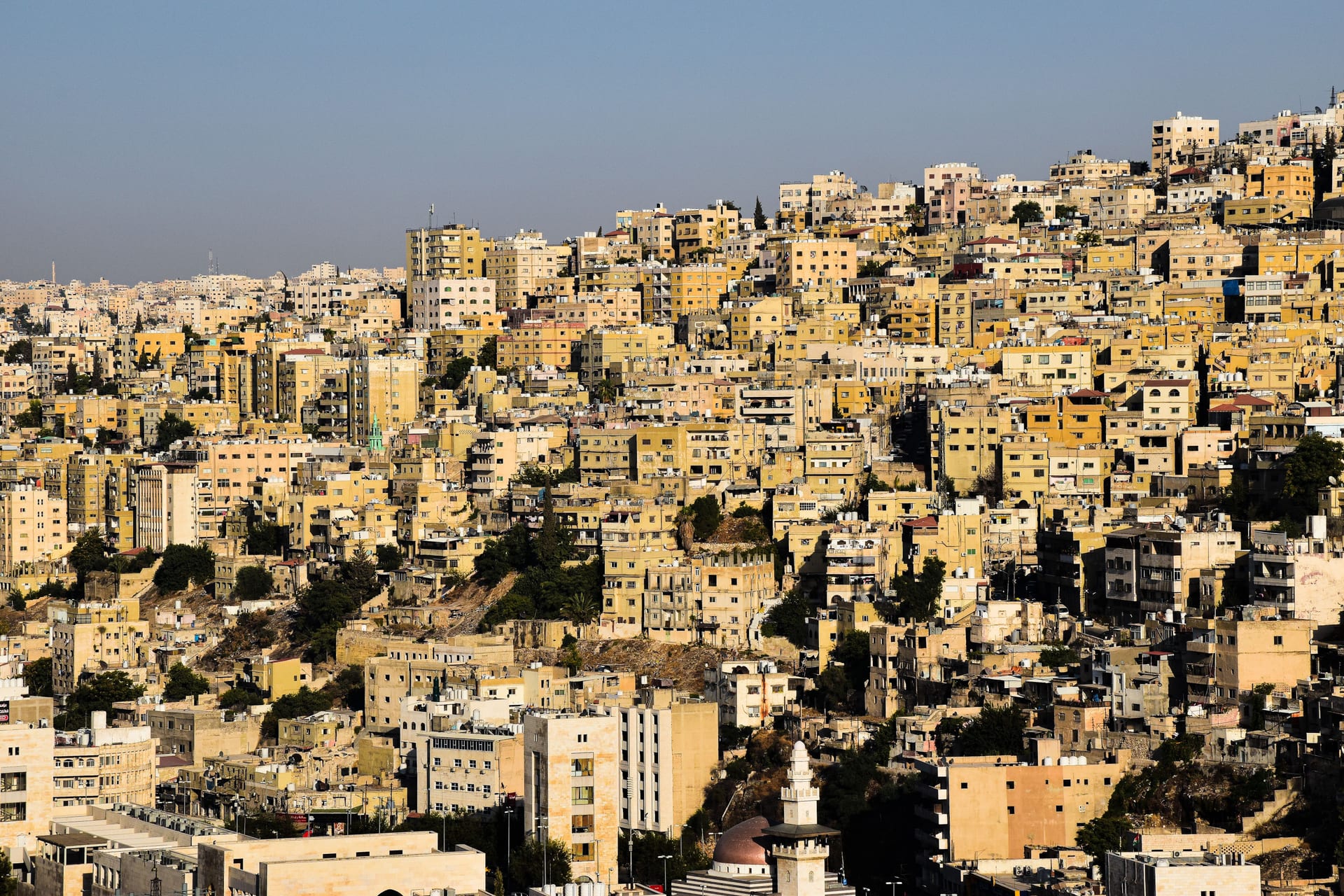
 Jordan
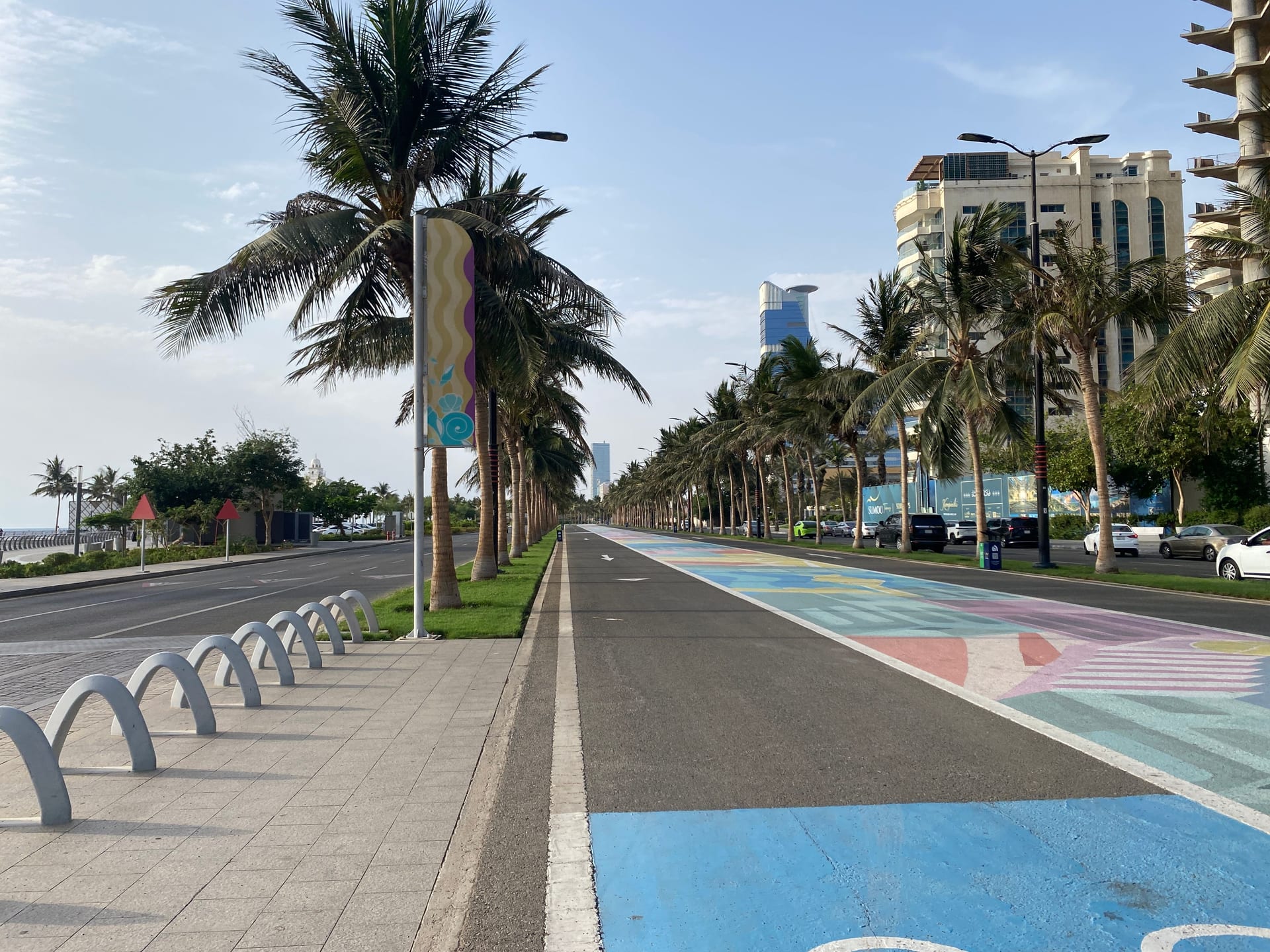
 Saudi Arabia
Amman makes sense if
- You want the deeper culture and food scene.
Amman is a calm, hilltop capital where hospitality, home life, and Levantine food matter more than nightlife; local work options are narrow and most errands lean on the car. Jeddah is a warmer coastal city with reliable sunshine and a different rhythm built around the Red Sea and professional work.
The grey shape is all 283 cities; each row says whether lower or higher is better. Ratings out of 10 are our reviewed estimates; the rest is published data. How we measure
Set how much each area counts. The ranking updates as you go. Climate and values are left out because there is no better or worse there, only your taste.
Leads on money, work & family and moving & settling in; stands out for beach & sea and train connections.
Leads on nature & outdoors; stands out for fewer muggy days and national parks nearby.
Scores out of 100, averaged from the areas you weighted. For a ranking built around your own situation, take the quiz.
Rent on a new lease, everyday prices and tax.
The year month by month. Whether it suits you is yours to judge.
Solid line: average daytime high. Dashed: night-time low. Point at the chart for any month; point at a city name to shade its range.
How easily you get to water, mountains and green space.
Getting around on foot, food, culture and the feel of the streets.
Crime, how safe people feel, and the care you would get.
Jobs, working culture, schools and raising kids.
Visas, language, paperwork and staying connected.
Where each city sits. There is no right end of these scales.
Cars still dominate daily movement, while mixed-use neighbourhoods are limited. Apartments offer a reasonable amount of space, and the overall tempo is moderate rather than frantic.
A sprawling, car-built city where walking rarely makes sense and distances are covered by driving. Density is low and neighbourhoods spread wide rather than cluster, so the compact, stroll-everywhere texture of an older European or Asian city is absent here.
Amman feels safe in ordinary street life. Violent crime and petty theft are uncommon, and walking after dark is usually comfortable, but traffic is a genuine hazard.
Jeddah is very safe by most everyday measures, with low violent and petty crime and a strong sense of personal security on the streets. The caveat sits at the political level, where the wider regional context carries more uncertainty than the calm of daily life would suggest.
English-language roles and remote work offer some openings, but local pay is very low and industry breadth is thin. Amman is a recognised medical hub in the region, drawing patients from neighbouring countries, and private care is solid with plenty of English-speaking doctors.
Jeddah's local market is reasonably broad, with English useful in many workplaces and unemployment relatively low. Hospital access is solid and English is commonly spoken in private clinics, which eases things considerably for newcomers.
Food is where Amman shines, from legendary street eats to a growing café culture, and the city holds onto a genuine local character that Gulf cities have largely traded away. Amman is dusty and uneven, its upkeep wavering across the hills, and modern plazas are scarce beyond the downtown souks and the old Roman theatre.
A long-standing merchant port, Jeddah is the more open and outward-looking of the kingdom's big cities, with a steady international crowd and a strong food culture spanning regional and global kitchens. The Corniche waterfront is genuinely strong, and Al-Balad's historic core gives the city texture.
Jeddah is a better fit for someone with a solid work arrangement who wants a larger professional base and abundant bright weather. Amman suits residents drawn to a quieter, more conservative social setting and local food culture, provided they have a plan for its thin job market.
These numbers treat everyone the same. The quiz weighs them by your budget, climate taste, family and work, and ranks all 283 cities for you.