Affordability
63/100Bergen's open-market one-bedroom rent on a new lease is about NOK 13,253 per month. That is roughly 31% of one typical employee's mean net pay, a rent burden labelled manageable solo.
Climate
wet & greyRain defines the year. Bergen has about 189 rainy-grey days, while summers stay cool and winters are relatively mild. The air is exceptionally clean, muggy conditions are almost absent, and severe weather is rarely the concern; the real test is persistent wetness and seasonal darkness.
Nature access
great hikingBergen puts mountain trails and fjords close to the centre. Paths climb straight from the streets, with forest and open water nearby. Weekend trips into the surrounding landscape need little planning.
Urban form
mid-sizedBergen's walkable centre puts homes and shops between the harbour and the hills. Beyond the core, the built-up area spreads thinly, making a car more useful. The pace is quieter than in Oslo.
Public life & spaces
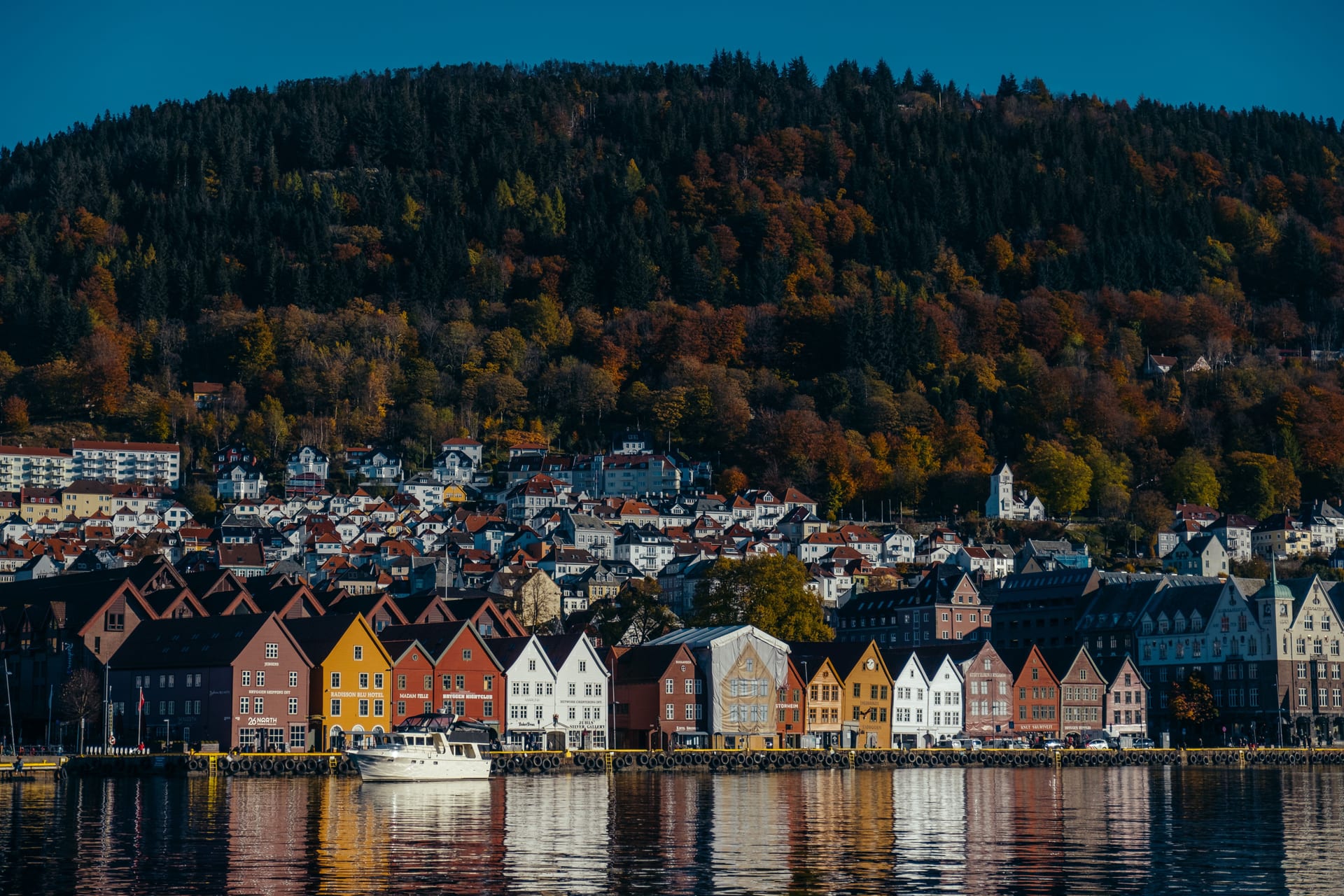
81/100Bergen is clean, its colourful clapboard streets rinsed regularly by the rain. The setting earns its keep: the UNESCO Bryggen wharf, the fish market, fjord-edge promenades and the funicular views. The hard catch is cost, this being among Europe's priciest corners, so genuinely cheap daily life is thin on the ground.
Safety
91/100About as safe as cities come. Violent and petty crime are rare, the streets feel secure after dark, and traffic safety and political stability are strong. Daily trips rarely require much thought about personal safety.
Healthcare
76/100Care quality is excellent and broadly free at the point of use, with reliable emergency services and staff who switch to English readily. Bergen is a smaller hub than Oslo, so hospital depth and specialist access are a notch below the largest centres, but the system is well-run and easy to navigate for newcomers.
Family life
81/100A genuinely strong place to raise children. Childcare is plentiful and subsidised, parental leave is among the world's most generous, and a deep outdoor-childhood culture sends kids onto trails and into all weathers from an early age. Schools are solid and family housing is more attainable here than in Oslo or Copenhagen.
Career
60/100Bergen has a steady but specialised market, with reasonable openings in its established industries and low unemployment. Professional networks and the startup scene are thinner than in a larger hub, while English-language and remote roles exist without being abundant. Typical employee pay is high by the comparison-set standards.
Culture & food
69/100The cafe scene is genuinely good and the music and arts life punches above the city's size, but the broader cultural offer is modest. Restaurants, nightlife and the international food range are narrower than in Oslo or other large European capitals. The local culture is distinct and proud, though the foreign community stays small.
Ease of integration
52/100Norwegian is the daily language, but English is spoken almost universally and goes a long way for newcomers. The society is liberal, secular and high-trust, which makes settling in administratively smooth. The harder part is social: locals can be reserved and the international scene is thin, so building close friendships takes patience and time.
Connectivity
62/100Utilities are rock-solid, internet is fast, and dealing with officialdom is largely digital and painless. Public transport works well for a city this size, though cycling infrastructure lags and intercity rail and air links are more limited than from Oslo. Road congestion stays low.
Social values
progressiveStrongly progressive and secular, with high gender equality, broad LGBTQ acceptance and deep civic trust. Traditionalism is low and public life is orderly and egalitarian. Where it lags its peers is diversity and visible internationalism, and openness to outsiders is welcoming but quietly measured rather than effusive.
Relocation ease
62/100Among the easier European moves once inside, helped by light bureaucracy, simple taxes and a less pressured housing search than in Oslo. The language barrier is low thanks to widespread English. The friction sits earlier, in visa and work authorisation, which are tougher than in EU-member peers.