
Living in Aarhus
Denmark's second city, a compact university town on the Jutland coast that runs at a calmer pace than Copenhagen across the water. Life here is bikeable, safe, and quietly prosperous, with the polished Nordic basics in place and far less big-city noise. Smaller and less international than the capital is the trade-off.
Aarhus at a glance
Vital stats
Where Aarhus stands out
The metrics where Aarhus sits farthest from the middle worldwide, good and bad.
Cheap to arrive, expensive to stay?
A typical one-bedroom in Aarhus runs DKK 8,225/mo. That is ~34% of one typical local employee’s mean net pay. This is a solo-newcomer stress test: sitting tenants, shared homes, subsidised housing and informal rents are deliberately outside the numerator.
The fastest way to test a shortlist is to go. A week on the ground tells you things no ranking can.
Partner link
Approved language-learning and international money resources for practical next steps.
Daily life in Aarhus
How Aarhus scores
Category by category
Affordability
61/100Aarhus' open-market one-bedroom rent on a new lease is about DKK 8,225 per month. That is roughly 34% of one typical employee's mean net pay, a rent burden labelled manageable solo.
Climate
temperateCool summers and chilly winters come with a sky that stays grey for long stretches. About 114 rainy-grey days and very limited winter brightness make light the main climatic trade-off, while clean air and low severe-weather risk keep the conditions comfortable in other respects.
Nature access
leafyThe coast is the main draw, with beaches and the sea right at the edge of town, plus easy forest and good cycling and running routes. Denmark is flat, so there are no mountains and only gentle hiking, and serious elevation means leaving the country. For coastal walks and weekend trips into Jutland's woods and lakes, it delivers.
Urban form
mid-sizedAarhus has a small urban footprint, with about 253,000 people in its metro area. The centre is walkable and mixed-use, cycling and low car dependence suit daily life, and the suburbs are strong. It remains a calm, low-tempo place, so big-city energy is limited.
Public life & spaces
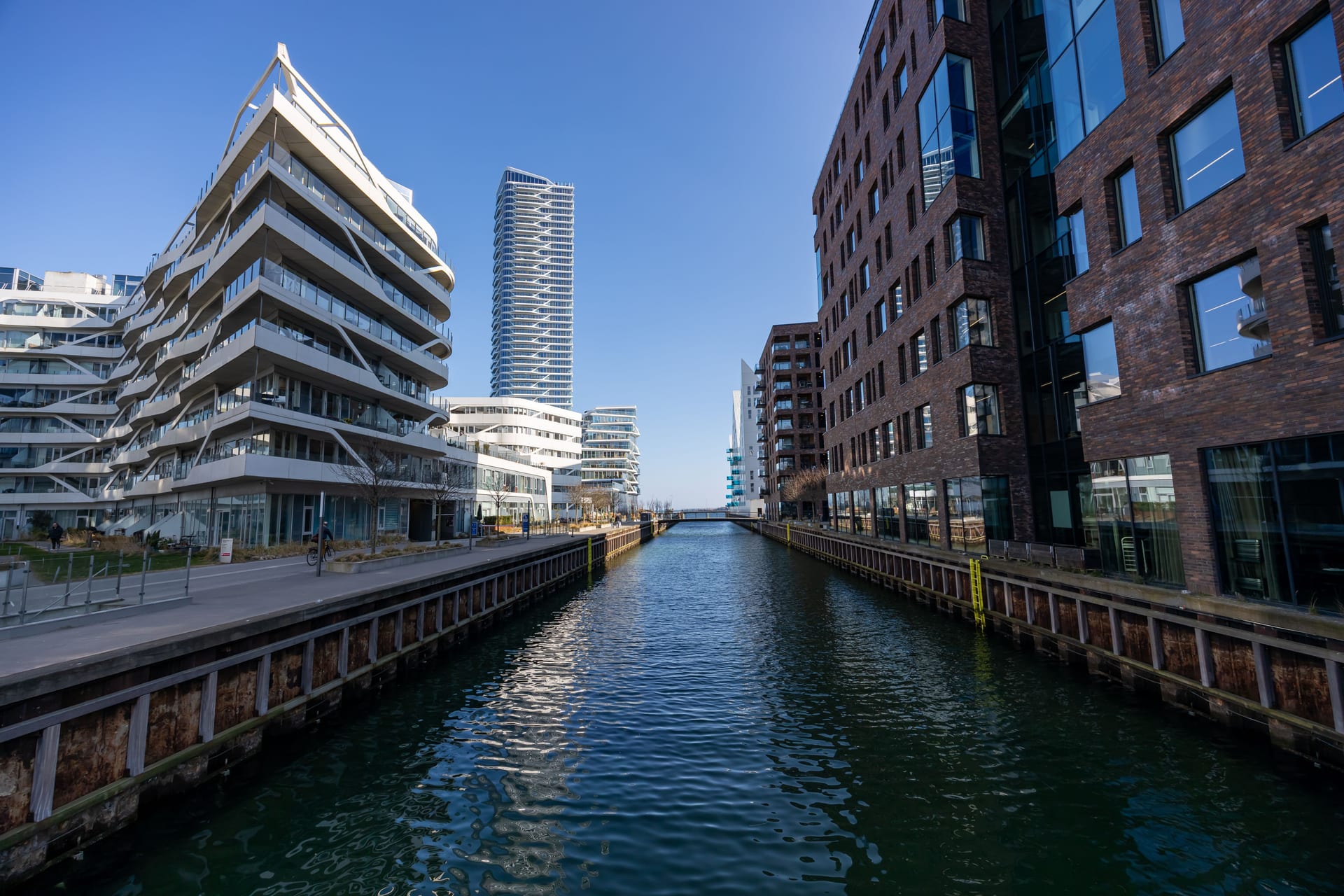
89/100Aarhus is tidy and well-kept in the Danish manner, with barely a stray wrapper on its streets. The waterfront does the heavy lifting: the harbour baths, the rebuilt Aarhus Ø quays, and ARoS's rainbow rooftop. A lively student scene keeps free culture flowing, though Danish prices mean much of daily life still costs real money.
Safety
87/100About as safe as a city gets. Violent crime is rare, streets feel secure after dark, and traffic is calm and well managed for cyclists and pedestrians. Political stability is rock solid. This is a place where letting children roam or walking home late simply isn't something people think twice about.
Healthcare
83/100Public healthcare is excellent and essentially free at the point of use, with reliable hospitals and emergency care and very little cost exposure. Staff widely work in English, which smooths things for newcomers. Getting a regular doctor can take patience, as family-physician availability is the one soft spot, but the system as a whole is among the best.
Family life
86/100One of the strongest cities anywhere for raising kids. Childcare is abundant and heavily subsidised, schools are good, playgrounds and green space are everywhere, and the work-life culture genuinely leaves time for family. Generous parental leave is the national norm. Finding the right family home is the only real friction in an otherwise very supportive setup.
Career
65/100A solid regional job market built around the university, healthcare, and a respectable tech and engineering base, but smaller and less varied than Copenhagen or the bigger European hubs. Unemployment is low and remote work is well supported. Newcomers without Danish should expect a limited set of English-language roles and a thinner professional network than the capital offers.
Culture & food
72/100Punches above its size for a city this small, with a strong cafe scene, good restaurants, and a respected art and music culture anchored by the university crowd. Nightlife is modest and low-key, nowhere near what Berlin offers, and the international scene is limited. The local Danish culture, though, is confident and genuinely present.
Ease of integration
44/100Danish is the everyday language, but English is widely spoken and goes a long way day to day. Civic trust and social order are extremely high, which makes the place feel orderly and reliable. The harder part is the social layer: Danes can be reserved with outsiders, and the resident mix is far less diverse than the capital's, so building a local circle takes real time and persistence.
Connectivity
77/100Cycling infrastructure and digital services are world class, internet is fast, and dealing with the state is almost entirely online and painless. Local transport and intercity trains work well. The clear weak point is the airport, which is small and poorly connected, so most long-haul travel routes through Copenhagen instead.
Social values
progressiveSecular, socially liberal, and strongly egalitarian, with high acceptance on gender and LGBTQ lines and very little social conservatism. Civic trust is total. The asterisk is that this openness is mostly inward-facing: the population is far less diverse than the bigger Nordic and German cities, and warmth toward foreigners is more measured than the progressive surface suggests.
Relocation ease
62/100The administrative side is refreshingly light, with simple banking, fast digital bureaucracy, and a small enough language barrier that English carries newcomers through the early months. Visa and work authorisation sit at the usual EU-newcomer difficulty. Housing is the main effort, with a competitive rental market, though the search is still less of a scramble here than in Copenhagen or Berlin.
The trade-offs
A year in Aarhus
Aug peaks around 21°C, Jan days top out near 5°C, and the year brings roughly 158 bright days.
Can you actually move here?
The hard limits people most often bring to a move, scored against Aarhus's data.
Moving with a pet
Bringing a pet to Aarhus is straightforward, with Denmark's EU rules requiring little more than standard vaccinations, a microchip, and paperwork. Cats and dogs move in easily, and the bike-friendly, outdoorsy city is an easy fit for an active dog.
Who Aarhus works for
Answer the questionnaire and see where Aarhus lands for you.
Take the free questionnaireWhere else to look
Aarhus vs. comparable cities


Objective scores (0–100) for Aarhus and its 4 nearest comparable cities.
The cities people weigh against Aarhus
Unexpected siblings
Far from Aarhus on the map, close across all 14 categories of daily life.
